

ABA Therapy Glossary for Parents
Plain definitions of the ABA and autism words you will hear from your child's care team.
Diagnosis
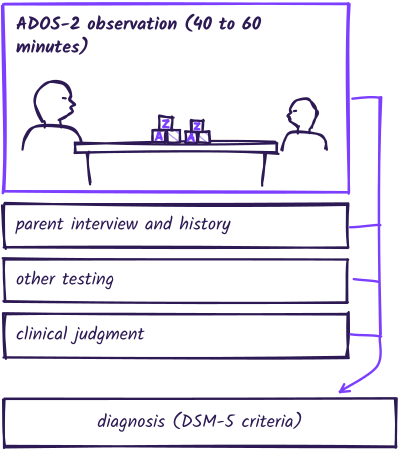
ADOS-2
The Autism Diagnostic Observation Schedule, Second Edition (ADOS-2) is a standardized observation that clinicians use as one part of an autism evaluation.
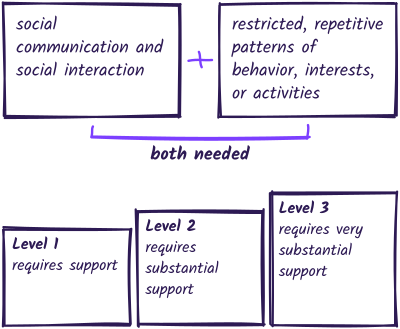
Autism spectrum disorder (ASD)
Autism spectrum disorder (ASD) is a neurological and developmental condition that affects how people communicate, interact with others, learn and behave.
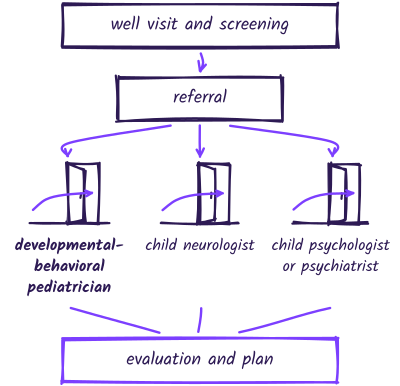
Developmental pediatrician
A developmental pediatrician is a children's doctor with three more years of specialty training who evaluates development, learning and behavior, including autism.
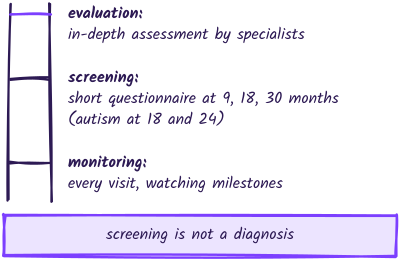
Developmental screening
Developmental screening is a short, standard check, often a parent questionnaire, that shows whether a child's development is on track or needs a closer look.

DSM-5-TR autism criteria
The DSM-5-TR autism criteria are the rules clinicians use to diagnose autism, covering social communication plus repetitive behaviors, interests or sensory responses.

Neurodivergent
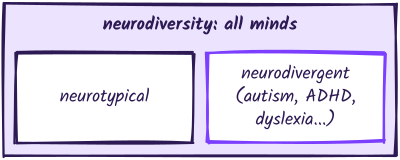
Neurodivergent describes a person whose brain works differently from what society treats as typical, such as an autistic person or someone with dyslexia.
Neurotypical
Neurotypical describes a person whose brain develops and works the way most people's do; it's the counterpart of neurodivergent, not a diagnosis.
Starting ABA
ABA settings: in-home, center-based, school
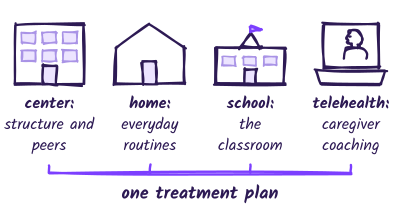
ABA can happen at a center, at home, at school or by telehealth, and many children get it in more than one place.
ABA therapy
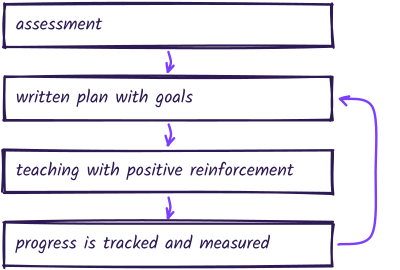
ABA (applied behavior analysis) therapy uses principles of learning and behavior to teach skills, mainly through positive reinforcement and measured progress.
Assent and neurodiversity-affirming ABA
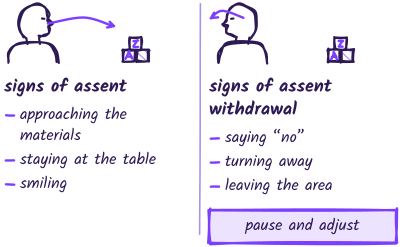
Assent is a child's own willingness to take part, and neurodiversity-affirming ABA is an approach that sees autism as a difference rather than a deficit.
Intake
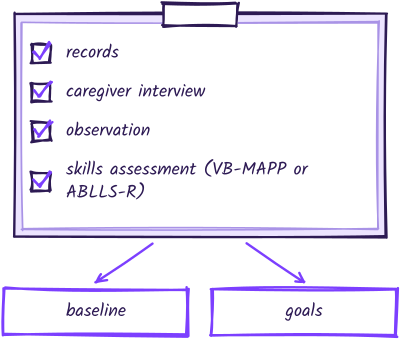
ABA assessment (VB-MAPP, ABLLS-R)
An ABA assessment is how a BCBA measures your child's strengths, missing skills and barriers to learning before writing a treatment plan.
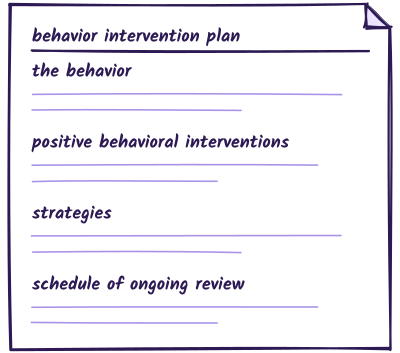
Behavior intervention plan (BIP)
A behavior intervention plan (BIP) is a written plan that names a behavior of concern and the positive strategies used to address it.
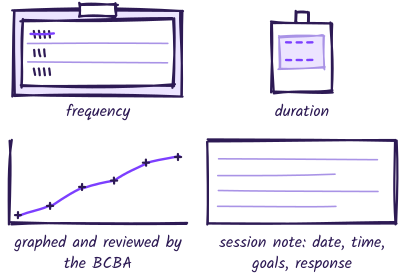
Data collection and session notes
In ABA, data collection is the steady, measurable record of what happens each session, and a session note is the written record of that session.

Discharge and fading services
Discharge is the planned end of ABA services, and fading is the gradual step-down that leads to it, with fewer hours and more caregiver coaching.
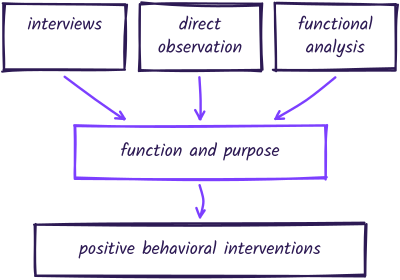
Functional behavior assessment (FBA)
A functional behavior assessment (FBA) is a structured process for working out why a specific behavior happens, so the team can plan better alternatives.
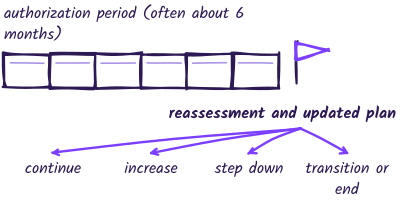
Reauthorization
Reauthorization is your health plan's or Medicaid program's review, near the end of an approved period of ABA, of whether to approve another.
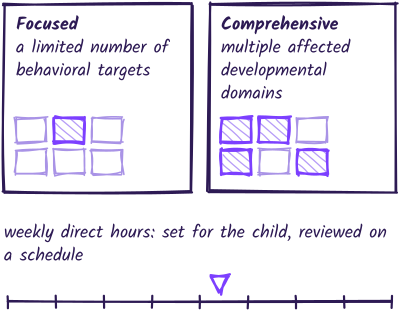
Treatment plan (comprehensive vs focused ABA)
An ABA treatment plan is the written, individualized plan your BCBA builds before services start, setting goals, methods, weekly hours and a review schedule.
Your child's team
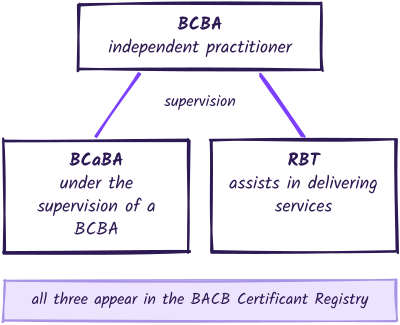
BCBA
A BCBA (Board Certified Behavior Analyst) holds a graduate-level certification and designs and oversees ABA programs, including supervising behavior technicians.
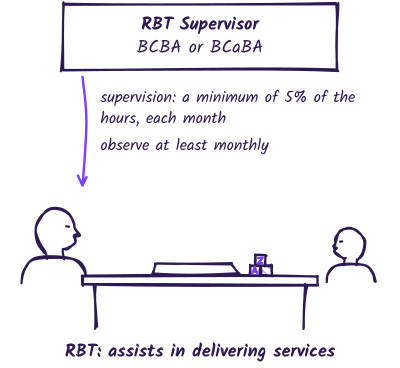
RBT (behavior technician)
An RBT (Registered Behavior Technician) is a certified paraprofessional who delivers day-to-day ABA sessions under close supervision from a BCBA or BCaBA.
In therapy
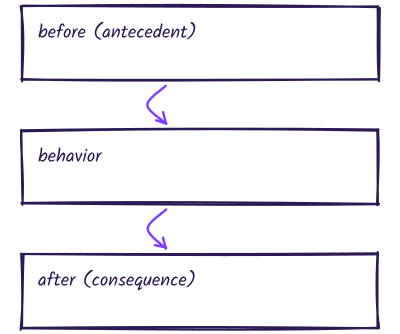
ABC data
ABC (antecedent, behavior, consequence) data is a record of what happened just before a behavior, the behavior itself, and what came right after.
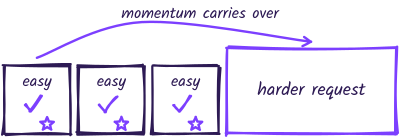
Behavioral momentum
Behavioral momentum is a teaching strategy that gives a child a few easy requests and praise, then a harder one right away.
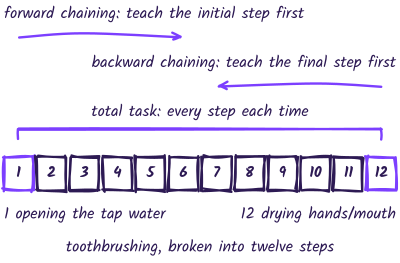
Chaining
Chaining teaches a multi-step skill, like brushing teeth, by breaking it into steps and teaching them until they link into one routine.
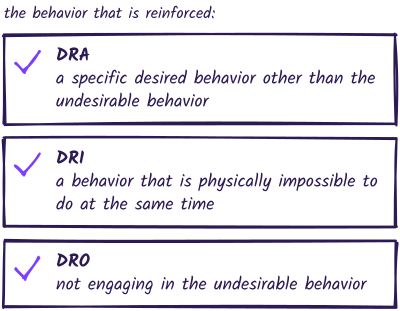
Differential reinforcement
Differential reinforcement means giving positive consequences for a chosen behavior, or for not doing a problem behavior, so the better behavior grows.
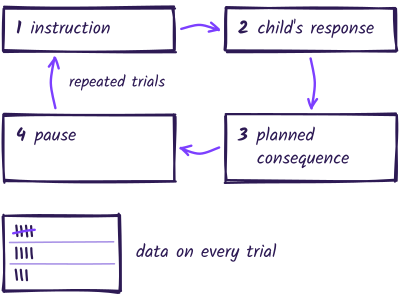
Discrete trial training (DTT)
Discrete trial training (DTT) is a structured ABA teaching style that breaks a skill into small parts and practices them in short, repeated trials.
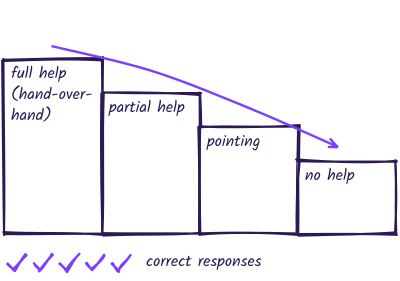
Errorless learning
Errorless learning is a way of teaching that gives a child enough help to answer correctly, then fades that help step by step.
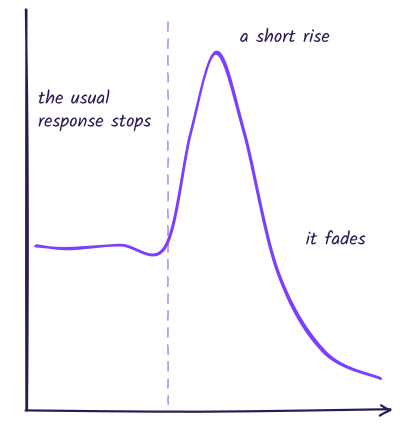
Extinction and extinction burst
Extinction means a behavior stops getting the payoff that kept it going; an extinction burst is a short rise in that behavior before it drops.
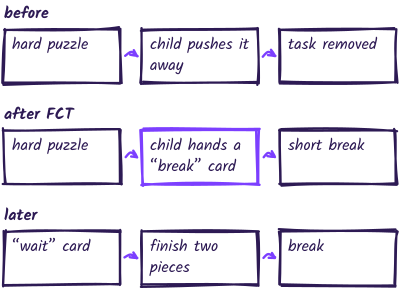
Functional communication training (FCT)
Functional communication training (FCT) teaches a child a clear way to ask for what a challenging behavior was getting them.
Functions of behavior
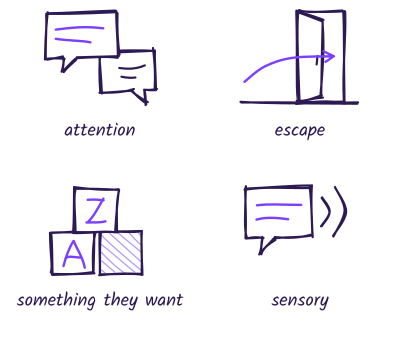
A behavior's function is the payoff that keeps it going, like attention, escape from a demand, an item, or a reward the behavior creates itself.
Generalization and maintenance
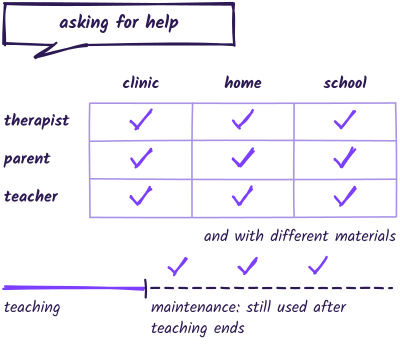
Generalization means your child uses a skill beyond where it was taught, and maintenance means they keep using it over time after teaching ends.
Natural environment teaching (NET)
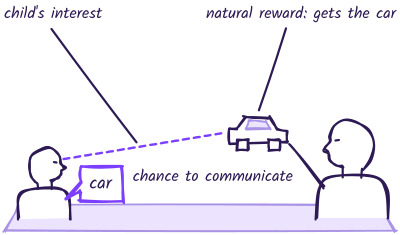
Natural environment teaching (NET) is ABA teaching built into play and daily routines, using a child's interests and natural rewards.
Pairing
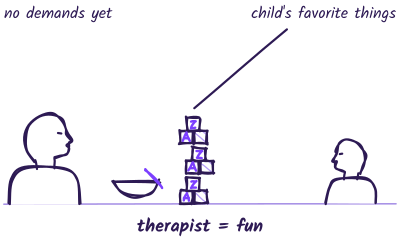
Pairing is time a therapist spends becoming someone a child enjoys, through play and favorite things with few or no demands, before teaching starts.
Positive reinforcement
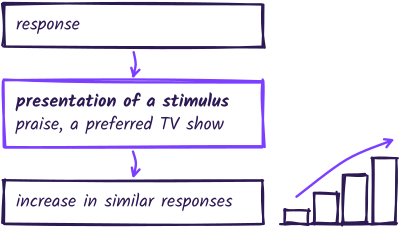
Positive reinforcement happens when something is added after a behavior, like praise or a favorite activity, and the behavior then happens more often.
Reinforcement schedules
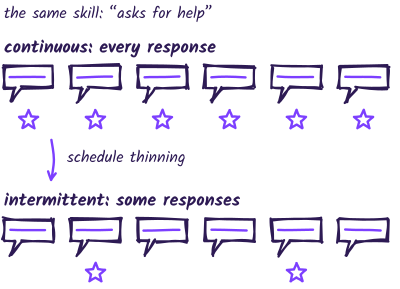
A reinforcement schedule is the rule for which times a behavior earns a reinforcer: every time (continuous) or only some times (intermittent).
Replacement behavior
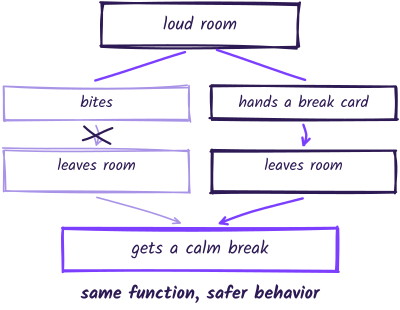
A replacement behavior is a safer, more useful action taught in place of a challenging behavior, chosen to meet the same need.

Shaping
Shaping teaches a new behavior by reinforcing small steps that get closer and closer to the goal.
Stimulus control
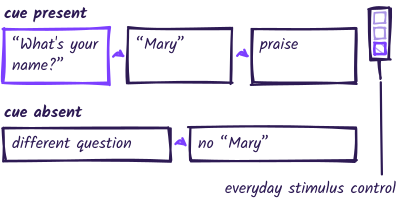
Stimulus control means a behavior reliably happens when a certain cue is present and not when it's absent, because it was rewarded with that cue.
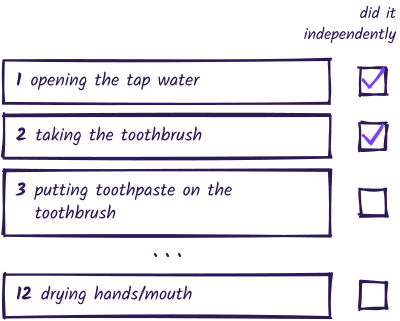
Task analysis
A task analysis breaks a skill or routine into small, manageable steps in order, so your child's team can assess it and teach it.
Approaches
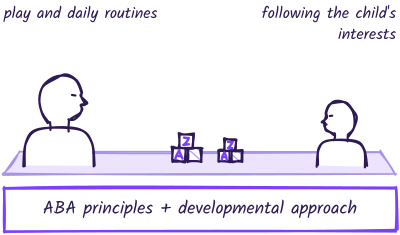
Early Start Denver Model (ESDM)
The Early Start Denver Model (ESDM) is a play-based early intervention for young autistic children that blends ABA with developmental, relationship-based methods.
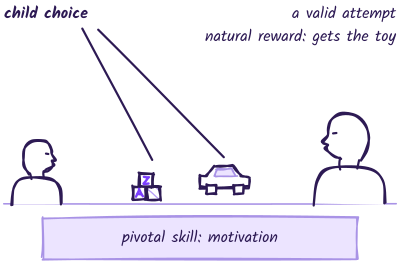
Pivotal response treatment (PRT)
Pivotal response treatment (PRT) is a play-based way of delivering ABA that targets a few key skills, like motivation, that can help many others.
At home

Adaptive and daily living skills
Adaptive skills are the everyday skills a person needs to get through the day. Daily living skills, like dressing and hygiene, are one part.
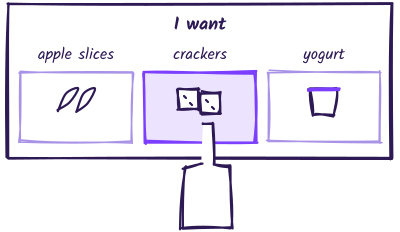
Choice board
A choice board shows two or more pictures, photos or words so a child can choose by pointing to one or handing it over.
Emotional regulation
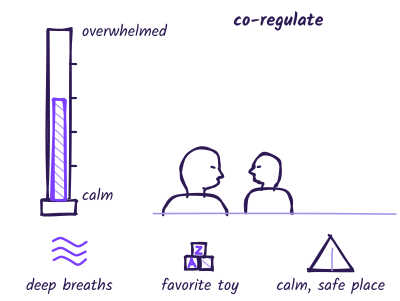
Emotional regulation is the ability to notice a strong feeling and bring it back to a manageable level, like calming down after being upset.
First-then (Premack principle)
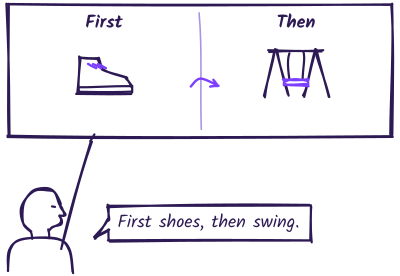
First-then pairs a less-liked task with a more-liked activity that comes right after it, such as first shoes, then the swing.
Communication
AAC (augmentative and alternative communication)
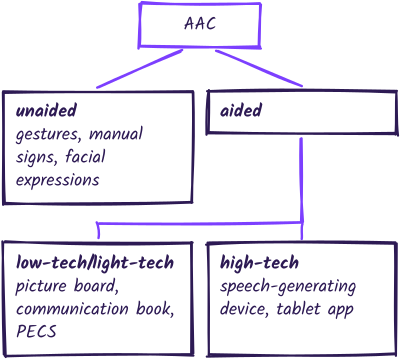
Augmentative and alternative communication (AAC) is any way of communicating that adds to speech or stands in for it, from gestures to speech devices.
Echolalia
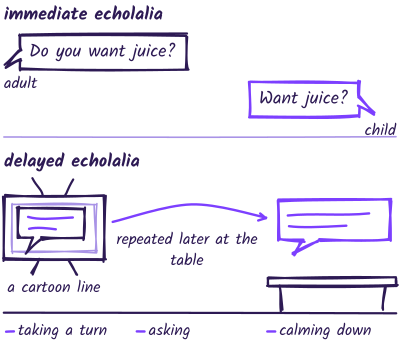
Echolalia is repeating words or phrases that someone else said, either right after hearing them or much later.
Gestalt language processing
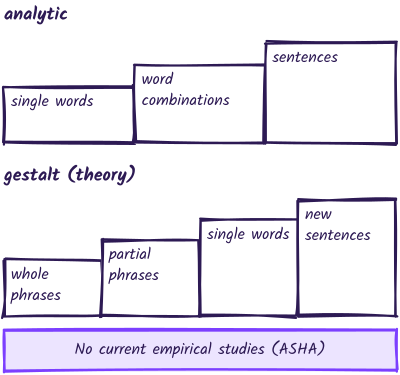
Gestalt language processing is the idea that some children learn language in whole chunks first, like lines from shows, before single words.
Intraverbal
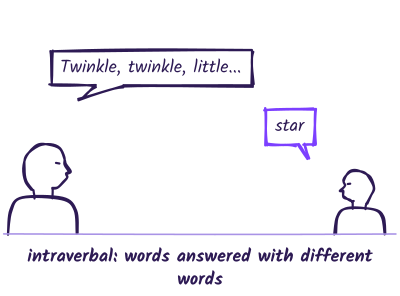
An intraverbal is answering someone's words with different words, like finishing a song line, answering a question or replying in a conversation.
Joint attention
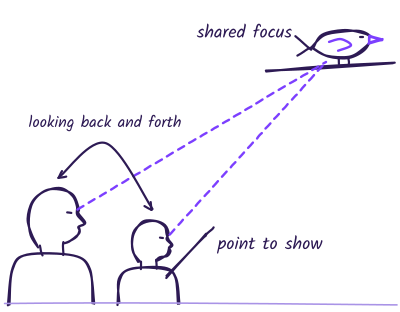
Joint attention is two people sharing focus on the same thing, like a child following a parent's point or pointing to show something.
Mand (manding)
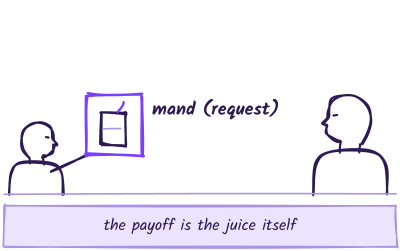
A mand is a request: your child communicates what they want right now, and the payoff is getting that exact thing.
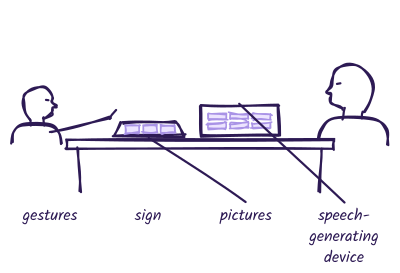
Nonverbal and minimally verbal autism
Nonverbal or minimally verbal autism describes autistic children who use no spoken words or only a few. It describes speech, not understanding.
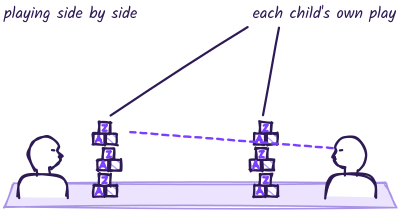
Parallel play
Parallel play is when young children play near each other, each with their own play, without playing together.
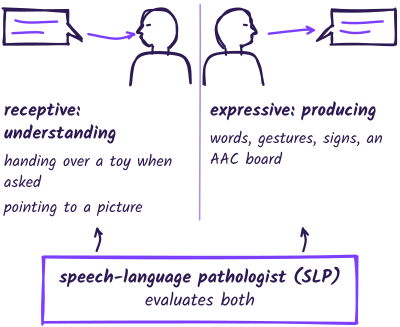
Receptive and expressive language
Receptive language is understanding what others say, and expressive language is sharing thoughts and needs through words, gestures, signs or writing.
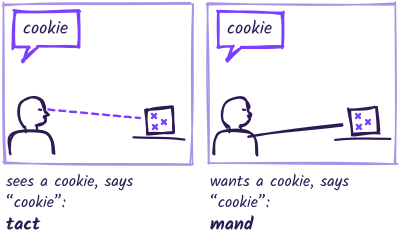
Tact (tacting)
A tact is naming or describing something your child notices, like a dog or a loud noise, for a social payoff such as your smile.
Traits
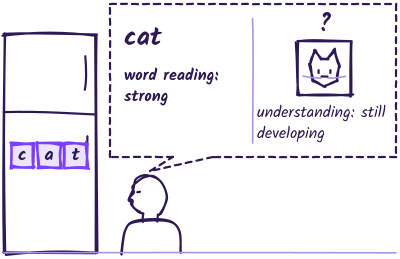
Hyperlexia
Hyperlexia is when a child reads words far above their age level while their understanding of what they read lags behind.
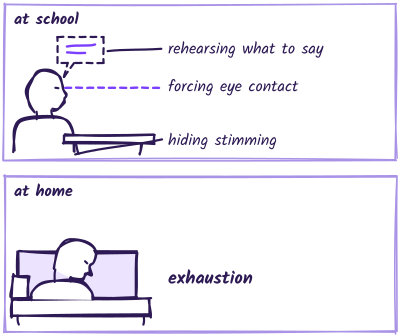
Masking
Masking, also called camouflaging, is when an autistic person hides or makes up for autistic traits, on purpose or not, to appear non-autistic.
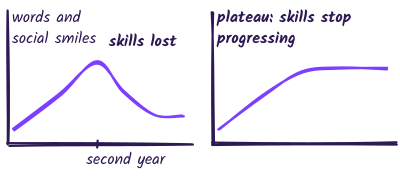
Regression
In autism, regression means a child loses skills they already had, most often words or social skills, usually in the second year of life.
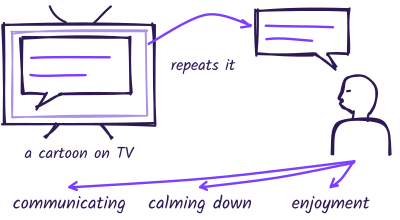
Scripting
Scripting is when a child repeats lines heard earlier, from TV shows, movies, songs or past conversations, often called delayed echolalia.
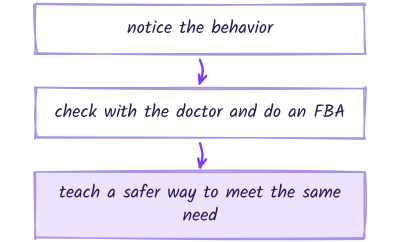
Self-injurious behavior
Self-injurious behavior (SIB) is any behavior a person does that can injure their own body, such as head banging or biting themselves.
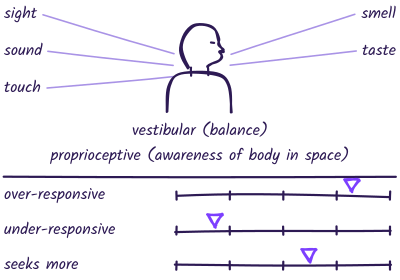
Sensory processing differences
Sensory processing differences describe how a child notices and reacts to sights, sounds, touch, movement and other input, more or less strongly than others.
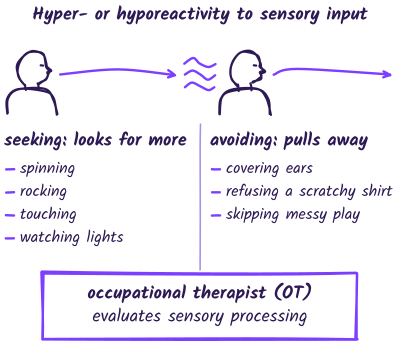
Sensory seeking and sensory avoiding
Sensory seeking is looking for more sensory input, like rocking or touching things; sensory avoiding is pulling away from input that feels like too much.
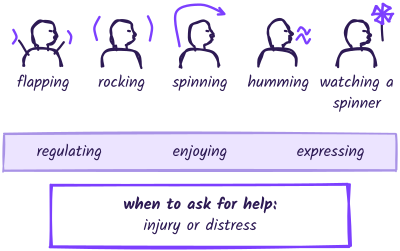
Stimming
Stimming, short for self-stimulating behavior, is a repeated movement or sound, such as hand flapping, rocking, spinning or humming.

Theory of mind
Theory of mind is understanding that other people have their own thoughts, beliefs and feelings, which can differ from yours.
School
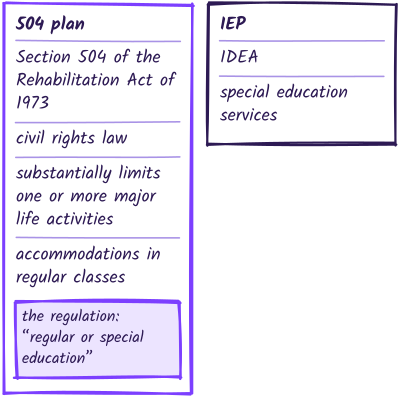
504 plan
A 504 plan sets out the supports a student with a disability needs at school, under Section 504, a federal civil rights law.
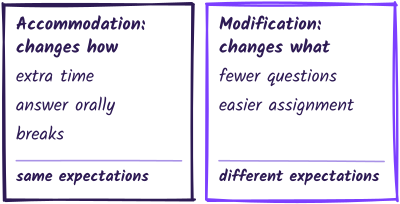
Accommodations vs modifications
Accommodations change how a child learns or shows what they know; modifications change what the child is expected to learn.
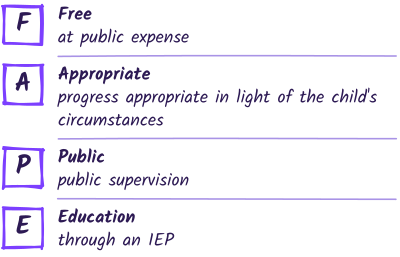
FAPE
FAPE (free appropriate public education) is an eligible child's right to special education and related services at public expense, through an individualized education program.
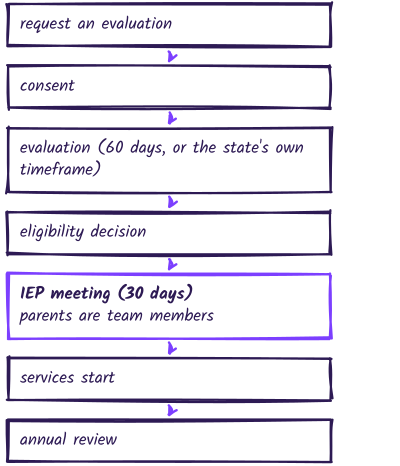
IEP (Individualized Education Program)
An IEP is a written plan for a public school student with a disability who needs special education, setting goals and listing services.
IFSP
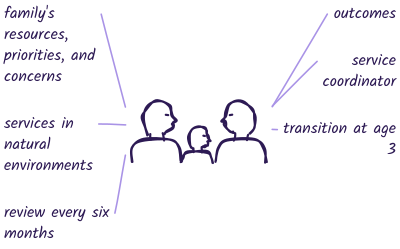
An Individualized Family Service Plan (IFSP) is the written plan for early intervention services for a child under 3 and their family.
Least restrictive environment (LRE)
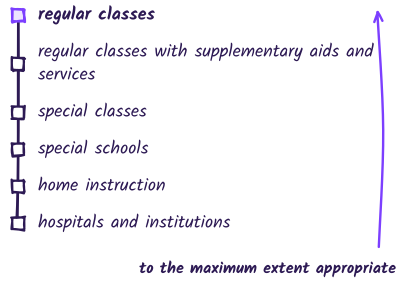
Least restrictive environment (LRE) is the special education rule that a child with a disability learns with children without disabilities as much as appropriate.
Related services (IEP)
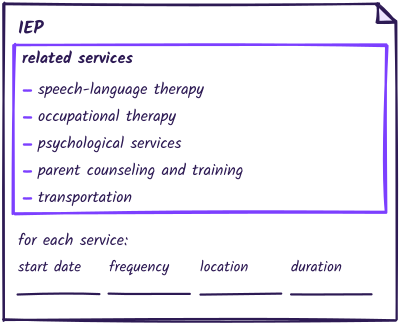
Related services are supports a school provides through an IEP, such as speech or occupational therapy, so a child can benefit from special education.
Insurance
CPT codes for ABA
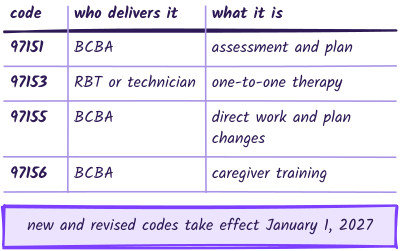
CPT (Current Procedural Terminology) codes are the billing codes on claims, and ABA uses a set billed in 15-minute units, with changes starting January 2027.

Deductible, copay and out-of-pocket maximum
You pay the deductible before your plan starts paying, then usually a copay or coinsurance, up to a yearly out-of-pocket maximum for covered in-network care.
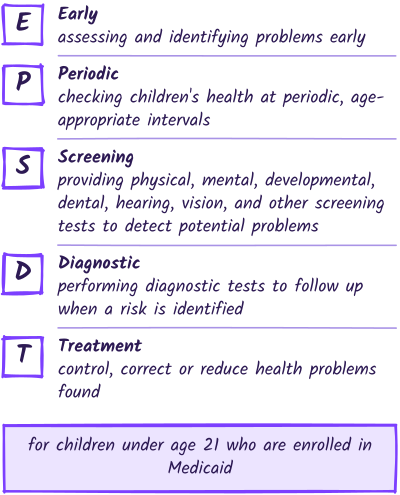
EPSDT
EPSDT is the Medicaid benefit for enrolled children under 21, covering screenings, follow-up diagnosis and treatment that is medically necessary.

Explanation of benefits (EOB)
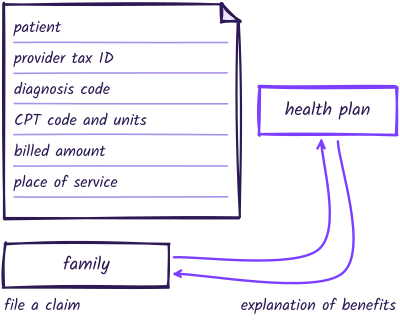
An explanation of benefits (EOB) is a statement your health plan sends after a claim, showing what it paid and what you may owe.
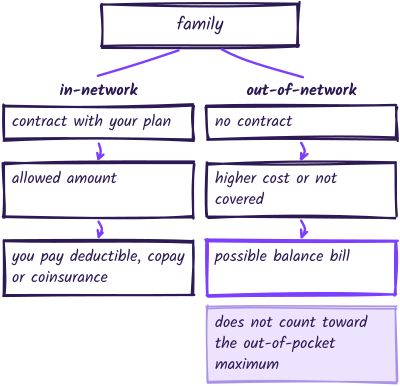
In-network vs out-of-network
An in-network provider has a contract with your health plan, while an out-of-network provider doesn't, which usually means you pay more.
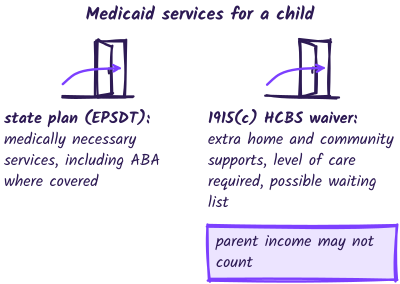
Medicaid waiver
A Medicaid waiver is a state program that pays for extra home and community supports for people who'd otherwise need institutional-level care.
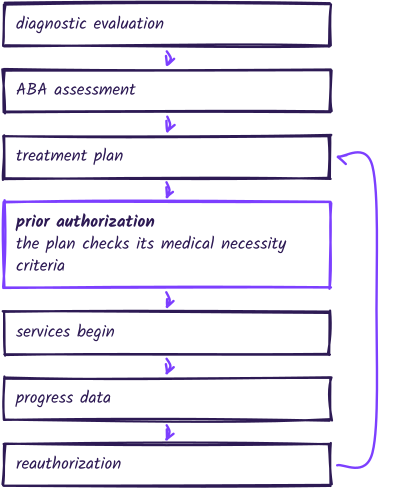
Medical necessity and prior authorization
Medical necessity means care is needed to diagnose or treat a condition, and prior authorization is your plan's approval of a service before it begins.
Single case agreement
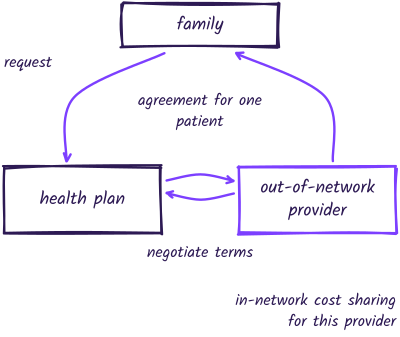
A single case agreement (SCA) is a one-time contract between your health plan and an out-of-network provider to cover one patient's care.
Superbill
A superbill is an itemized receipt from an out-of-network provider that you can send to your health plan to ask for reimbursement.
Covered in our full guides
- Autism evaluationFull guide →
- Autistic burnoutFull guide →
- Colorado 504 plansFull guide →
- Early interventionFull guide →
- ElopementFull guide →
- Feeding therapyFull guide →
- Global developmental delayFull guide →
- HyperfixationFull guide →
- IEP goalsFull guide →
- Levels of autismFull guide →
- M-CHAT-RFull guide →
- Meltdown vs tantrumFull guide →
- Parent and caregiver trainingFull guide →
- PECSFull guide →
- Prompt hierarchy and prompt fadingFull guide →
- Sensory dietFull guide →
- Social storiesFull guide →
- Telehealth ABAFull guide →
- Texas 504 plansFull guide →
- Token economy and token boardFull guide →
- Visual scheduleFull guide →