

ABA Therapy Glossaryfor Parents
All termsAccommodations vs modifications
Accommodations change how a child learns or shows what they know; modifications change what the child is expected to learn.
What it means
Accommodations change how your child learns or shows what they know. They don't change what your child is expected to learn. Extra time, breaks and answering out loud instead of writing are all examples. Modifications change what your child is expected to learn or produce, such as fewer or easier questions or a shorter assignment. So with accommodations, your child is held to the same bar as classmates, and with modifications, they aren't.
Both are meant to help your child learn, and both can go into an individualized education program (IEP). Federal special education rules use both words but don't define them, so the split comes from guidance, not the law itself. Many people use the two words as if they mean the same thing. Guidance often says modifications belong in IEPs, not 504 plans, while the Section 504 rule also allows special education and related services.
What it looks like for your child
Say your child has trouble writing. An accommodation might let them give answers out loud, and they'd still answer the same questions as everyone else. A modification might give them fewer questions or easier work. On state tests, only accommodations that keep the score valid are allowed. Your child also shouldn't be moved out of a regular class just because they need changes to what's taught.
What to ask your BCBA
- Which one is in the plan: Ask the school team whether each support in your child's plan is an accommodation or a modification.
- Grade-level work: Ask how any modifications will be reviewed and what they mean for your child's grade-level work.
- What therapy shows: Ask your Board Certified Behavior Analyst (BCBA) which supports help your child in sessions, so you can bring that to the IEP meeting.
Wondering which supports help your child most?
A BCBA tracks what works for your child in therapy, which can shape what you ask the school for.

Sources
- Center for Parent Information and Resources (2020), Supports, modifications and accommodations.
- Understood.org (2025), Accommodations vs modifications.
- Electronic Code of Federal Regulations, 34 CFR 300.320, 34 CFR 300.160 and 34 CFR 300.116.
- Electronic Code of Federal Regulations, 34 CFR 104.33 (Section 504).
Related terms
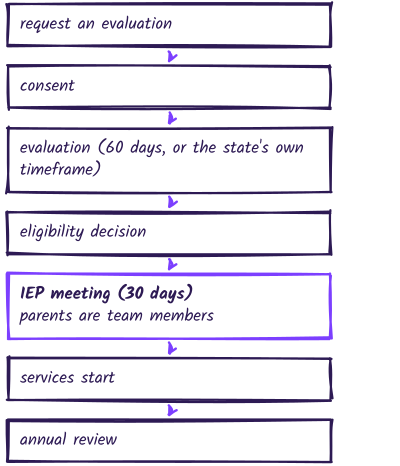
IEP (Individualized Education Program)
An IEP is a written plan for a public school student with a disability who needs special education, setting goals and listing services.
Definition →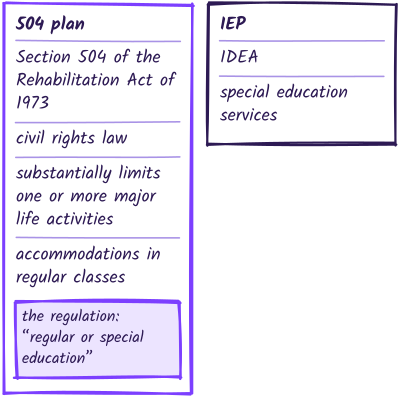
504 plan
A 504 plan sets out the supports a student with a disability needs at school, under Section 504, a federal civil rights law.
Definition →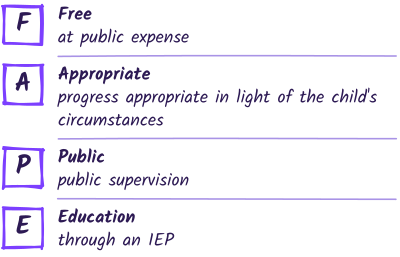
FAPE
FAPE (free appropriate public education) is an eligible child's right to special education and related services at public expense, through an individualized education program.
Definition →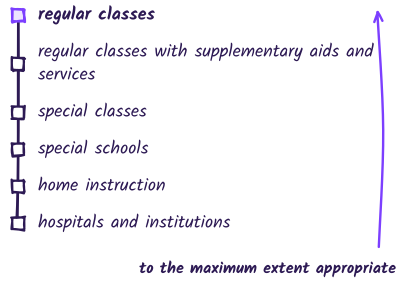
Least restrictive environment (LRE)
Least restrictive environment (LRE) is the special education rule that a child with a disability learns with children without disabilities as much as appropriate.
Definition →