

ABA Therapy Glossaryfor Parents
All termsLeast restrictive environment (LRE)
Least restrictive environment (LRE) is the special education rule that a child with a disability learns with children without disabilities as much as appropriate.
What it means
The least restrictive environment (LRE) is a rule in the Individuals with Disabilities Education Act (IDEA). It says a child with a disability should learn with children without disabilities as much as is appropriate for that child. A more separate setting is used only when your child's needs mean regular classes can't work well enough, even with extra aids and services. That might be a special class, a special school or teaching at home.
The U.S. Department of Education calls this a strong preference, not a mandate, for regular classes. Schools must still keep more separate options open. They also have to weigh any possible harm to your child or to the services they need. So LRE is a way of choosing a setting, not one fixed place. The regular setting includes lunch and recess as well as the classroom.
What it looks like for your child
A team that includes you decides your child's placement at least once a year. The choice is based on your child's individualized education program (IEP), not the disability label. The setting should also be as close to home as possible. Your child shouldn't be moved out of a regular class only because the curriculum needs changes. The IEP must say how much of the day, if any, your child will spend apart from classmates without disabilities.
What to ask your BCBA
- What was tried first: Ask the IEP team which aids and services, such as visual supports, were tried in the regular class before a more separate setting came up.
- Time apart from classmates: Ask how much of the day your child will spend apart from classmates without disabilities, and why.
- Your own notes: Ask your Board Certified Behavior Analyst (BCBA) which therapy data could help you at the IEP meeting.
Talking with the school about where your child learns?
A BCBA can walk you through your child's therapy data before you sit down to talk about placement.

Sources
- Cornell Legal Information Institute, 20 U.S. Code 1412, (a)(5).
- Electronic Code of Federal Regulations, 34 CFR 300.115, 34 CFR 300.116 and 34 CFR 300.320.
- Center for Parent Information and Resources (2022), LRE in placement decisions.
Related terms
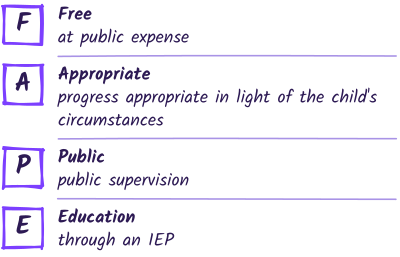
FAPE
FAPE (free appropriate public education) is an eligible child's right to special education and related services at public expense, through an individualized education program.
Definition →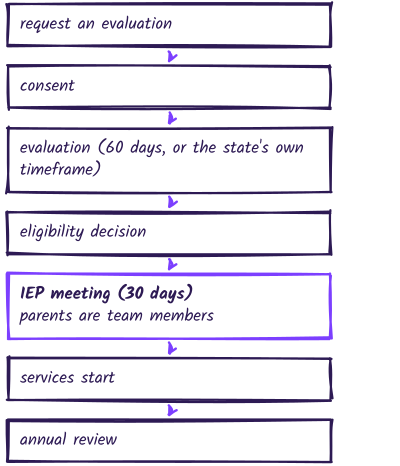
IEP (Individualized Education Program)
An IEP is a written plan for a public school student with a disability who needs special education, setting goals and listing services.
Definition →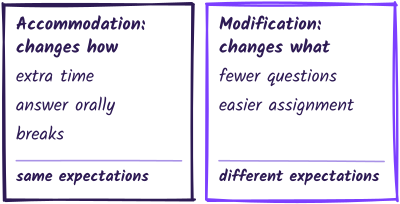
Accommodations vs modifications
Accommodations change how a child learns or shows what they know; modifications change what the child is expected to learn.
Definition →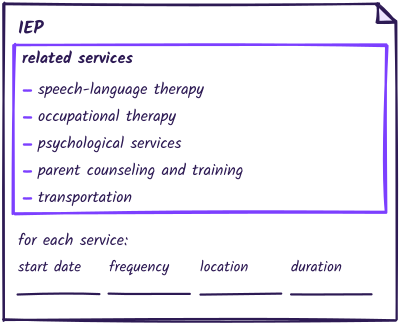
Related services (IEP)
Related services are supports a school provides through an IEP, such as speech or occupational therapy, so a child can benefit from special education.
Definition →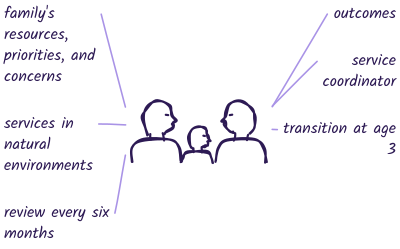
IFSP
An Individualized Family Service Plan (IFSP) is the written plan for early intervention services for a child under 3 and their family.
Definition →