

ABA Therapy Glossaryfor Parents
All termsRegression
In autism, regression means a child loses skills they already had, most often words or social skills, usually in the second year of life.
What it means
In autism, regression means a child loses skills they already had. It's most often words or social behaviors, like looking at faces, sharing smiles and making sounds toward people. It usually happens in the second year of life, and the loss can be sudden or gradual. The American Academy of Pediatrics (AAP) says about 25 percent of children later diagnosed may lose some words, though studies find different rates.
Regression is different from a plateau, where skills stop moving forward but aren't lost. Some autistic children show early differences from infancy instead, and some show a mix. Slow loss can be easy to miss, too. In one study, most parents didn't report a regression even when testing showed their child's social skills had faded. That's why watching for early signs of autism over time matters.
What it looks like for your child
Your child might stop using words they used to say, look at faces less, stop sharing smiles or seem more withdrawn. The Centers for Disease Control and Prevention (CDC) says to act early if your child has lost skills they once had. Talk to your child's doctor right away. Regression also shows up in other conditions, such as Rett syndrome, so a doctor needs to evaluate it. A screening is a starting point, not a diagnosis.
What to ask your BCBA
- What changed and when: Ask your child's doctor to look at which skills your child lost, when it started and whether it was sudden or gradual.
- Other causes: Ask whether your child needs testing for other conditions that involve skill loss, such as Rett syndrome.
- If your child is in therapy: Ask your Board Certified Behavior Analyst (BCBA) to share data on any lost skills, so you can bring it to the doctor.
Has your child stopped using words or skills they had?
Screening results can help you start the conversation with your child's doctor.

Sources
- Centers for Disease Control and Prevention (2026), CDC's Developmental Milestones.
- American Academy of Pediatrics, HealthyChildren.org (2025), 3 Early Signs of Autism.
- American Speech-Language-Hearing Association, Autism Practice Portal, Classification section.
- Ozonoff et al. (2010), Early behavioral signs of autism, Journal of the American Academy of Child and Adolescent Psychiatry 49(3).
Related terms
Autism spectrum disorder (ASD)
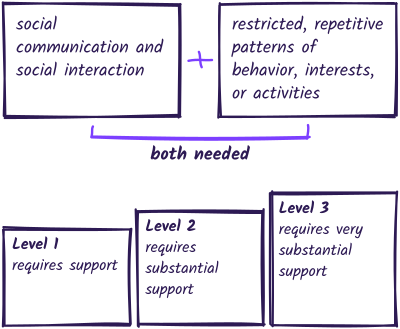
Autism spectrum disorder (ASD) is a neurological and developmental condition that affects how people communicate, interact with others, learn and behave.
Definition →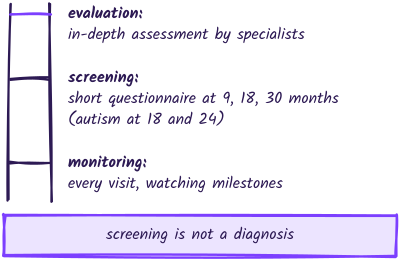
Developmental screening
Developmental screening is a short, standard check, often a parent questionnaire, that shows whether a child's development is on track or needs a closer look.
Definition →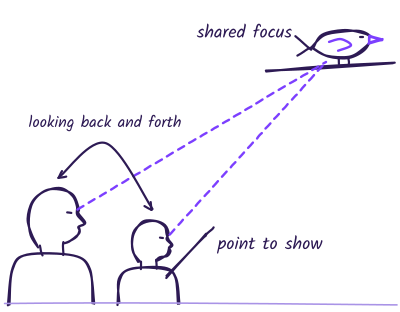
Joint attention
Joint attention is two people sharing focus on the same thing, like a child following a parent's point or pointing to show something.
Definition →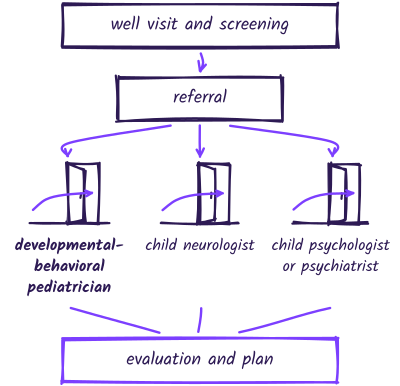
Developmental pediatrician
A developmental pediatrician is a children's doctor with three more years of specialty training who evaluates development, learning and behavior, including autism.
Definition →