

ABA Therapy Glossaryfor Parents
All termsDeductible, copay and out-of-pocket maximum
You pay the deductible before your plan starts paying, then usually a copay or coinsurance, up to a yearly out-of-pocket maximum for covered in-network care.
What it means
Your deductible is what you pay for covered care before your health plan starts to pay. After that, you usually pay a copay or coinsurance. A copay is a set amount for a service. Coinsurance is a share of the plan's allowed amount, which is the most your plan will pay for a covered service. Some plans pay for certain services before you meet the deductible.
The out-of-pocket maximum is the most you have to pay for covered services in a plan year. It counts your deductible, copays and coinsurance for in-network care. Once you reach it, your plan pays the full cost of covered benefits for the rest of that plan year. Your monthly premiums don't count, and neither do out-of-network care or services your plan doesn't cover.
What it looks like for your child
Applied behavior analysis (ABA) is billed in 15-minute units, so your child's claims show units of time, not hours. Whether you owe a copay per visit or coinsurance on each unit depends on your plan. Each explanation of benefits (EOB) shows how much you've paid toward your deductible and maximum. Those pieces shape what ABA therapy costs your family.
Your deductible starts over each plan year, which may not match the calendar year. If your child is on Medicaid, costs work differently, since it's free or low-cost coverage with its own rules for ABA.
What to ask your BCBA
- Ask your plan about ABA cost sharing: Ask your plan whether ABA has a copay per visit, per day or per code, or coinsurance on each unit.
- Ask when your plan year starts: Ask your plan for the date your deductible and maximum start over.
- Ask about out-of-network costs: Ask your plan whether out-of-network care has its own deductible or limit.
Wondering how your deductible and copays apply to ABA?
Check your plan year, deductible and out-of-pocket maximum before therapy starts, then find your BCBA.

Sources
- HealthCare.gov glossary: Deductible, Copayment, Coinsurance and Allowed amount.
- HealthCare.gov glossary: Out-of-pocket maximum/limit, Plan year and Medicaid.
- Centers for Medicare & Medicaid Services (2026), Medicaid ABA Toolkit, Appendix D, p. 161.
Related terms

Explanation of benefits (EOB)
An explanation of benefits (EOB) is a statement your health plan sends after a claim, showing what it paid and what you may owe.
Definition →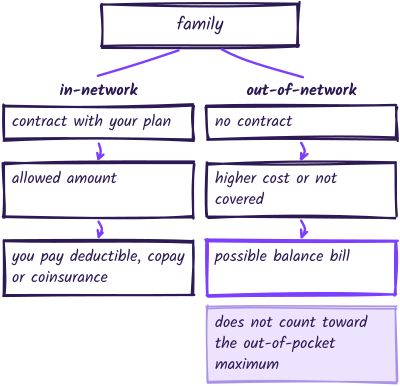
In-network vs out-of-network
An in-network provider has a contract with your health plan, while an out-of-network provider doesn't, which usually means you pay more.
Definition →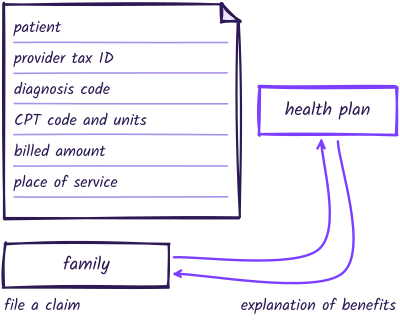
Superbill
A superbill is an itemized receipt from an out-of-network provider that you can send to your health plan to ask for reimbursement.
Definition →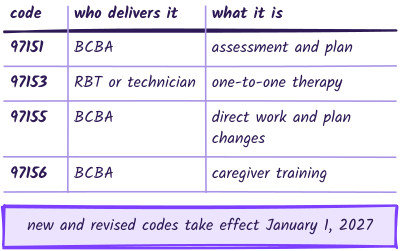
CPT codes for ABA
CPT (Current Procedural Terminology) codes are the billing codes on claims, and ABA uses a set billed in 15-minute units, with changes starting January 2027.
Definition →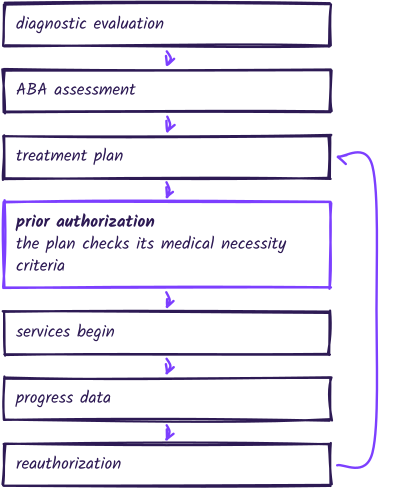
Medical necessity and prior authorization
Medical necessity means care is needed to diagnose or treat a condition, and prior authorization is your plan's approval of a service before it begins.
Definition →