

ABA Therapy Glossaryfor Parents
All termsExtinction and extinction burst
Extinction means a behavior stops getting the payoff that kept it going; an extinction burst is a short rise in that behavior before it drops.
What it means
In applied behavior analysis (ABA), extinction means the payoff that kept a behavior going stops coming. The payoff might be attention, a break from a task or a favorite item. Once it's gone, the behavior happens less over time. It depends on knowing the payoff, so your child's behavior analyst finds that out first with an assessment.
An extinction burst is a short rise in the behavior right after the payoff stops. Bursts that do happen tend to show up early, before the behavior starts to drop. One large autism report calls bursts common, while a 2023 review says estimates of how often they happen vary a lot. That report also says extinction shouldn't be used alone. In one older study, side effects were less common when it was part of a larger plan. Some autism rights and neurodiversity advocates have raised concerns about extinction, too.
What it looks like for your child
Say your child yells at dinner, and the assessment shows the yelling gets your attention. With extinction, adults might stop answering the yelling. At the same time, they'd give your child lots of attention for asking in a calm voice. The yelling may get worse for a bit before it fades, and that rise is the burst. Don't start this on your own, especially with behavior that could hurt someone. It belongs inside a plan your child's behavior analyst writes and explains.
What to ask your BCBA
- What the behavior gets: Ask your Board Certified Behavior Analyst (BCBA) which payoff the assessment found and how they worked it out.
- What gets taught instead: Ask which new skill will earn the same payoff, since extinction shouldn't be used alone.
- The plan for a burst: Ask what you and the Registered Behavior Technician (RBT) should do if the behavior rises at first, and whether parent training covers it.
Worried a burst is coming?
A BCBA plans for it before it starts, and shows you what to do at home.

Sources
- Steinbrenner et al. (2020), UNC Frank Porter Graham Institute (NCAEP), autism practices report, extinction fact sheet, p. 85.
- Fisher, Greer, Shahan and Norris (2023), research on extinction bursts, Journal of Applied Behavior Analysis 56(1).
- Lerman, Iwata and Wallace (1999), side effects of extinction, Journal of Applied Behavior Analysis 32(1).
- Leaf et al. (2022), concerns about ABA-based intervention, Journal of Autism and Developmental Disorders 52(6).
Related terms
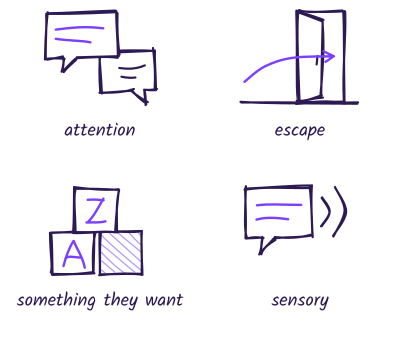
Functions of behavior
A behavior's function is the payoff that keeps it going, like attention, escape from a demand, an item, or a reward the behavior creates itself.
Definition →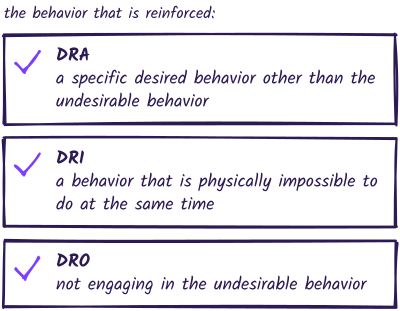
Differential reinforcement
Differential reinforcement means giving positive consequences for a chosen behavior, or for not doing a problem behavior, so the better behavior grows.
Definition →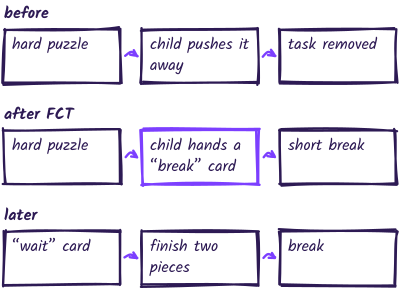
Functional communication training (FCT)
Functional communication training (FCT) teaches a child a clear way to ask for what a challenging behavior was getting them.
Definition →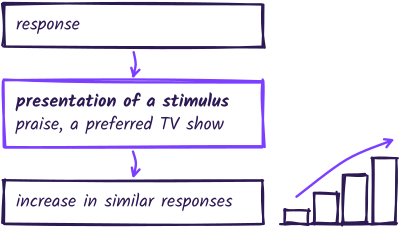
Positive reinforcement
Positive reinforcement happens when something is added after a behavior, like praise or a favorite activity, and the behavior then happens more often.
Definition →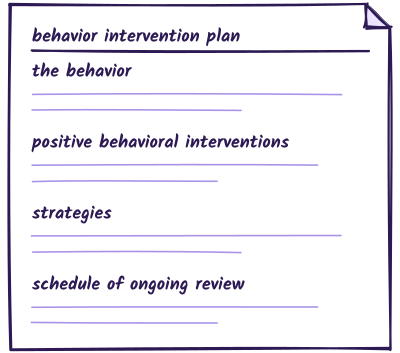
Behavior intervention plan (BIP)
A behavior intervention plan (BIP) is a written plan that names a behavior of concern and the positive strategies used to address it.
Definition →