

ABA Therapy Glossaryfor Parents
All termsDifferential reinforcement
Differential reinforcement means giving positive consequences for a chosen behavior, or for not doing a problem behavior, so the better behavior grows.
What it means
Differential reinforcement is a teaching method in applied behavior analysis (ABA). It builds a better behavior by giving positive consequences for it. Your child gets something they value, such as attention, a break or a toy, after the behavior the team chose. Its main job is building the new behavior, though it can also make a problem behavior less common.
The reward can follow a different behavior, like asking for a break. It can follow a behavior your child can't do at the same time as the problem one, or stretches without the problem behavior. The best choice gets your child the same thing the problem behavior did. That's why plans usually start by finding out what that is. Some plans also stop rewarding the problem behavior, a step called extinction, and some don't, since that isn't always possible.
What it looks like for your child
Say your child hits to get out of a hard task. Your child's Registered Behavior Technician (RBT) might teach them to ask for a break instead. When your child asks, they get the break. It's often paired with prompts so your child can succeed with the new behavior. Your Board Certified Behavior Analyst (BCBA) designs the plan and checks the data, and the RBT carries it out in sessions.
What to ask your BCBA
- The new behavior: Ask which behavior your child is learning instead and what they get for using it.
- The reason behind it: Ask whether the new behavior gets your child the same thing the problem behavior did.
- When the old behavior happens: Ask what the team does if the problem behavior still happens and whether extinction is part of the plan.
Want your child to learn a better way to get what they need?
A BCBA picks a new skill that earns the same thing the old behavior did.

Sources
- National Clearinghouse on Autism Evidence and Practice (Steinbrenner et al., 2020), Evidence-based practices report, pp. 28 and 75.
- Council of Autism Service Providers (2014, 2020), ABA practice guidelines, 2nd edition, pp. 12 to 13.
- Athens and Vollmer (2010), Journal of Applied Behavior Analysis, introduction.
- Behavior Analyst Certification Board: RBT Test Content Outline, D.3, and BCBA Test Content Outline, G.2.
Related terms
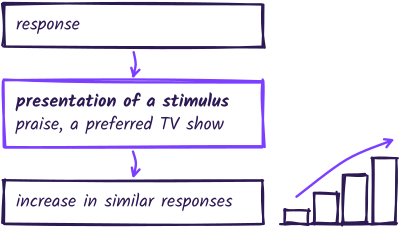
Positive reinforcement
Positive reinforcement happens when something is added after a behavior, like praise or a favorite activity, and the behavior then happens more often.
Definition →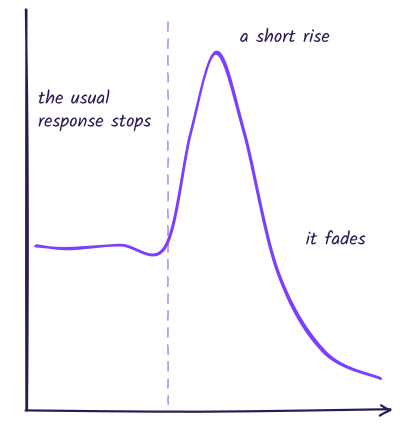
Extinction and extinction burst
Extinction means a behavior stops getting the payoff that kept it going; an extinction burst is a short rise in that behavior before it drops.
Definition →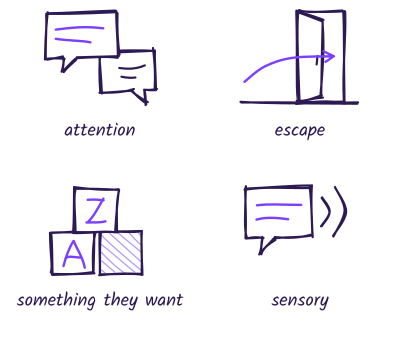
Functions of behavior
A behavior's function is the payoff that keeps it going, like attention, escape from a demand, an item, or a reward the behavior creates itself.
Definition →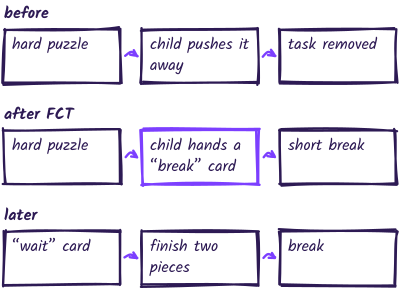
Functional communication training (FCT)
Functional communication training (FCT) teaches a child a clear way to ask for what a challenging behavior was getting them.
Definition →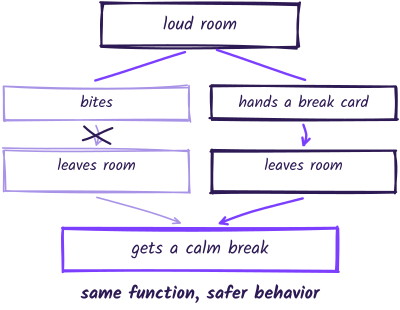
Replacement behavior
A replacement behavior is a safer, more useful action taught in place of a challenging behavior, chosen to meet the same need.
Definition →