

ABA Therapy Glossaryfor Parents
All termsStimming
Stimming, short for self-stimulating behavior, is a repeated movement or sound, such as hand flapping, rocking, spinning or humming.
What it means
Stimming is short for self-stimulating behavior. It's a repeated movement or sound, usually with a rhythm, like hand flapping, rocking, spinning or humming. Most people stim a little, such as tapping or twirling their hair, but autistic people may stim more. Behavior analysts often call it stereotypy. They look at what a stim does for a child, which isn't always about how it feels.
U.S. health officials list hand flapping, rocking and spinning among the signs of autism. Still, stimming alone doesn't mean a child is autistic. In one study, autistic adults said stimming helps them calm down and also communicate. The National Autistic Society sees no reason to prevent harmless stimming, while Leaf and colleagues say behavior analysts will likely be required to address it and should aim for more options, not conformity.
What it looks like for your child
Your child might flap their hands when excited or rock when a room gets loud. Stimming often goes up with stress, excitement or sensory overload. Many autistic people say it helps them cope. It can be hard to tell apart from obsessive-compulsive behavior. If a stim causes injury, or your child seems upset instead of soothed, raise it with your child's clinicians.
What to ask your BCBA
- What the stim does: Ask your Board Certified Behavior Analyst (BCBA) what your child's stimming seems to do for them, since the reason can vary.
- Goals about stimming: If any goal targets stimming, ask why and how it gives your child more options.
- Safety concerns: If a stim causes injury, ask what safe options the team can offer that meet the same need.
Noticing hand flapping, rocking or spinning?
A short screener helps you decide whether to talk with your pediatrician about autism.

Sources
- Centers for Disease Control and Prevention, Signs and Symptoms of Autism.
- National Autistic Society, Repeated movements and behaviour (stimming).
- Kapp et al. (2019), autistic adults' views of stimming, Autism 23(7).
- Leaf et al. (2022), concerns about ABA-based intervention, Journal of Autism and Developmental Disorders 52(6).
Related terms
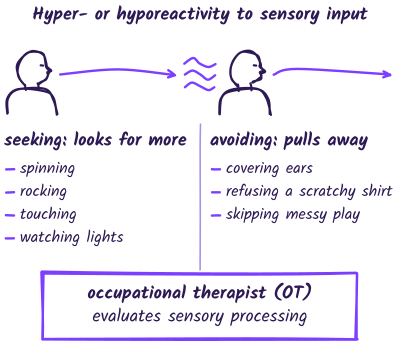
Sensory seeking and sensory avoiding
Sensory seeking is looking for more sensory input, like rocking or touching things; sensory avoiding is pulling away from input that feels like too much.
Definition →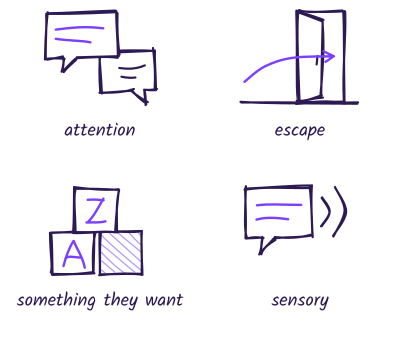
Functions of behavior
A behavior's function is the payoff that keeps it going, like attention, escape from a demand, an item, or a reward the behavior creates itself.
Definition →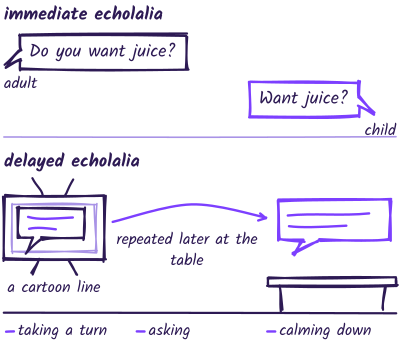
Echolalia
Echolalia is repeating words or phrases that someone else said, either right after hearing them or much later.
Definition →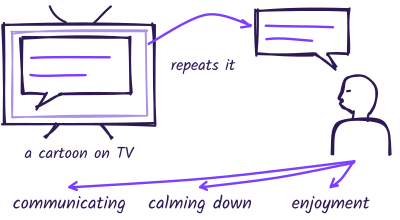
Scripting
Scripting is when a child repeats lines heard earlier, from TV shows, movies, songs or past conversations, often called delayed echolalia.
Definition →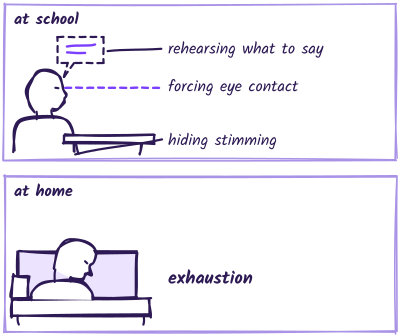
Masking
Masking, also called camouflaging, is when an autistic person hides or makes up for autistic traits, on purpose or not, to appear non-autistic.
Definition →