

ABA Therapy Glossaryfor Parents
All termsIntraverbal
An intraverbal is answering someone's words with different words, like finishing a song line, answering a question or replying in a conversation.
What it means
In applied behavior analysis (ABA), an intraverbal is an answer to someone's words that doesn't copy what they said. Nothing in view prompts it, either. Finishing "ready, set..." with "go" is one example. Answering "What's your name?" and replying when someone talks to you count, too, and the answer can be spoken, signed or typed.
Fill-ins and songs tend to come first. Answering questions and back-and-forth talk come later and are harder. Many children with autism learn simple fill-ins but find conversation hard, since they have to respond to several cues at once. In one study, autistic children made the same kinds of errors as children without autism at the same language level. Research is mixed on whether these skills need to be taught directly or can grow out of naming and listening.
What it looks like for your child
Your child might fill in "star" when you sing "Twinkle, twinkle, little," answer "moo" when you ask what a cow says, or tell you about their day. It's also different from echoing. If you ask "What's your name?" and your child repeats the question, that's an echo, while saying their name is an intraverbal.
What to ask your BCBA
- Where your child is now: Ask your Board Certified Behavior Analyst (BCBA) which kinds of intraverbals your child already uses, from fill-ins to answering questions.
- Speech and ABA together: Ask how the team will share conversation goals with your child's speech therapist.
- Older kids and conversation: If your child is older, ask how conversation goals connect to any social skills work.
Can your child finish a song but not answer a question yet?
A BCBA can find where your child's language skills are today and plan the steps that come next.

Sources
- Sautter and LeBlanc (2006), Skinner's verbal behavior research, The Analysis of Verbal Behavior 22(1).
- Sundberg and Sundberg (2011), Intraverbal behavior in children, The Analysis of Verbal Behavior 27(1).
- Aguirre, Valentino and LeBlanc (2016), Intraverbal research, 2005 to 2015, The Analysis of Verbal Behavior 32(2).
- Sundberg, The VB-MAPP, author page.
Related terms
Mand (manding)
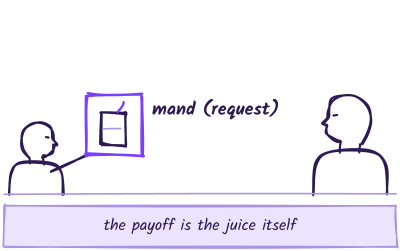
A mand is a request: your child communicates what they want right now, and the payoff is getting that exact thing.
Definition →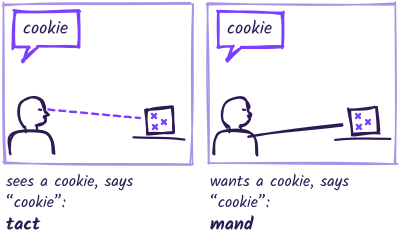
Tact (tacting)
A tact is naming or describing something your child notices, like a dog or a loud noise, for a social payoff such as your smile.
Definition →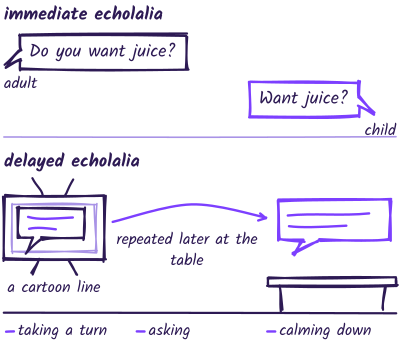
Echolalia
Echolalia is repeating words or phrases that someone else said, either right after hearing them or much later.
Definition →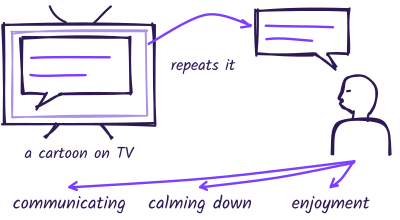
Scripting
Scripting is when a child repeats lines heard earlier, from TV shows, movies, songs or past conversations, often called delayed echolalia.
Definition →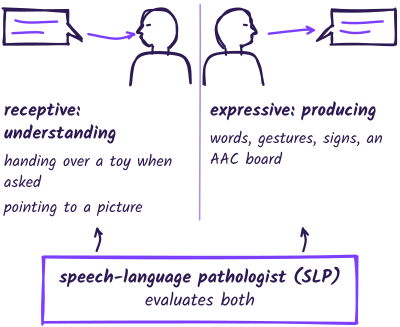
Receptive and expressive language
Receptive language is understanding what others say, and expressive language is sharing thoughts and needs through words, gestures, signs or writing.
Definition →