

ABA Therapy Glossaryfor Parents
All termsIEP (Individualized Education Program)
An IEP is a written plan for a public school student with a disability who needs special education, setting goals and listing services.
What it means
An individualized education program (IEP) is a written plan for a public school student with a disability who needs special education. Federal special education law requires it. The plan says how your child is doing now and sets measurable yearly goals. It also lists the services and supports the school will give, such as speech therapy, and how progress will be reported.
A team writes the IEP, and you're on it. The team also includes a special education teacher, a school district representative and someone who can explain test results. It reviews the plan at least once a year. For an IEP, autism has to affect how your child does in school, and your child has to need special education because of it. So a diagnosis alone doesn't guarantee one.
What it looks like for your child
Getting an IEP starts with a school evaluation, and you can ask for one. Federal rules give the school 60 days from your consent to finish it, unless your state sets its own timeline. Saying yes to the evaluation isn't saying yes to services. If you disagree with the results, you can ask for an independent educational evaluation.
If your child is found eligible, the first IEP meeting must be held within 30 days. You can bring people who know your child, such as a private therapist. Eligible children under 3 get an individualized family service plan (IFSP) through early intervention instead.
What to ask your BCBA
- Ask the school about timing: Ask the school what its evaluation timeline is, since states can set their own.
- Ask about progress reports: Ask how often you'll get progress reports on each goal.
- Ask your behavior analyst: Ask your Board Certified Behavior Analyst (BCBA) what from therapy might help you prepare for the IEP meeting.
Working on an IEP and want ABA support at home too?
Ask your BCBA for progress notes you can bring to the next school meeting.

Sources
- Electronic Code of Federal Regulations, 34 CFR 300.320 (IEP contents), 34 CFR 300.321 (IEP team) and 34 CFR 300.8 (autism under IDEA).
- Electronic Code of Federal Regulations, 34 CFR 300.301 (initial evaluations) and 34 CFR 300.323 (when IEPs start).
- U.S. Department of Education, A Guide to the IEP, archived copy.
- Center for Parent Information and Resources (2022), IEP overview.
Related terms
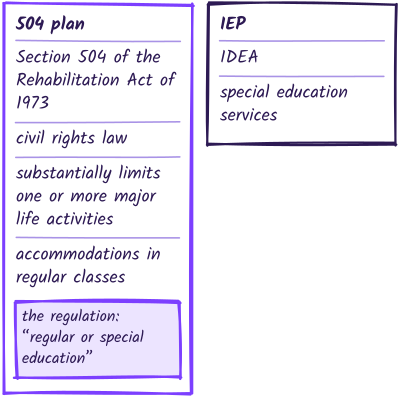
504 plan
A 504 plan sets out the supports a student with a disability needs at school, under Section 504, a federal civil rights law.
Definition →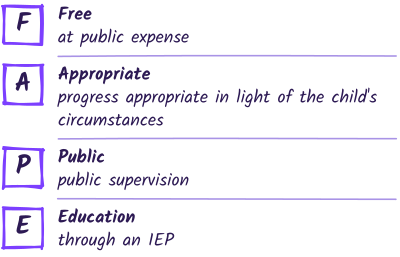
FAPE
FAPE (free appropriate public education) is an eligible child's right to special education and related services at public expense, through an individualized education program.
Definition →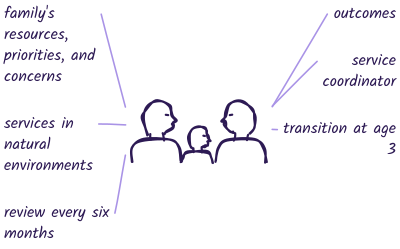
IFSP
An Individualized Family Service Plan (IFSP) is the written plan for early intervention services for a child under 3 and their family.
Definition →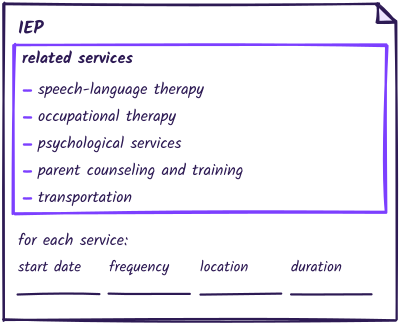
Related services (IEP)
Related services are supports a school provides through an IEP, such as speech or occupational therapy, so a child can benefit from special education.
Definition →
Functional behavior assessment (FBA)
A functional behavior assessment (FBA) is a structured process for working out why a specific behavior happens, so the team can plan better alternatives.
Definition →