

ABA Therapy Glossaryfor Parents
All termsABA therapy
ABA (applied behavior analysis) therapy uses principles of learning and behavior to teach skills, mainly through positive reinforcement and measured progress.
What it means
ABA stands for applied behavior analysis. It uses the science of behavior to build skills that matter in daily life. That science starts from the idea that behavior is shaped by what happens around us. In therapy, ABA builds up wanted behaviors and cuts back unwanted ones. It does this mainly through positive reinforcement, and the team tracks progress as it goes.
ABA isn't one fixed program. Early forms leaned on very structured teaching. Over time, ABA moved toward more natural teaching in daily life. A certified behavior analyst designs the plan and oversees it. Trained behavior technicians often work with your child in sessions. Parents get training, too, so skills carry over at home.
The Centers for Disease Control and Prevention says behavioral approaches have the most evidence for autism, while a 2026 Medicaid toolkit says ABA isn't the only option. Some autism rights and neurodiversity advocates have also raised concerns about ABA.
What it looks like for your child
ABA starts with an assessment and a written plan with goals for your child. Sessions might mix short, structured lessons with teaching built into your child's day. Your child earns praise or a reward for using new skills. The team takes data to see what's working. You'll also learn ways to practice the same skills at home.
What to ask your BCBA
- The teaching approach: Ask your Board Certified Behavior Analyst (BCBA) how much of the plan uses structured teaching and how much happens in daily routines.
- Measuring progress: Ask how progress is measured and how often you'll review it together.
- Your part in it: Ask what parent training is included and how it fits your family's routines.
Wondering if ABA is the right fit for your child?
A BCBA assesses your child first and walks you through the plan before sessions begin.

Sources
- Behavior Analyst Certification Board (BACB), About Behavior Analysis.
- Centers for Disease Control and Prevention (CDC), autism treatment and intervention, last reviewed May 16, 2024.
- Centers for Medicare & Medicaid Services (CMS), Medicaid ABA Toolkit, pp. 10 to 13 (August 2026).
- Leaf et al. (2022), concerns about ABA-based intervention, Journal of Autism and Developmental Disorders 52(6).
Related terms
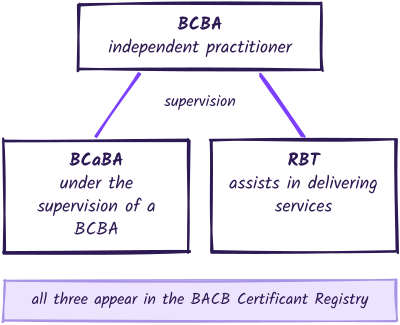
BCBA
A BCBA (Board Certified Behavior Analyst) holds a graduate-level certification and designs and oversees ABA programs, including supervising behavior technicians.
Definition →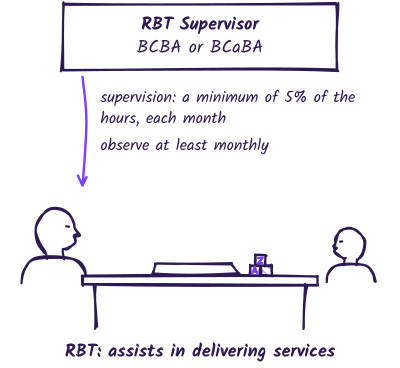
RBT (behavior technician)
An RBT (Registered Behavior Technician) is a certified paraprofessional who delivers day-to-day ABA sessions under close supervision from a BCBA or BCaBA.
Definition →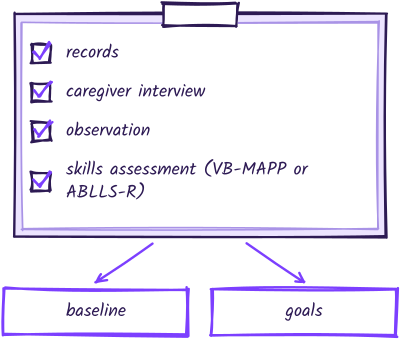
ABA assessment (VB-MAPP, ABLLS-R)
An ABA assessment is how a BCBA measures your child's strengths, missing skills and barriers to learning before writing a treatment plan.
Definition →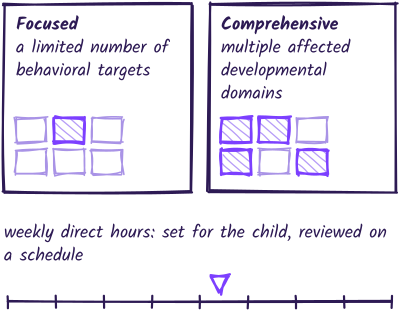
Treatment plan (comprehensive vs focused ABA)
An ABA treatment plan is the written, individualized plan your BCBA builds before services start, setting goals, methods, weekly hours and a review schedule.
Definition →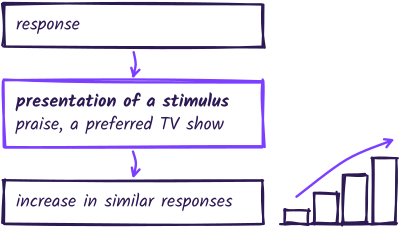
Positive reinforcement
Positive reinforcement happens when something is added after a behavior, like praise or a favorite activity, and the behavior then happens more often.
Definition →