

ABA Therapy Glossaryfor Parents
All termsPairing
Pairing is time a therapist spends becoming someone a child enjoys, through play and favorite things with few or no demands, before teaching starts.
What it means
In applied behavior analysis (ABA), pairing usually means a therapist spends time becoming someone your child enjoys. Before teaching starts, the therapist joins your child's play, copies what they do and offers favorite toys and activities. They ask little or nothing of your child during this time. The aim is for therapy to feel like things getting better for your child, not worse. The idea is that something neutral, like a new person or praise, gains value when paired with things your child already likes.
Pairing is often recommended, but it has less research behind it than you might guess. Lugo and colleagues found no step-by-step definition to copy. Fanning Tacoaman and colleagues report few studies on how staff learn to do it. The word has a second meaning, too. Stimulus-stimulus pairing is a separate method that aims to encourage early speech sounds.
What it looks like for your child
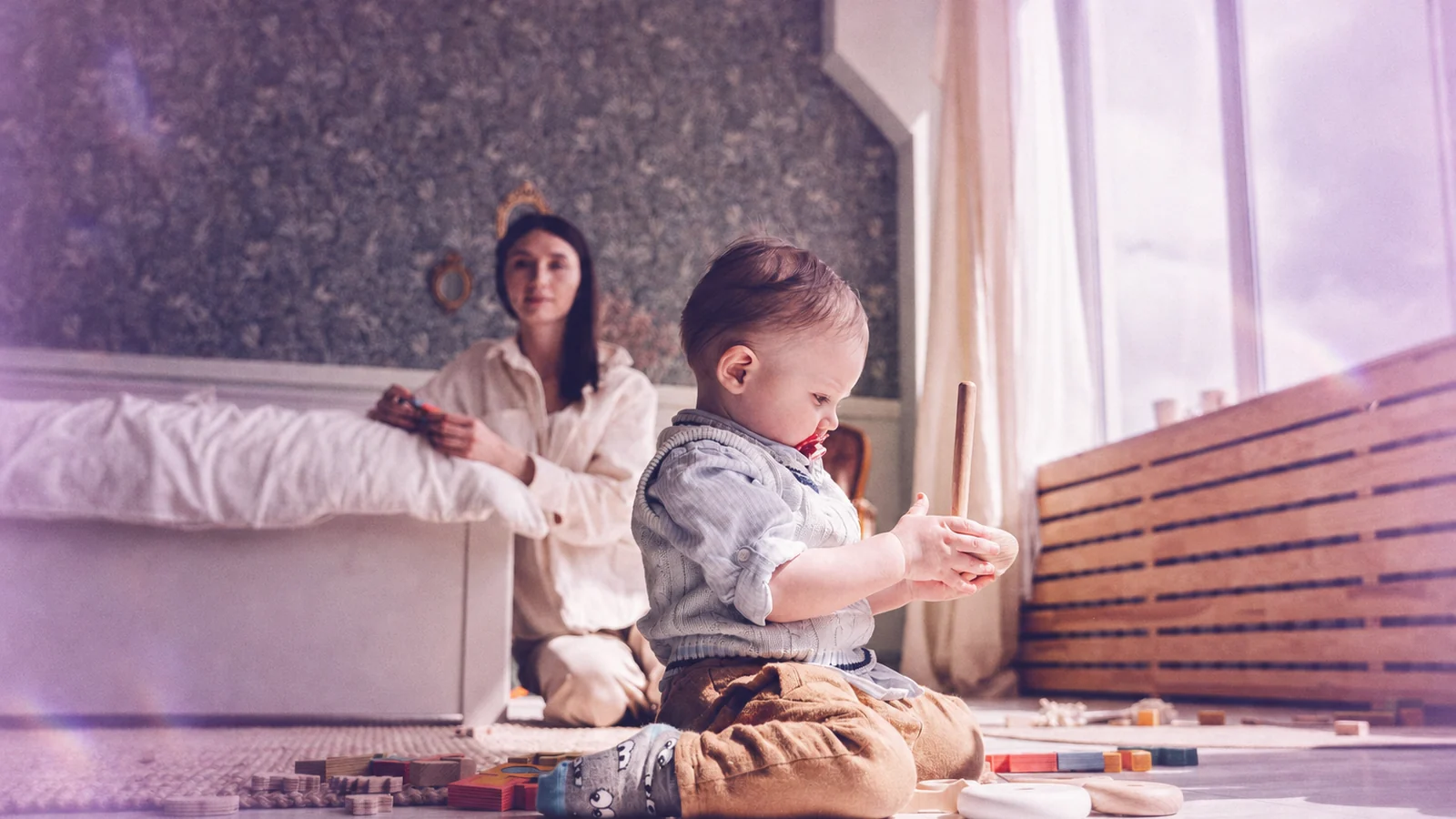
In your child's first ABA sessions, it may look like the therapist is just playing, but that play is on purpose. The goal is for your child to be happy to come to sessions and see their therapist. You can help by telling the team about favorite toys, shows, songs and snacks. ABA teams also run formal preference assessments to find what your child likes.
What to ask your BCBA
- How often it happens: Ask your Board Certified Behavior Analyst (BCBA) whether pairing happens before every session or mostly early on.
- When teaching begins: Ask when teaching will start and how pairing fits into the first months of therapy.
- What your child loves: Ask how you can share your child's favorite things, and how the team will use them.
Wondering why the first sessions look like play?
A BCBA explains how the team gets to know your child before any teaching starts.
Sources
- Lugo, King, Lamphere and McArdle (2017), therapist-child rapport in early intervention, Behavior Analysis in Practice 10(4).
- Fanning Tacoaman, Rosales and Shvarts (2024), teaching pairing procedures, Journal of Applied Behavior Analysis 57(4), abstract.
- American Psychological Association, APA Dictionary of Psychology, "secondary reinforcement."
- Behavior Analyst Certification Board (BACB), RBT Test Content Outline (3rd ed.), B.1 and C.2.
Related terms
Positive reinforcement
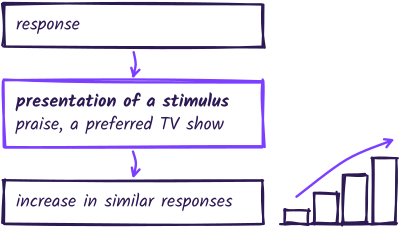
Positive reinforcement happens when something is added after a behavior, like praise or a favorite activity, and the behavior then happens more often.
Definition →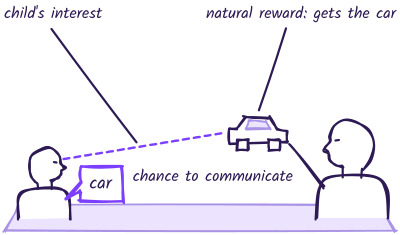
Natural environment teaching (NET)
Natural environment teaching (NET) is ABA teaching built into play and daily routines, using a child's interests and natural rewards.
Definition →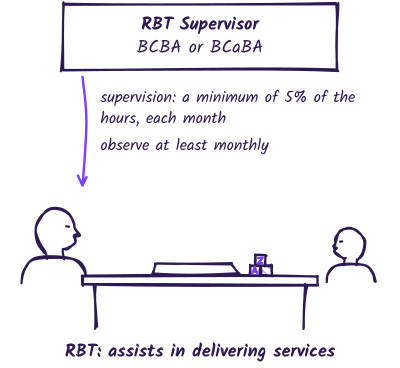
RBT (behavior technician)
An RBT (Registered Behavior Technician) is a certified paraprofessional who delivers day-to-day ABA sessions under close supervision from a BCBA or BCaBA.
Definition →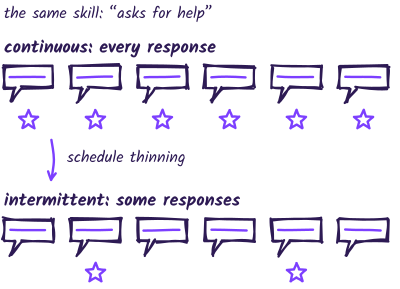
Reinforcement schedules
A reinforcement schedule is the rule for which times a behavior earns a reinforcer: every time (continuous) or only some times (intermittent).
Definition →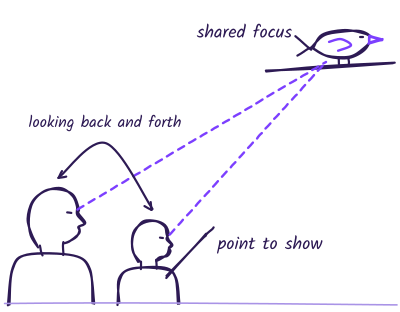
Joint attention
Joint attention is two people sharing focus on the same thing, like a child following a parent's point or pointing to show something.
Definition →