

ABA Therapy Glossaryfor Parents
All termsDevelopmental screening
Developmental screening is a short, standard check, often a parent questionnaire, that shows whether a child's development is on track or needs a closer look.
What it means
Developmental screening is a short, formal check of how your child is developing, often a questionnaire you fill out. It's more formal than developmental monitoring, which is the ongoing watching of your child's skills at checkups. The American Academy of Pediatrics (AAP) schedule lists screening at the 9, 18 and 30 month visits, plus autism screening at 18 and 24 months. An AAP parent page also lists 48 months. Screening should also happen any time you or your doctor have a concern.
Screening doesn't diagnose anything. A positive autism screen doesn't mean your child will be diagnosed, and a negative one doesn't rule autism out. If a screen finds a concern, the next step is a developmental evaluation. That's a longer look by specialists such as a developmental pediatrician or child psychologist.
What it looks like for your child
Screening can happen at your doctor's office or in a community or school setting. A common autism screener in pediatric offices is the M-CHAT-R/F, a 23-point questionnaire parents fill out. The AAP doesn't endorse one tool over another. If your child's doctor hasn't done a screening, you can ask for one, and you don't have to wait if you've noticed early signs of autism. For children under 3, you can also ask your state's early intervention program for an evaluation.
What to ask your BCBA
- Ask your child's doctor: Ask which screening tool they use and what your child's result means.
- Ask about next steps: If a screen shows a concern, ask who does the developmental evaluation and how to get a referral.
- Ask about timing: Ask whether your child is due for a screen, even if no one has raised a concern.
Have a concern about your child's development?
You can screen any time you have a concern, then take the results to your child's doctor.

Sources
- Centers for Disease Control and Prevention (2025), Screening for Autism Spectrum Disorder.
- American Academy of Pediatrics and Bright Futures (2025), Periodicity schedule.
- American Academy of Pediatrics, HealthyChildren.org: How Pediatricians Screen for Autism and Assessing Developmental Delays.
- Electronic Code of Federal Regulations, 34 CFR 303.320 (early intervention screening).
Related terms
ADOS-2
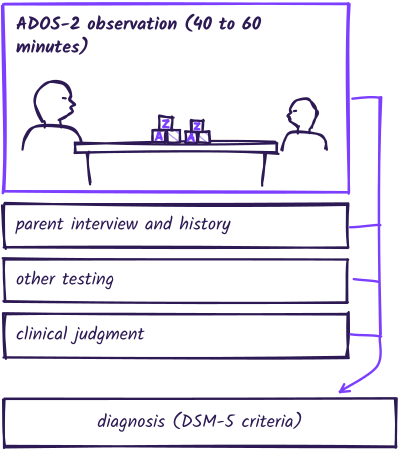
The Autism Diagnostic Observation Schedule, Second Edition (ADOS-2) is a standardized observation that clinicians use as one part of an autism evaluation.
Definition →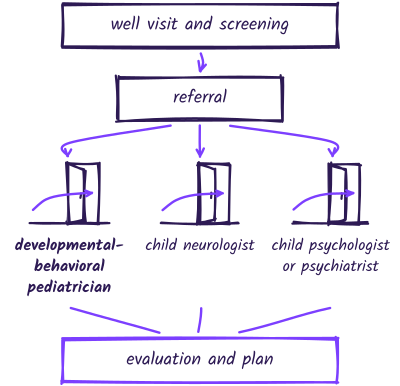
Developmental pediatrician
A developmental pediatrician is a children's doctor with three more years of specialty training who evaluates development, learning and behavior, including autism.
Definition →
DSM-5-TR autism criteria
The DSM-5-TR autism criteria are the rules clinicians use to diagnose autism, covering social communication plus repetitive behaviors, interests or sensory responses.
Definition →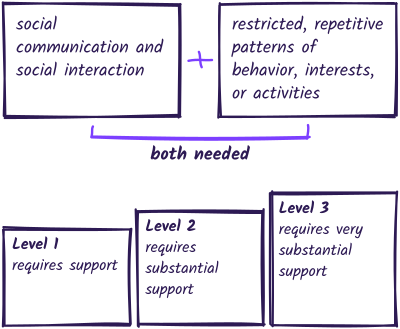
Autism spectrum disorder (ASD)
Autism spectrum disorder (ASD) is a neurological and developmental condition that affects how people communicate, interact with others, learn and behave.
Definition →