

ABA Therapy Glossaryfor Parents
All termsScripting
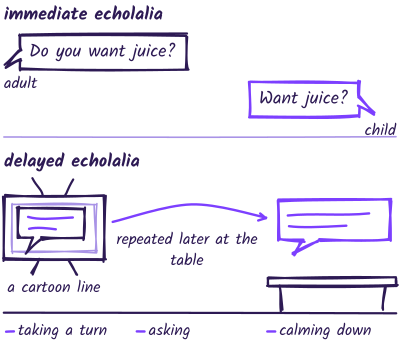
Scripting is when a child repeats lines heard earlier, from TV shows, movies, songs or past conversations, often called delayed echolalia.
What it means
Scripting is when your child repeats lines they heard earlier, from TV shows, movies, songs or people important to them. It can happen long after they first heard the line. Clinicians often call it delayed echolalia. It's one of the repeated behaviors seen in autism. Still, repeated phrases alone don't mean a child is autistic.
Repeated speech can serve different purposes, such as taking turns, labeling, asking for things, agreeing or protesting. It can also help with calming or just be fun. Some behavior analysis studies aim to reduce echolalia, while the American Speech-Language-Hearing Association and Cohn and colleagues argue against trying to stop all of it. The word has a second meaning too. The National Autistic Society uses it for planning what to say ahead of time, which it lists as a kind of masking.
What it looks like for your child
Your child might repeat a TV show line loudly and often, or say a movie line at a moment that seems unrelated. That line may carry a message. A movie line at bedtime, for example, might be your child's way of saying they're tired. Other times, a line may be for comfort or fun. A speech-language pathologist (SLP) looks at what your child's scripting is for and why, since its purpose can vary.
What to ask your BCBA
- What it does for your child: Ask your Board Certified Behavior Analyst (BCBA) what your child's scripting seems to do for them, such as asking, protesting or calming.
- Working with speech therapy: Ask how your child's ABA and speech therapy teams will look at scripting together.
- Goals around scripting: If a goal targets scripting, ask why and what your child gains from the change.
Hearing the same movie lines over and over?
A short screener can help you decide whether to bring it up with your child's doctor.

Sources
- American Speech-Language-Hearing Association, Autism, Practice Portal.
- Cohn et al. (2022), Repeating purposefully.
- Edelstein, Sloman and Selver (2021), echolalia in students with autism.
- National Autistic Society, Masking.
Related terms
Echolalia
Echolalia is repeating words or phrases that someone else said, either right after hearing them or much later.
Definition →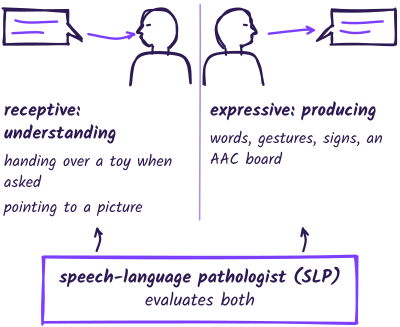
Receptive and expressive language
Receptive language is understanding what others say, and expressive language is sharing thoughts and needs through words, gestures, signs or writing.
Definition →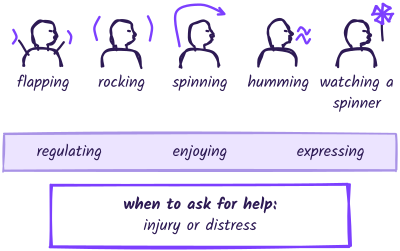
Stimming
Stimming, short for self-stimulating behavior, is a repeated movement or sound, such as hand flapping, rocking, spinning or humming.
Definition →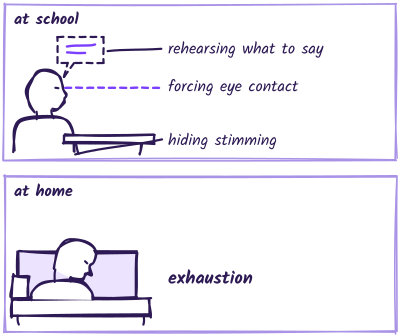
Masking
Masking, also called camouflaging, is when an autistic person hides or makes up for autistic traits, on purpose or not, to appear non-autistic.
Definition →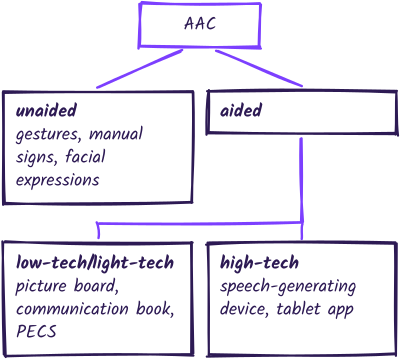
AAC (augmentative and alternative communication)
Augmentative and alternative communication (AAC) is any way of communicating that adds to speech or stands in for it, from gestures to speech devices.
Definition →