

ABA Therapy Glossaryfor Parents
All termsMedicaid waiver
A Medicaid waiver is a state program that pays for extra home and community supports for people who'd otherwise need institutional-level care.
What it means
A Medicaid waiver is a state program that pays for extra supports at home and in the community. Usually this means a 1915(c) home and community-based services (HCBS) waiver. It serves people who would otherwise need the level of care given in an institution. Each state runs its own waivers, with their own names, rules and services. States use other kinds of waivers too.
States can target a waiver by age or diagnosis, and some have waivers just for autism. A waiver can let a child qualify even when a parent's income is too high for regular Medicaid. States also cap how many people a waiver serves, so many have waiting lists. Waiver services can include case management, personal care and respite care. They follow a written plan built around the person.
What it looks like for your child
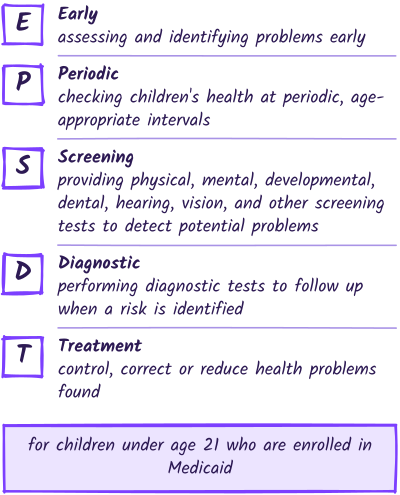
If your child already has Medicaid, you don't need a waiver to ask for applied behavior analysis (ABA). For children under 21, the main route is the regular state plan. There, Medicaid's EPSDT benefit (Early and Periodic Screening, Diagnostic, and Treatment) covers services that are medically necessary.
Some waivers, like one in California, include ABA-based services. Still, a waiver doesn't replace EPSDT. A waiver can still add other supports. Because of waiting lists, it helps to apply early and learn your state's options, like the Texas waiver programs.
What to ask your BCBA
- Ask your state Medicaid agency: Ask which waivers your state offers for children with autism and how to join each waiting list.
- Ask about eligibility: Ask how the waiver decides level of care and whether a parent's income counts.
- Ask your behavior analyst: Ask your Board Certified Behavior Analyst (BCBA) whether ABA in your state goes through the state plan or a waiver.
Is your child on a Medicaid waiver waiting list?
If your child already has Medicaid, you can ask about ABA through the regular state plan without a waiver.

Sources
- Medicaid.gov, HCBS 1915(c) waivers.
- Electronic Code of Federal Regulations, 42 CFR 441.300 and 42 CFR 441.301.
- Centers for Medicare & Medicaid Services (2026), Medicaid ABA Toolkit, Table 6, pp. 58 to 59.
Related terms
EPSDT
EPSDT is the Medicaid benefit for enrolled children under 21, covering screenings, follow-up diagnosis and treatment that is medically necessary.
Definition →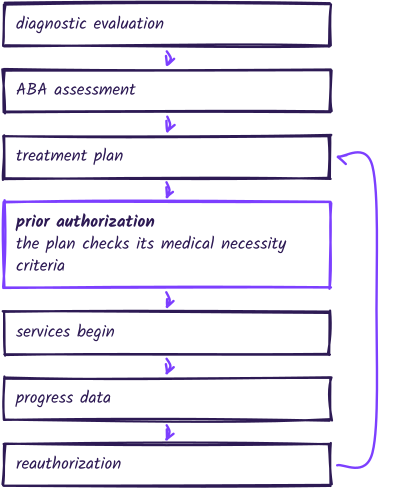
Medical necessity and prior authorization
Medical necessity means care is needed to diagnose or treat a condition, and prior authorization is your plan's approval of a service before it begins.
Definition →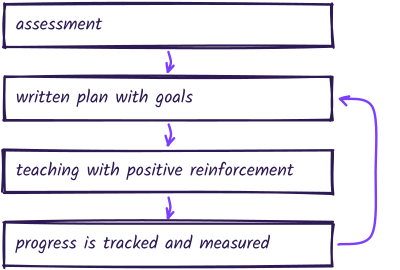
ABA therapy
ABA (applied behavior analysis) therapy uses principles of learning and behavior to teach skills, mainly through positive reinforcement and measured progress.
Definition →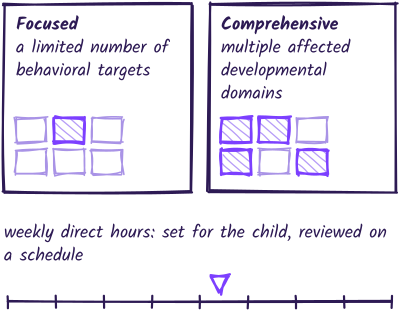
Treatment plan (comprehensive vs focused ABA)
An ABA treatment plan is the written, individualized plan your BCBA builds before services start, setting goals, methods, weekly hours and a review schedule.
Definition →