

ABA Therapy Glossaryfor Parents
All termsSingle case agreement
A single case agreement (SCA) is a one-time contract between your health plan and an out-of-network provider to cover one patient's care.
What it means
A single case agreement (SCA) is a one-time contract between your health plan and a provider outside its network. The provider agrees to act as if they're in-network for one patient. That way you can see them with your in-network benefits and pay your regular copay or cost share. Plans use the term in different ways. Some sources call it a gap exception when no in-network provider exists at all.
Plans usually consider an SCA when a needed service isn't in the network or when your child is already in treatment with the provider. It can also come up when in-network providers are too far away. The provider has to agree, and not every provider will. Some state Medicaid programs allow SCAs too.
What it looks like for your child
For applied behavior analysis (ABA), an SCA can come up when no in-network ABA provider near you can see your child. You or the provider start by calling your plan's member services number. Be ready to explain why your child needs this provider, such as distance or ongoing care. It helps to have a treatment plan ready, and the process can take a long time. Prior authorization (your plan's sign-off before care starts) may still apply.
What to ask your BCBA
- Ask your plan how to start: Ask your plan's member services team how to request an SCA and what it needs from you.
- Ask the provider's billing team: Ask whether the provider will agree to an SCA with your plan.
- Ask about the time frame: Ask your plan how long the agreement would last and whether prior authorization still applies.
No in-network ABA provider near you?
A single case agreement may let you see an out-of-network provider at in-network cost, if your plan and provider agree.

Sources
- Arizona Health Care Cost Containment System (2025), Single case agreement fact sheet, archived copy.
- Triage Cancer (2025), Understanding single case agreements.
- Sheppard Pratt, Single case agreement.
- HealthCare.gov glossary: Non-preferred provider.
Related terms
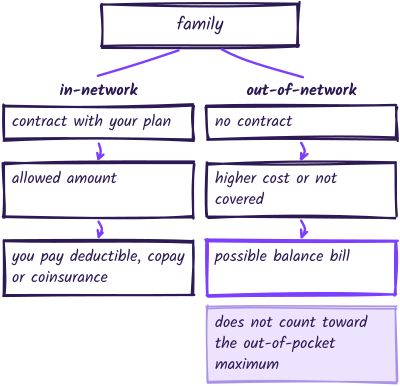
In-network vs out-of-network
An in-network provider has a contract with your health plan, while an out-of-network provider doesn't, which usually means you pay more.
Definition →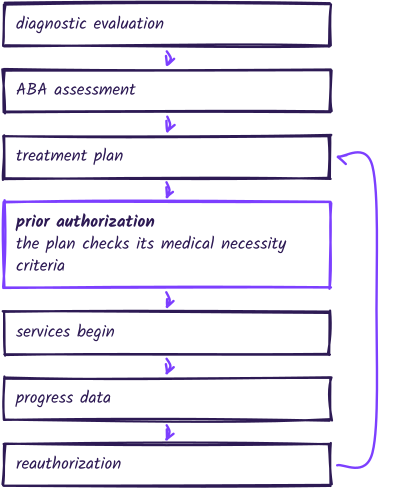
Medical necessity and prior authorization
Medical necessity means care is needed to diagnose or treat a condition, and prior authorization is your plan's approval of a service before it begins.
Definition →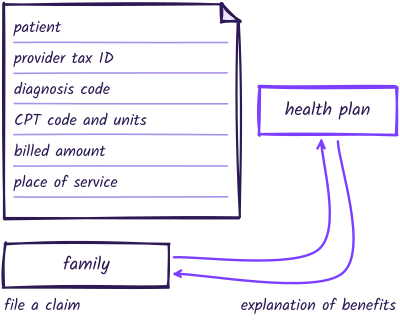
Superbill
A superbill is an itemized receipt from an out-of-network provider that you can send to your health plan to ask for reimbursement.
Definition →
Explanation of benefits (EOB)
An explanation of benefits (EOB) is a statement your health plan sends after a claim, showing what it paid and what you may owe.
Definition →