

ABA Therapy Glossaryfor Parents
All termsTask analysis
A task analysis breaks a skill or routine into small, manageable steps in order, so your child's team can assess it and teach it.
What it means
A task analysis breaks a skill or routine into small, manageable steps in order. Your child's team uses it to see which steps your child already does and to teach the rest. Your Board Certified Behavior Analyst (BCBA) writes it for your child, and each step is described so anyone watching can tell whether it happened.
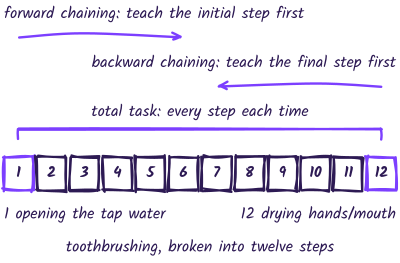
There's no set number of steps. One study taught tasks of 3 to 18 steps, and another split toothbrushing into twelve. The list alone doesn't teach the skill, so teams pair it with other methods, such as reinforcement, prompting or video modeling. The steps are often taught through chaining, and as your child masters each one, they become more independent.
What it looks like for your child
For brushing teeth, the steps might start with turning on the tap, picking up the toothbrush and putting toothpaste on it. They might end with drying hands and mouth. In sessions, the team tracks which steps your child does without help, and progress shows up as more steps done alone. The same skill can have more or fewer steps for different children.
What to ask your BCBA
- A copy of the steps: Ask for the written steps for any routine you practice at home.
- Where your child is now: Ask which steps your child already does alone and which ones the team is teaching next.
- How the steps are taught: Ask which methods, such as chaining, prompting or video modeling, the team uses with the list.
Want a daily routine broken into steps your child can learn?
A BCBA writes the steps for your child and tracks which ones they do on their own.

Sources
- National Clearinghouse on Autism Evidence and Practice (Steinbrenner et al., 2020), Evidence-based practices report, pp. 29 and 127.
- Behavior Analyst Certification Board, RBT Test Content Outline, A.5 and C.5.
- Slocum and Tiger (2011), forward and backward chaining study.
- Esposito et al. (2024), teaching toothbrushing through chaining.
Related terms
Chaining
Chaining teaches a multi-step skill, like brushing teeth, by breaking it into steps and teaching them until they link into one routine.
Definition →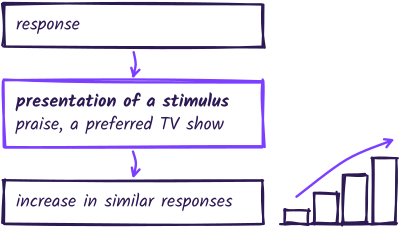
Positive reinforcement
Positive reinforcement happens when something is added after a behavior, like praise or a favorite activity, and the behavior then happens more often.
Definition →
Adaptive and daily living skills
Adaptive skills are the everyday skills a person needs to get through the day. Daily living skills, like dressing and hygiene, are one part.
Definition →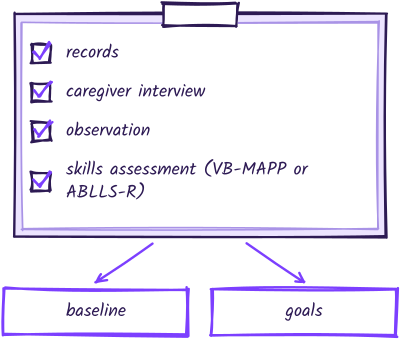
ABA assessment (VB-MAPP, ABLLS-R)
An ABA assessment is how a BCBA measures your child's strengths, missing skills and barriers to learning before writing a treatment plan.
Definition →