

ABA Therapy Glossaryfor Parents
All termsMedical necessity and prior authorization
Medical necessity means care is needed to diagnose or treat a condition, and prior authorization is your plan's approval of a service before it begins.
What it means
Medical necessity means a service is needed to diagnose or treat a condition. It also has to meet accepted standards of medicine. Prior authorization means your plan agrees, before care starts, that a service meets that bar. In Medicaid, it's the main way states and health plans check requests for applied behavior analysis (ABA) therapy.
For Medicaid, federal law doesn't define medical necessity, so each state sets its own rules. For children on Medicaid, each request must be judged on its own, and the review can't hold up needed care. An approval also isn't a promise that your plan will pay.
What it looks like for your child
Before therapy starts, your Board Certified Behavior Analyst (BCBA) usually sends your plan a request. It often includes the diagnosis or diagnostic evaluation, the ABA assessment and a treatment plan. That plan lists the hours requested and the reasons for them. The review should come after the treatment plan is written and before therapy begins.
Each approval lasts for a set time. To renew it, your provider sends new progress data and an updated plan. This step is called reauthorization (approval for the next stretch of time). The Council of Autism Service Providers says approvals shouldn't usually last under six months, but Medicaid lets states set their own periods, and some are shorter.
What to ask your BCBA
- What goes in the request: Ask what will be sent to the plan and how the requested hours are explained.
- How long approval lasts: Ask how long your plan's approval runs and when the reauthorization paperwork is due.
- How scores are used: Ask how the plan will weigh test scores, since the same provider group says one score alone shouldn't be used to deny or end ABA.
Facing a prior authorization before therapy can start?
Your BCBA builds the request from the assessment and treatment plan, then sends updates when renewal is due.

Sources
- HealthCare.gov glossary: Medically necessary and Preauthorization.
- Centers for Medicare & Medicaid Services (2026), Medicaid ABA Toolkit, chapter 6, pp. 103 to 111.
- Centers for Medicare & Medicaid Services (2014), Early and Periodic Screening, Diagnostic, and Treatment: A Guide for States, p. 24.
- Council of Autism Service Providers (2014, 2020), ABA practice guidelines, 2nd edition, pp. 21 to 22.
Related terms
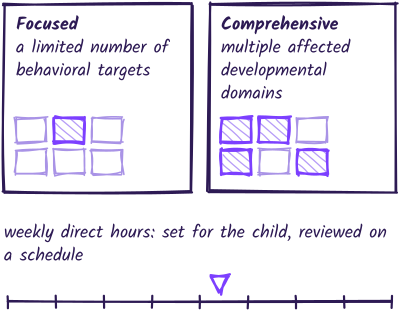
Treatment plan (comprehensive vs focused ABA)
An ABA treatment plan is the written, individualized plan your BCBA builds before services start, setting goals, methods, weekly hours and a review schedule.
Definition →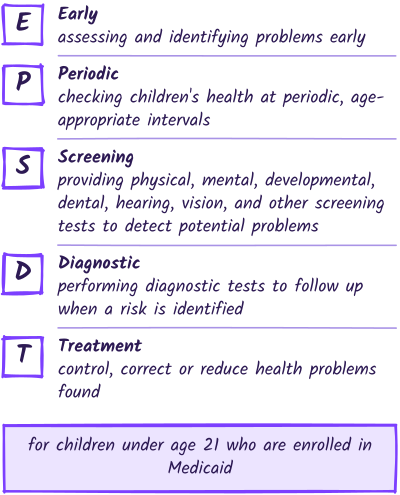
EPSDT
EPSDT is the Medicaid benefit for enrolled children under 21, covering screenings, follow-up diagnosis and treatment that is medically necessary.
Definition →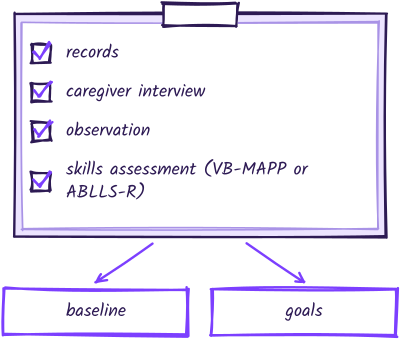
ABA assessment (VB-MAPP, ABLLS-R)
An ABA assessment is how a BCBA measures your child's strengths, missing skills and barriers to learning before writing a treatment plan.
Definition →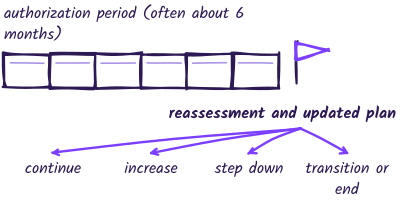
Reauthorization
Reauthorization is your health plan's or Medicaid program's review, near the end of an approved period of ABA, of whether to approve another.
Definition →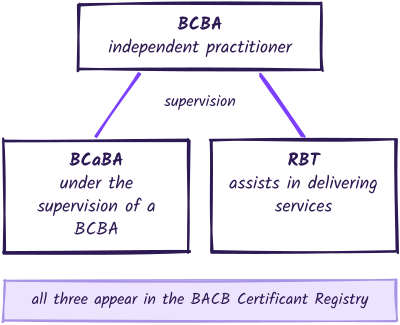
BCBA
A BCBA (Board Certified Behavior Analyst) holds a graduate-level certification and designs and oversees ABA programs, including supervising behavior technicians.
Definition →