

ABA Therapy Glossaryfor Parents
All termsIFSP
An Individualized Family Service Plan (IFSP) is the written plan for early intervention services for a child under 3 and their family.
What it means
An Individualized Family Service Plan (IFSP) is the written plan for early intervention for a baby or toddler under 3 and their family. It's a family plan, and you help build it with the team. It records where your child is now and your family's priorities and concerns. It also lists the services, how often and how long they happen, and who your service coordinator is. Then it sets out the steps for when your child turns 3.
The evaluation, assessments and first IFSP meeting must happen within 45 days of the referral. The plan is reviewed every six months, or sooner if you ask, and updated at least once a year. The Centers for Disease Control and Prevention (CDC) says services are free or reduced cost, while federal rules let states charge for some of them. So cost depends on your state.
What it looks like for your child
Services happen in natural settings, such as your home, where appropriate. Your service coordinator is your main contact. Meetings should happen at times that work for you and in your family's language. You give written consent before services start. At 3, a child who still needs help usually moves to an individualized education program (IEP) through the school. That's a different plan, though some states let the IFSP serve as the IEP through age 5 if the school and parents agree.
What to ask your BCBA
- Getting started: If you're noticing early signs of autism, ask your state's early intervention program how to start, since you don't need a doctor's referral.
- Cost in your state: Ask the program which parts of the plan carry no fees and whether any services cost money.
- Lining up with ABA: If your child also gets ABA, ask your Board Certified Behavior Analyst (BCBA) how their goals line up with the IFSP.
Wondering whether your toddler's development needs a closer look?
Bring the screener's results when you call your state's program or talk with your pediatrician.

Sources
- Electronic Code of Federal Regulations, 34 CFR 303.20, 34 CFR 303.342, 34 CFR 303.344 and 34 CFR 303.521.
- Electronic Code of Federal Regulations, 34 CFR 303.310 and 34 CFR 300.323.
- Centers for Disease Control and Prevention (2026), Early Intervention.
- Center for Parent Information and Resources (2021), Writing the IFSP.
Related terms
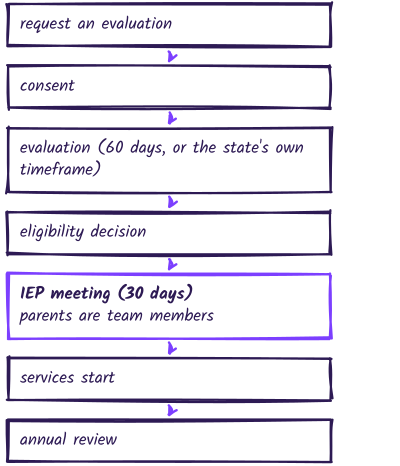
IEP (Individualized Education Program)
An IEP is a written plan for a public school student with a disability who needs special education, setting goals and listing services.
Definition →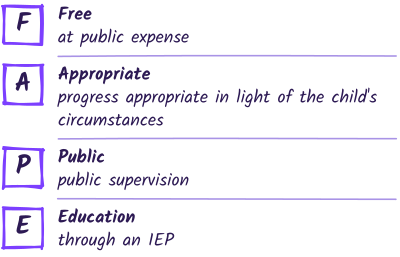
FAPE
FAPE (free appropriate public education) is an eligible child's right to special education and related services at public expense, through an individualized education program.
Definition →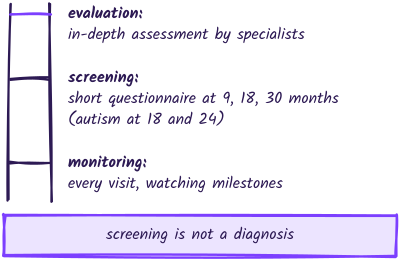
Developmental screening
Developmental screening is a short, standard check, often a parent questionnaire, that shows whether a child's development is on track or needs a closer look.
Definition →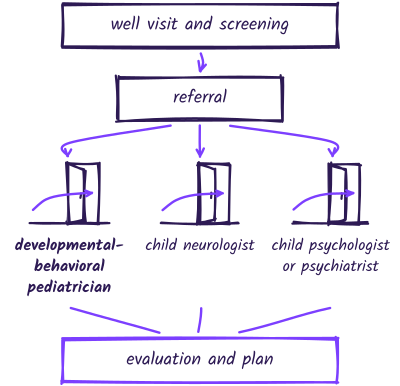
Developmental pediatrician
A developmental pediatrician is a children's doctor with three more years of specialty training who evaluates development, learning and behavior, including autism.
Definition →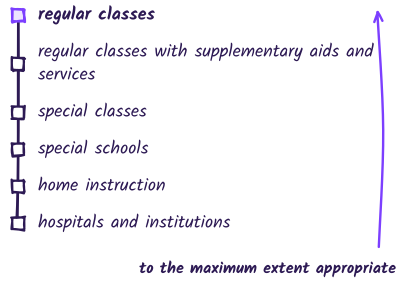
Least restrictive environment (LRE)
Least restrictive environment (LRE) is the special education rule that a child with a disability learns with children without disabilities as much as appropriate.
Definition →