

ABA Therapy Glossaryfor Parents
All terms504 plan
A 504 plan sets out the supports a student with a disability needs at school, under Section 504, a federal civil rights law.
What it means
A 504 plan sets out the supports a student with a disability needs to learn at school. It comes from Section 504 of the Rehabilitation Act of 1973. That's a federal civil rights law. It bans unfair treatment based on disability in programs that get federal money. A student qualifies if a physical or mental impairment substantially limits a major life activity, such as learning, reading or speaking.
A diagnosis alone isn't enough, so an autism diagnosis doesn't qualify a child on its own. The school must evaluate your child first, using more than one source. Then it decides whether your child qualifies. Understood.org says 504 plans remove barriers in general education, while the federal rule also allows special education and related services.
What it looks like for your child
For your child, a 504 plan might mean changes in the regular classroom. Classroom teachers must follow it. A child with an individualized education program (IEP) doesn't need a separate 504 plan, since an IEP is one way to meet Section 504. The rules for who qualifies differ, too, so a child who doesn't qualify for an IEP may still get a 504 plan. Parents also have rights, such as notice, access to records and an impartial hearing.
What to ask your BCBA
- Ask the school team: Ask how the school will evaluate your child for Section 504 and what information it will use.
- Ask about the plan itself: Ask the school whether the plan will be written down and how often it will be reviewed, since rules vary by state.
- Ask your behavior analyst: Ask your Board Certified Behavior Analyst (BCBA) whether anything from your child's therapy could help you prepare for the school meeting.
Getting ready for a school meeting about a 504 plan?
A BCBA can share what your child's therapy data shows before you sit down with the school.

Sources
- Cornell Legal Information Institute, 29 U.S. Code 794 (Section 504).
- Electronic Code of Federal Regulations, 34 CFR 104.33 and 34 CFR 104.36.
- U.S. Department of Education, Office for Civil Rights (2023), Section 504 FAQ, archived copy.
- Understood.org (2026), IEPs and 504 plans compared.
Related terms
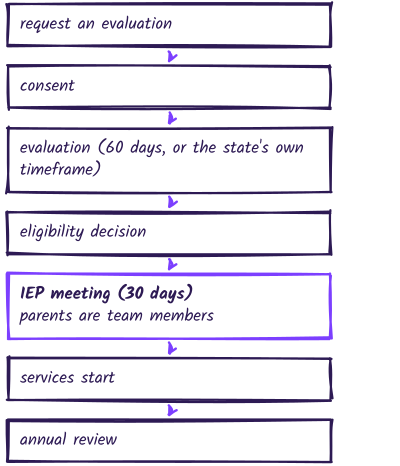
IEP (Individualized Education Program)
An IEP is a written plan for a public school student with a disability who needs special education, setting goals and listing services.
Definition →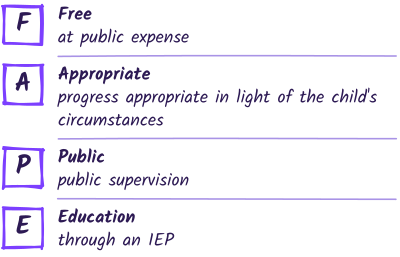
FAPE
FAPE (free appropriate public education) is an eligible child's right to special education and related services at public expense, through an individualized education program.
Definition →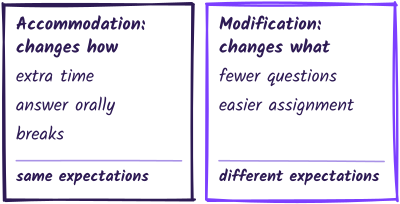
Accommodations vs modifications
Accommodations change how a child learns or shows what they know; modifications change what the child is expected to learn.
Definition →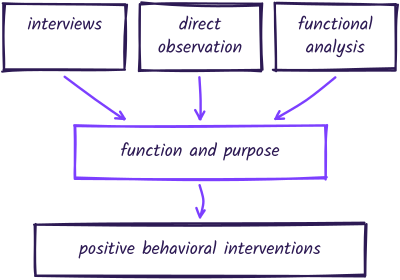
Functional behavior assessment (FBA)
A functional behavior assessment (FBA) is a structured process for working out why a specific behavior happens, so the team can plan better alternatives.
Definition →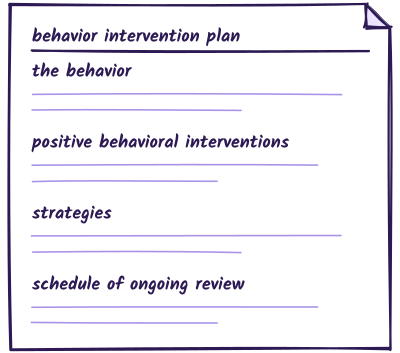
Behavior intervention plan (BIP)
A behavior intervention plan (BIP) is a written plan that names a behavior of concern and the positive strategies used to address it.
Definition →