

ABA Therapy Glossaryfor Parents
All termsIn-network vs out-of-network
An in-network provider has a contract with your health plan, while an out-of-network provider doesn't, which usually means you pay more.
What it means
Your plan's network is the group of providers, facilities and suppliers it has a contract with. An in-network provider has agreed to a discount with your plan. So you pay your deductible, copay or coinsurance on the plan's allowed amount. For covered services, an in-network provider can't bill you for the gap between their charge and that amount.
An out-of-network provider has no contract with your plan, and you'll pay more to see one. That provider may bill you for the gap, which is called balance billing. What you spend out of network also doesn't count toward your out-of-pocket limit. Some plans generally won't pay for out-of-network care except in an emergency, while others will but charge you more.
What it looks like for your child
Seeing an in-network provider doesn't mean applied behavior analysis (ABA) is approved. ABA usually also needs prior authorization (your plan's sign-off before care starts). If no in-network ABA provider can see your child, you can ask your plan about a single case agreement. If you see an out-of-network provider, you may be able to file your own claim with a superbill.
A federal law called the No Surprises Act guards against some surprise out-of-network bills, such as from the emergency room. Its list doesn't include therapy at home or in an office.
What to ask your BCBA
- Ask your plan about the network: Ask your plan whether a provider is in-network for your exact plan.
- Ask about out-of-network benefits: Ask your plan whether it covers out-of-network care and how that spending counts.
- Ask about a network gap: If no in-network ABA provider can see your child, ask your plan how to request a single case agreement.
Looking for in-network ABA therapy for your child?
In-network care usually costs you less, though ABA often still needs your plan's approval before it starts.

Sources
- HealthCare.gov glossary: Network, Preferred provider and Non-preferred provider.
- HealthCare.gov glossary: Balance billing and Out-of-pocket maximum/limit.
- HealthCare.gov glossary: HMO, EPO and PPO plans.
- Centers for Medicare & Medicaid Services (2026), Medical bill rights.
Related terms

Deductible, copay and out-of-pocket maximum
You pay the deductible before your plan starts paying, then usually a copay or coinsurance, up to a yearly out-of-pocket maximum for covered in-network care.
Definition →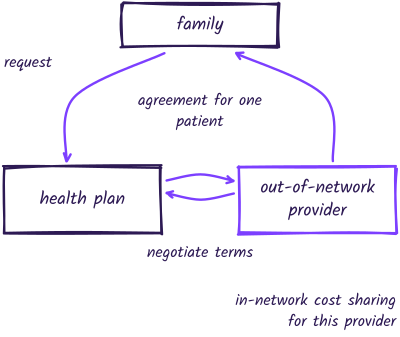
Single case agreement
A single case agreement (SCA) is a one-time contract between your health plan and an out-of-network provider to cover one patient's care.
Definition →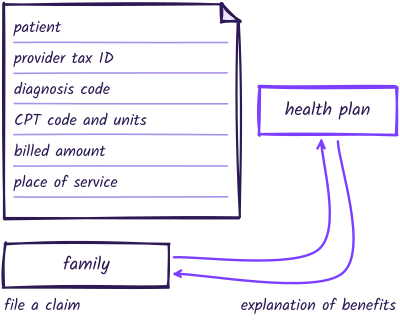
Superbill
A superbill is an itemized receipt from an out-of-network provider that you can send to your health plan to ask for reimbursement.
Definition →
Explanation of benefits (EOB)
An explanation of benefits (EOB) is a statement your health plan sends after a claim, showing what it paid and what you may owe.
Definition →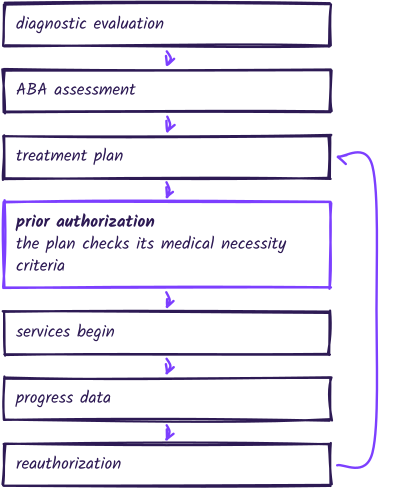
Medical necessity and prior authorization
Medical necessity means care is needed to diagnose or treat a condition, and prior authorization is your plan's approval of a service before it begins.
Definition →