







If you're wondering whether your child is autistic, you may think you need a diagnosis before taking the next step. As a parent of an autistic child, I remember feeling like I needed an answer before I could figure out what to do next.
But you don't have to wait. If your toddler isn't meeting developmental milestones or you're concerned about their communication, movement, play, or even other skills, you can ask about Early Intervention services now. An autism evaluation can happen at the same time if you're noticing signs of autism.
You can start on both paths together.
Key Takeaways
- You don't need to wait for an autism diagnosis to ask about Early Intervention for a child with developmental concerns.
- State Early Intervention programs generally serve eligible children from birth to age 3, with preschool special education available after age 3.
- ABA is separate from state Early Intervention but may be used alongside those services for an autistic child.
- Starting with developmental screening and referral can help your child access support sooner. If you want help with the next step, you can get started with Alpaca Health.
What Early Intervention for Autism Means
Early Intervention is a system of developmental services, not one specific autism therapy.
Under the Individuals with Disabilities Education Act (IDEA), infants and toddlers with disabilities and developmental delays are eligible for services. The programs run at the state level so eligibility and exact services available can depend on where you live.
A child doesn't have to be autistic to receive Early Intervention; the program supports many children with various types of developmental needs. The exact services your child could receive depend on their individual development and what's available through your state's program.
The window that matters and why timing changes outcomes
Research shows us that early diagnosis and intervention for autism can have positive effects on development and later skill building.
During the first few years of life, a young child's brain is still forming and is more plastic, or changeable. This can make early childhood an important time for learning and building new skills.
But that doesn't mean you've missed your chance if your child is diagnosed later. Support is helpful at any age.
The goal of Early Intervention isn't to race against a deadline. It’s to avoid spending months waiting when you already have concerns that deserve attention.
Early Intervention is a system, not a single therapy
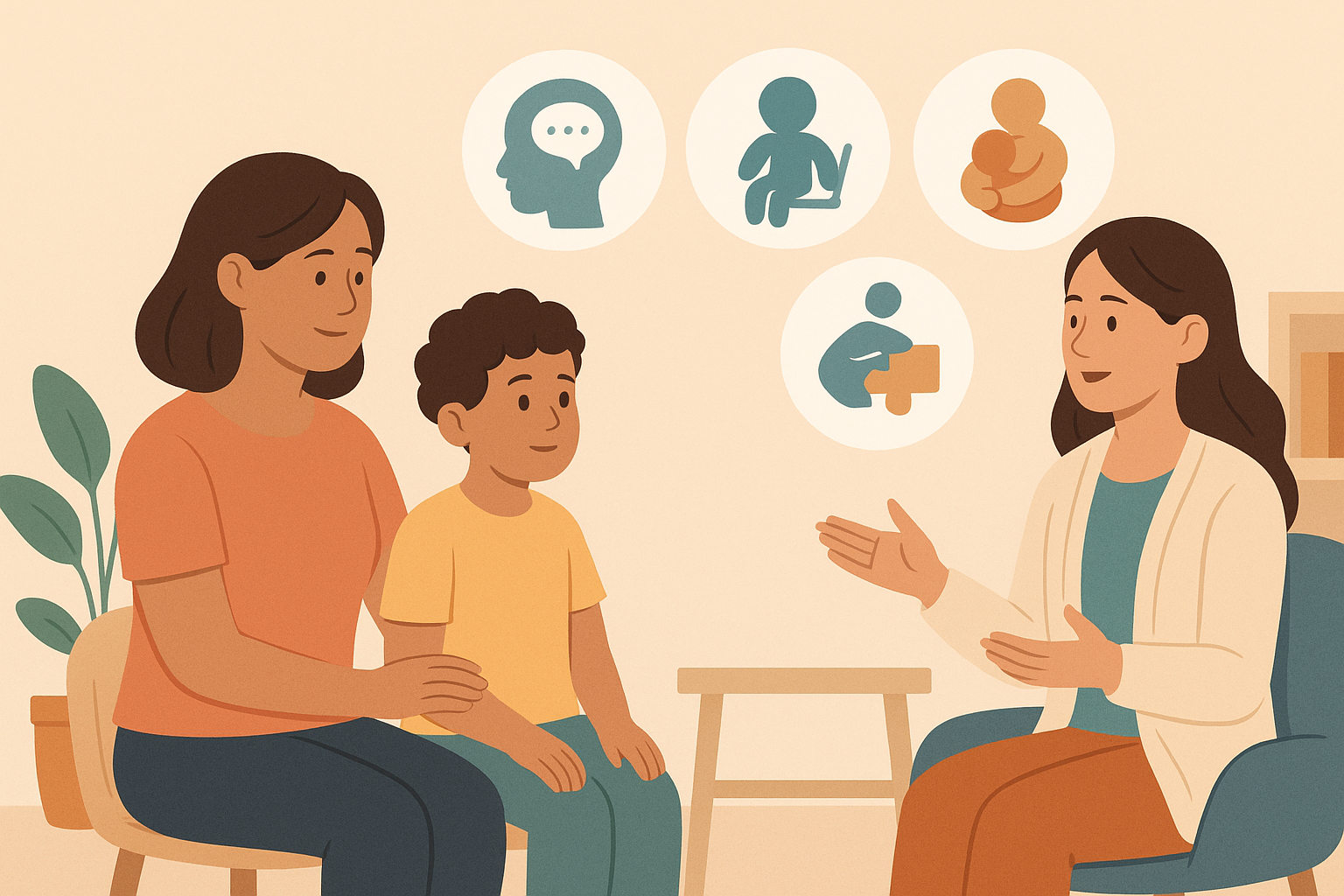
Think of Early Intervention as an umbrella for services that support your child's development depending on what your child needs.
You don't have to figure this out alone.
Alpaca Health matches your family with a vetted, in-network BCBA, often within days and with no waitlist. We handle the insurance paperwork so you can focus on your child.
Get matched with a BCBA →
Signs It Is Time to Act, Even Without a Diagnosis
As a parent, you don't have to wait for a diagnosis before asking questions about your child's development.
The U.S. Centers for Disease Control and Prevention (CDC) recommends acting early if your child isn't meeting one or more developmental milestones. Parents should also look at any lost skills they previously had or if you have other concerns about how they play with others, learn, speak, act, or move.
You can always speak with your child’s healthcare provider, ask about developmental screening, and contact your state's Early Intervention program.
Developmental signs by 12, 18, and 24 months
One missed milestone doesn't automatically mean your child is autistic. Development varies from child to child. Still, there are certain patterns to look for as you watch your child grow.
“I’ve worked with so many parents who’ve studied the milestone charts and worry about every box their child has or hasn’t checked,” says Maria Orzechowski, PsyD, who works with neurodiverse children and their families. “The first thing I tell them is that all that worry comes from how hard they’re working to make sure their child gets the right care, and that’s wonderful. The second thing is that kids really do develop on their own timelines. ‘Average’ covers a much wider range than most people expect. So trust yourself enough to ask questions, and be gentle with yourself while you wait for answers. Noticing something is just the start of the conversation.”
Around 12 months, if your baby rarely responds when you call their name, isn't using gestures such as waving, or doesn't seem to share an interest with you, it may warrant concern.
Around 18 months, if you notice limited use of words, difficulty following simple directions, fewer attempts to get your attention, or repetitive ways of playing, you might speak with your child’s pediatrician.
Around 24 months, concerns may include limited combinations of words, difficulty noticing when others are upset, repetitive behaviors, or strong reactions to changes and sensory experiences.
These are only examples and not meant to be a diagnostic checklist. Think of them as a reason to look more closely at your child's overall development.
The American Academy of Pediatrics recommends all children undergo developmental screening at 9, 18, and 30 months. Autism-specific screening is recommended at 18 and 24 months or whenever a parent or healthcare provider has a concern.
Why waiting to be sure costs more than screening early
You don't have to wait until you're certain something is wrong. Developmental screenings help determine whether your child needs a more detailed evaluation.
You can also contact your state's Early Intervention program yourself since you don't need a physician referral to begin that process.
Children who qualify for Early Intervention services can begin addressing their developmental needs while you continue pursuing answers about autism. That can save something families don't get back easily: time.
If autism is one of your concerns, you don't have to wait months to take the next step. You can get started with Alpaca Health to explore autism evaluation and ABA options for your child.
The Two Systems: State Programs and Autism-Specific Therapy
Families have access to support through more than one system. Your child can receive developmental services through a state Early Intervention program while also receiving autism-specific services, such as ABA therapy, through health insurance.
Part C Early Intervention from birth to age 3
IDEA Part C provides Early Intervention services for eligible infants and toddlers from birth through age 2 and their families.
If your child qualifies, the Early Intervention team develops what's called an Individualized Family Service Plan (IFSP). This plan outlines the goals for your child and family, along with the services and support you'll receive to help reach them.
Services may be provided in places where your child already spends time such as your home or another community setting.
You don't need an autism diagnosis to ask for an Early Intervention evaluation. Eligibility is based on your state's criteria for developmental delays or disabilities.
Preschool services from ages 3 to 5
When your child turns three years-old, the system changes.
Children ages 3 to 5 may receive preschool special education services under IDEA Part B. If your child moves from Part C into preschool special education, federal rules require planning for that transition. This means qualifying children will have an Individualized Education Program (IEP) developed and implemented by the time of their third birthday.
An IEP and IFSP are different. The IEP focuses on the special education related services your child needs to participate in and benefit from their education. If your child's third birthday is coming up, don't wait until then to ask what happens next. Transition planning typically begins before Part C services end.
Where ABA fits alongside state services
ABA is separate from state Early Intervention and preschool special education. Your child may receive ABA therapy along with other types of therapy such as speech, occupational, physical, or educational services. One doesn't automatically replace the other.
ABA is typically accessed through your child's health insurance plan. Government and commercial insurance coverage depends on factors such as your child's diagnosis, medical necessity, health plan, and state requirements. The Centers for Medicare & Medicaid Services (CMS) considers ABA one possible treatment for autism instead of requiring one specific treatment approach for every autistic child.
What Early Intervention Services Include
There isn't a standard Early Intervention plan that every child receives. The services are based on your child's individual developmental needs and goals.
Speech, occupational, and physical therapy
A child experiencing challenges with communication may receive support from a speech-language pathologist. This type of therapist can help them communicate wants and needs, understand language, or use other forms of communication when appropriate.
An occupational therapist works with children on their skills that affect everyday activities like eating, dressing, playing, fine motor skills, or sensory needs.
Physical therapy can help a child who needs support with movement, balance, strength, or other gross motor skills.
Family training and parent coaching
Early Intervention is a holistic approach to therapy. It focuses on more than what happens during the session.
As a parent or caregiver, you spend far more time with your child than any therapist does. That's why services may include coaching you on ways to support development during everyday routines.
However, the goal isn't to turn every moment at home into a therapy session. It's to help you recognize natural opportunities to practice the skills you learned and what your child is already working on.
ABA therapy for autism-specific goals
ABA therapy may be another part of your child's overall support plan. The goals of ABA should be individualized to your child rather than simply on their autism diagnosis.
Depending on your child's needs, therapy may focus on functional communication, independence, learning new skills or reducing behaviors that create safety concerns or interfere with daily life.
If your child receives both ABA and Early Intervention services, providers are often working on related skills but from different perspectives. It's important to share goals and updates among your child's care team to help everyone understand what your child is working on.
How to Access Early Intervention in Texas, Colorado, North Carolina, and Hawaii
Even though Early Intervention is federally supported through IDEA Part C, each state runs its own program. The name of the program and the referral process depend on where you live.
Texas ECI and how referrals work
The program in Texas is called Early Childhood Intervention (ECI) and serves eligible children from birth to 36 months.
A parent can refer their child when they have concerns about development.
Colorado Early Intervention through CDEC and Community Centered Boards
Colorado administers its Early Intervention program through the Colorado Department of Early Childhood (CDEC), with local services coordinated through Community Centered Boards.
An autism diagnosis isn't required to ask for an evaluation and parents can make a referral themselves. The Colorado statewide Early Intervention referral line is currently 833-733-3734.
North Carolina Infant-Toddler Program
North Carolina's Infant-Toddler Program provides Early Intervention through local Children's Developmental Services Agencies (CDSAs).
Families can contact their local CDSA when they have concerns about a child younger than 3. A medical autism diagnosis isn't required to request an Early Intervention evaluation.
Hawaii Early Intervention Section
Hawaii's Early Intervention Section is the state's IDEA Part C program for eligible infants and toddlers with developmental delays or disabilities.
Families with developmental concerns can contact the state program to ask about referral and evaluation.
Getting an Autism Evaluation Without Losing Months
If you notice developmental delays in your child, you can contact your state’s Early Intervention program now. You can also still schedule an autism evaluation.
“When families ask me why early support matters, I tell them it’s not about racing a clock, it’s about giving a child more ways to be understood, sooner,” says Samantha Ridout, BCBA, LBA, who reviews Alpaca Health's clinical content. “I once worked with a toddler whose family thought he ‘wasn’t interested’ in them, when really he just connected through repetition of silly sounds and exciting actions. Once we followed his lead and imitated his actions, we saw an explosion of joint attention, imitation and communicative attempts, and we just grew from there!”
The autism evaluation looks closely at your child’s development to identify possible signs of autism, if applicable. Wait times for autism evaluations can be lengthy, so Early Intervention can address developmental needs while you wait.
“The wait can feel long, but you can use it!” Maria adds. “Keep a running note on your phone of the things you want your evaluator to know, and save short videos as they happen. Kids often aren’t themselves in a new office with a stranger, so a quick clip of a meltdown, a favorite game, or how your child gets your attention shows me what home really looks like.”
When to pursue both tracks at the same time
You should pursue Early Intervention as soon as you or your doctor notice a developmental delay. If your child is missing milestones or showing a loss of skills, such as speaking, then it’s a sign to ask about an evaluation.
If you want a formal diagnosis, you’ll need an autism evaluation. It's often indicated if you notice differences in how your child acts socially, shows signs of intense sensory sensitivities, or repetitive behaviors.
What an autism evaluation adds beyond Early Intervention screening
Early Intervention evaluations tell you if your child meets the state’s eligibility requirements for developmental services. That’s not the same as a medical autism evaluation.
An autism evaluation specifically determines whether your child meets the criteria for autism. It can also help your child access autism-specific treatments such as ABA therapy.
Wondering how you'll pay for ABA?
Alpaca Health is in-network with 100+ plans, including Medicaid in the states we serve, and we verify your coverage for free before anything starts.
Check your coverage →
What Early Intervention Costs and What Insurance Covers
Some Early Intervention services are often provided at no cost to families. Services offered include evaluations, service coordination, and development of the IFSP. Your state may charge for other services or use of public or private insurance.
A state’s Early Intervention program can explain any potential costs before services start.
What the Evidence Says About Starting Early
Research supports identifying developmental concerns and connecting children with needed services early. Early support can help them build communication, social, and other developmental skills.
Starting early doesn’t mean every child needs the same services or has the same goals. Services are individualized and should reflect your child’s individual needs.
What Parents Can Do at Home While Waiting
You can support your child’s development now by looking for natural ways to support them during everyday routines. For example, you can follow their interests during play, read together, and even create opportunities to communicate with you and others.
“I’m thinking of one family I got to see again after their daughter’s evaluation,” Maria explains. “One of my recommendations had been to give her a little extra time to process. So they started pausing for just a few seconds before handing her a favorite snack, long enough for her to reach, point, or make a sound. Within a few weeks, those little asks were popping up all through the day. They didn’t need any special equipment. All it took was a few seconds of patience, and her communication came through.”
Your Early Intervention provider may also suggest skills you can practice between visits.
How Alpaca Health Fits In
Early Intervention and autism-specific services can happen at the same time. Alpaca Health can help you access autism evaluations and individualized ABA therapy when needed.
Get started with Alpaca Health to learn more about your evaluation and ABA options for your child.
Starting Early Intervention This Month
If you're concerned about your child's development:
- Write down the specific concerns or behaviors you've noticed.
- Ask your child's healthcare provider about developmental screening.
- Contact your state's Early Intervention program.
- Pursue an autism evaluation at the same time if autism is a concern.
You don't have to figure this out alone.
Alpaca Health matches your family with a vetted, in-network BCBA, often within days and with no waitlist. We handle the insurance paperwork so you can focus on your child.
Get matched with a BCBA →Frequently Asked Questions about Early Intervention for Autism
Can my child get Early Intervention without an autism diagnosis?
Yes. Eligible children may receive Early Intervention to address developmental delays or disabilities without an autism diagnosis.
Is Early Intervention the same as ABA?
No. Early Intervention is a state-specific program offering a system of developmental services. ABA is an autism-specific therapy that may be used alongside these services.
What happens to Early Intervention when my child turns 3?
Eligible children may transition from Part C Early Intervention to their preschool special education services under IDEA Part B.
Should I wait for an autism evaluation before starting Early Intervention?
No. You can pursue both at the same time. If you’re concerned about autism, get started with Alpaca Health while you pursue Early Intervention services.
RELATED ARTICLES





NEW TO THE TERMS?
ABA glossary for parents →The words you will hear from your child's care team, explained in plain language.