

ABA Therapy Glossaryfor Parents
All termsNatural environment teaching (NET)
Natural environment teaching (NET) is ABA teaching built into play and daily routines, using a child's interests and natural rewards.
What it means
Natural environment teaching (NET) is applied behavior analysis (ABA) teaching built into play and daily routines. It can happen at home, at school or in a clinic play area. It starts from what your child is interested in, and the reward is part of the activity itself. The Behavior Analyst Certification Board lists it as one kind of naturalistic teaching, and the names often overlap.
A federal Medicaid guide notes that earlier ABA relied on highly structured discrete trial training (DTT). Today's ABA often builds teaching into everyday activities instead. One reason is that skills learned in real routines are more likely to carry over. A 2024 study of 142 toddlers found that those who got NET, alone or with DTT, gained more everyday adaptive skills than those who got DTT alone. The authors also say DTT may lay a needed foundation for children with more significant delays.
What it looks like for your child
Say your child loves toy cars. In an in-home session, the therapist might hold a car just out of reach and wait for your child to say "car" before handing it over. Getting the car is the reward. NET is planned teaching, even when it looks like play. You can use the same idea during meals, bath time and play.
What to ask your BCBA
- The mix of teaching styles: Ask your Board Certified Behavior Analyst (BCBA) how your child's program mixes NET with more structured teaching, and why, since practice varies by provider.
- Using it at home: Ask which routines are good places to practice, and whether parent training covers it.
- Skills that carry over: Ask how the team checks that skills learned in play show up in other places.
Want therapy that fits into play and your daily routines?
A BCBA plans how teaching fits into your child's play and routines, at home and in sessions.

Sources
- Behavior Analyst Certification Board (BACB), RBT Test Content Outline (3rd ed.), C.4.
- Steinbrenner et al. (2020), UNC Frank Porter Graham Institute (NCAEP), autism practices report, naturalistic intervention fact sheet, p. 95.
- Centers for Medicare & Medicaid Services (2026), Medicaid ABA toolkit, p. 12.
- Yanchik, Vietze and Lax (2024), DTT and NET in toddlers, American Journal on Intellectual and Developmental Disabilities 129(4), abstract.
Related terms
Discrete trial training (DTT)
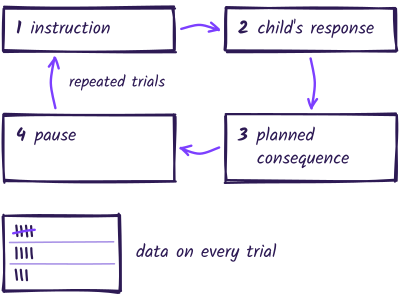
Discrete trial training (DTT) is a structured ABA teaching style that breaks a skill into small parts and practices them in short, repeated trials.
Definition →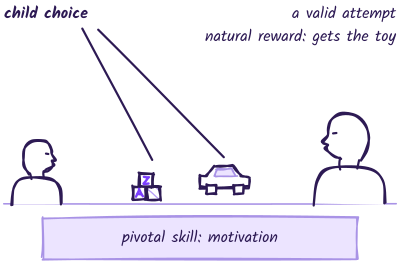
Pivotal response treatment (PRT)
Pivotal response treatment (PRT) is a play-based way of delivering ABA that targets a few key skills, like motivation, that can help many others.
Definition →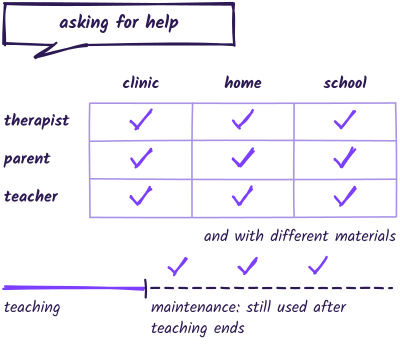
Generalization and maintenance
Generalization means your child uses a skill beyond where it was taught, and maintenance means they keep using it over time after teaching ends.
Definition →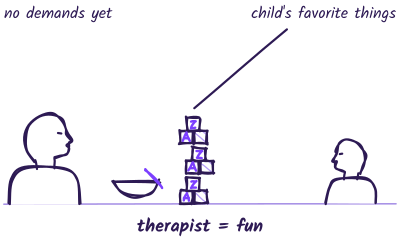
Pairing
Pairing is time a therapist spends becoming someone a child enjoys, through play and favorite things with few or no demands, before teaching starts.
Definition →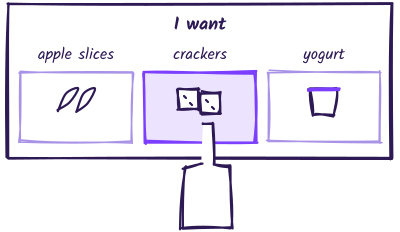
Choice board
A choice board shows two or more pictures, photos or words so a child can choose by pointing to one or handing it over.
Definition →