

ABA Therapy Glossaryfor Parents
All termsNeurotypical
Neurotypical describes a person whose brain develops and works the way most people's do; it's the counterpart of neurodivergent, not a diagnosis.
What it means
Neurotypical describes a person whose brain grows and works the way most people's do. It's the word for people who aren't neurodivergent. That term is for people whose brains grow or work in other ways, as with autism or dyslexia. Neither word is a medical diagnosis. Both come from the neurodiversity movement, which holds that there's no one right way to think, learn or act.
In talk about autism, people often use the word loosely for anyone who isn't autistic. The Cleveland Clinic uses it, while a group of autism researchers says it's often misleading and suggests non-autistic when that's all you know about someone. Neurotypical doesn't mean normal or better. The people it describes still have strengths and challenges, and theirs just aren't shaped by a brain difference.
What it looks like for your child
You may hear a brother, sister or parent called neurotypical in online groups. Trying to seem neurotypical, often called masking, is linked to exhaustion and burnout in autistic people. If you're not sure how your child is developing, a screening and a talk with your child's doctor are the next step.
What to ask your BCBA
- Words the team uses: Ask your Board Certified Behavior Analyst (BCBA) whether the team says neurotypical or non-autistic, and what they mean by it.
- Explaining it at home: Ask for simple ways to explain these words to siblings, and how to talk with extended family.
Not sure whether your child's development is on a typical path?
A screener is a starting point you can bring to your pediatrician, not a diagnosis.

Sources
- Cleveland Clinic (2026), Neurodivergent, health library.
- Baumer and Frueh (2021), What is neurodiversity?, Harvard Health Blog.
- Bottema-Beutel et al. (2021), Avoiding ableist language, Autism in Adulthood 3(1).
- Dwyer (2022), The neurodiversity approaches, Human Development 66(2).
Related terms

Neurodivergent
Neurodivergent describes a person whose brain works differently from what society treats as typical, such as an autistic person or someone with dyslexia.
Definition →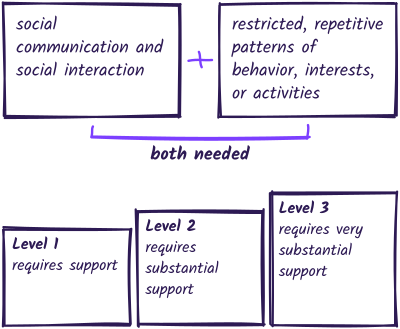
Autism spectrum disorder (ASD)
Autism spectrum disorder (ASD) is a neurological and developmental condition that affects how people communicate, interact with others, learn and behave.
Definition →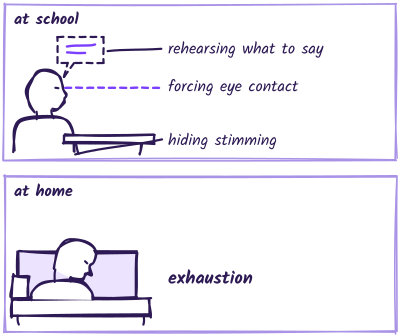
Masking
Masking, also called camouflaging, is when an autistic person hides or makes up for autistic traits, on purpose or not, to appear non-autistic.
Definition →
Theory of mind
Theory of mind is understanding that other people have their own thoughts, beliefs and feelings, which can differ from yours.
Definition →