

ABA Therapy Glossaryfor Parents
All termsReceptive and expressive language
Receptive language is understanding what others say, and expressive language is sharing thoughts and needs through words, gestures, signs or writing.
What it means
Receptive language is your child's skill at understanding words, like following directions and answering questions. Expressive language is the skill of putting words together to share thoughts and needs. That includes naming objects, using gestures and building sentences. It doesn't have to be spoken, since signing, writing and other gestures count too.
The two can grow at different rates, so a child can be stronger in one than the other. A speech-language pathologist (SLP) checks both, often with a hearing test, because hearing problems can affect language. Some language disorders aren't found until middle or high school.
What it looks like for your child
Milestones show the difference. By 18 months, most children can follow a one-step direction like "give it to me" without a gesture. That's receptive. Most also try to say three or more words besides "mama" or "dada," which is expressive. By 2, most can point to things in a book when asked and put two words together, like "more milk."
Most children reach these by that age, so they aren't hard cutoffs. The Centers for Disease Control and Prevention advises acting early if your child misses milestones or loses skills, or if you have other concerns.
What to ask your BCBA
- Both sides of language: Ask your Board Certified Behavior Analyst (BCBA) or your child's SLP how your child is doing with understanding and with expressing, since the two can differ.
- A hearing check: Ask whether a hearing test is part of your child's language evaluation.
- More than one language: If your family uses two languages, ask how the evaluation looks at both, since a true expressive difficulty shows up in every language a child uses.
Wondering how your child's understanding and talking compare?
A short screener is a simple first step before you ask about an evaluation.

Sources
- National Institute on Deafness and Other Communication Disorders (2022), Speech and Language Developmental Milestones.
- Communication Health Support Association, with ASHA expertise, Childhood Language Disorders.
- Centers for Disease Control and Prevention (2026), milestones at 18 months and 2 years, and Developmental Milestones.
- American Speech-Language-Hearing Association, Spoken Language Disorders, Practice Portal.
Related terms
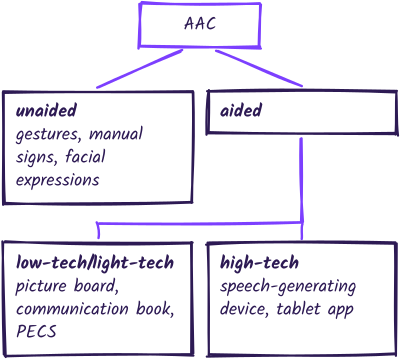
AAC (augmentative and alternative communication)
Augmentative and alternative communication (AAC) is any way of communicating that adds to speech or stands in for it, from gestures to speech devices.
Definition →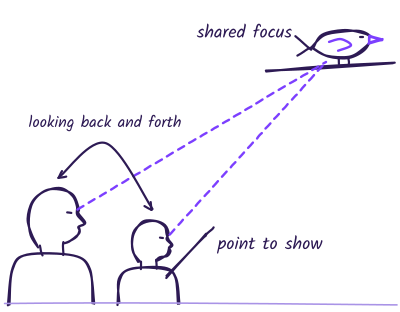
Joint attention
Joint attention is two people sharing focus on the same thing, like a child following a parent's point or pointing to show something.
Definition →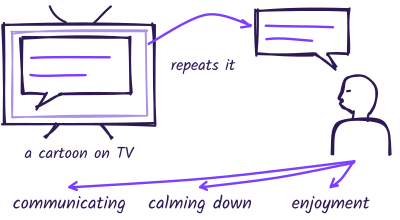
Scripting
Scripting is when a child repeats lines heard earlier, from TV shows, movies, songs or past conversations, often called delayed echolalia.
Definition →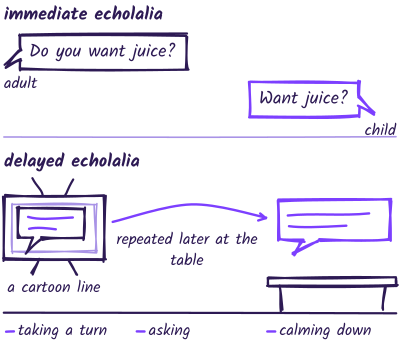
Echolalia
Echolalia is repeating words or phrases that someone else said, either right after hearing them or much later.
Definition →