

ABA Therapy Glossaryfor Parents
All termsTact (tacting)
A tact is naming or describing something your child notices, like a dog or a loud noise, for a social payoff such as your smile.
What it means
In applied behavior analysis (ABA), a tact is naming or describing something your child sees, hears, smells, tastes or feels. It might be "dog," "red car" or "it's loud." The thing itself prompts the tact, and the payoff is social, like your smile or "yes, a dog." Speech therapists often call this skill labeling.
A tact is different from a mand, which is a request. Saying "cookie" because your child sees one is a tact, while saying "cookie" because they want one is a mand. Skinner proposed that children learn the two separately, and studies support that. One study found requests appeared after naming was taught, though, so researchers still treat it as an open question.
What it looks like for your child
Your child might point at a plane and say "plane," tell you the bath is "hot" or name a color during play. Tacts can describe actions, sizes, sounds and feelings as well as objects. A child who can name an item may still need to be taught to ask for it, and the reverse is true, too. Many later language skills, including conversation, build on naming and listening.
What to ask your BCBA
- Naming and asking: Ask your Board Certified Behavior Analyst (BCBA) whether your child's plan teaches naming and asking as separate goals, and why.
- Beyond object names: Ask whether your child's goals include actions, colors, sounds or feelings as well as things.
- Your part at home: Ask how to respond when your child names something at home, and whether parent training can show you.
Does your child name things but not ask for them?
A BCBA can check which language skills your child uses now and plan what to teach next.

Sources
- American Speech-Language-Hearing Association, Autism Practice Portal, Assessment section.
- Sautter and LeBlanc (2006), Skinner's verbal behavior research, The Analysis of Verbal Behavior 22(1).
- Sundberg, The VB-MAPP, author page.
Related terms
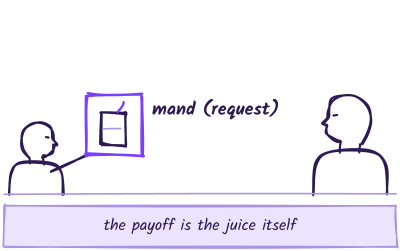
Mand (manding)
A mand is a request: your child communicates what they want right now, and the payoff is getting that exact thing.
Definition →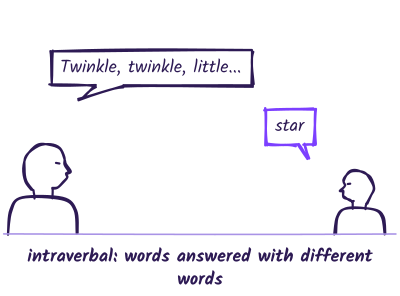
Intraverbal
An intraverbal is answering someone's words with different words, like finishing a song line, answering a question or replying in a conversation.
Definition →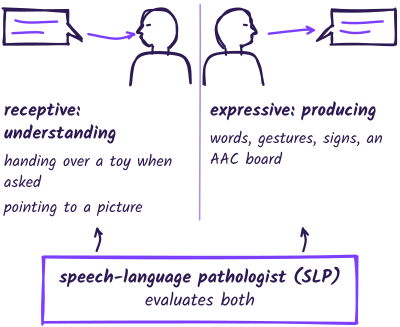
Receptive and expressive language
Receptive language is understanding what others say, and expressive language is sharing thoughts and needs through words, gestures, signs or writing.
Definition →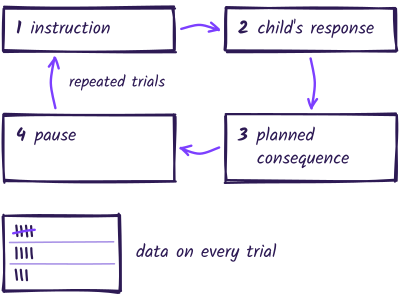
Discrete trial training (DTT)
Discrete trial training (DTT) is a structured ABA teaching style that breaks a skill into small parts and practices them in short, repeated trials.
Definition →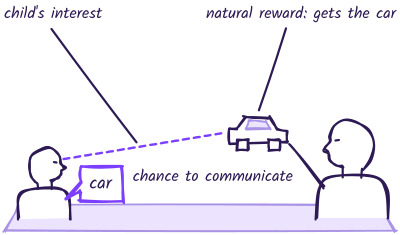
Natural environment teaching (NET)
Natural environment teaching (NET) is ABA teaching built into play and daily routines, using a child's interests and natural rewards.
Definition →