

ABA Therapy Glossaryfor Parents
All termsErrorless learning
Errorless learning is a way of teaching that gives a child enough help to answer correctly, then fades that help step by step.
What it means
Errorless learning covers a group of teaching methods that aim to cut down on mistakes while a child learns. The adult gives enough help up front, called a prompt, so your child answers correctly. A prompt can be words, a gesture or physical help. Then the help fades step by step, from the most help to the least, until your child does the skill alone. In practice, many people treat errorless learning and most-to-least prompting as the same thing.
Time delay is another version. The adult waits a moment before helping, then slowly makes that wait longer. Fading aims to avoid prompt dependence, which is when a child waits for help instead of trying. Error correction, where the adult corrects a mistake after it happens, is also common, and which approach fits your child is a call for your Board Certified Behavior Analyst (BCBA).
What it looks like for your child
Say your child is learning to point to the right picture when asked. In a therapy session, a Registered Behavior Technician (RBT) might show the answer right away at first. On later tries, they might just gesture toward it, then wait a moment before helping, until your child points on their own. RBTs carry out these steps, and BCBAs choose and check them. Errorless learning aims to reduce mistakes, so it doesn't mean your child never makes any.
What to ask your BCBA
- How the help will fade: Ask your BCBA how prompts will be faded so your child doesn't come to depend on them.
- Which approach fits: Ask whether each goal uses errorless teaching or error correction, and why.
- What help looks like: Ask which kinds of prompts the team will use with your child, and how you'll know when they're fading.
Wondering how much help your child gets during lessons?
A BCBA picks the prompting method for each goal and plans how the help fades.

Sources
- Behavior Analyst Certification Board (BACB), RBT Test Content Outline (3rd ed.), C.7, and BCBA Test Content Outline (6th ed.), G.7.
- Steinbrenner et al. (2020), UNC Frank Porter Graham Institute (NCAEP), autism practices report, prompting and time delay fact sheets, pp. 106 and 132.
- Severtson and Carr (2012), training errorless discrete-trial teaching, Behavior Analysis in Practice 5(2).
- Touchette and Howard (1984), errorless learning and delayed prompting, Journal of Applied Behavior Analysis 17(2).
Related terms
Discrete trial training (DTT)
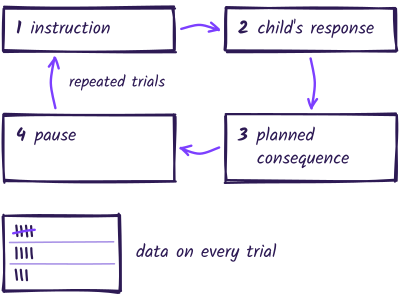
Discrete trial training (DTT) is a structured ABA teaching style that breaks a skill into small parts and practices them in short, repeated trials.
Definition →
Shaping
Shaping teaches a new behavior by reinforcing small steps that get closer and closer to the goal.
Definition →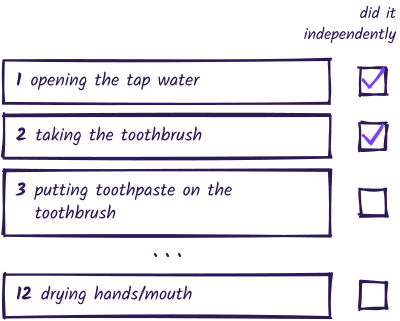
Task analysis
A task analysis breaks a skill or routine into small, manageable steps in order, so your child's team can assess it and teach it.
Definition →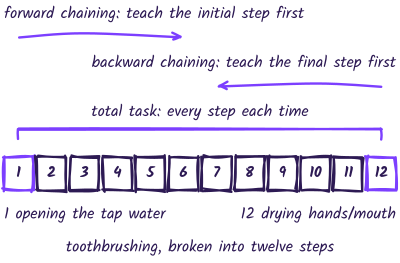
Chaining
Chaining teaches a multi-step skill, like brushing teeth, by breaking it into steps and teaching them until they link into one routine.
Definition →