

ABA Therapy Glossaryfor Parents
All termsEmotional regulation
Emotional regulation is the ability to notice a strong feeling and bring it back to a manageable level, like calming down after being upset.
What it means
Emotional regulation is the ability to notice a strong feeling and bring it back to a level you can manage. That way, you can keep doing what you need to do. For a child, that might mean calming down after being upset, waiting, or switching from one activity to the next. Young children lean on adults to help them calm down, which is called co-regulation, before they can do it alone.
Many children with autism find this harder. A 2013 paper notes that some autistic children react to strong feelings with tantrums, aggression or self-injury. Intense reactions to stress are often called meltdowns. They can look deliberate or defiant, but they may come from trouble managing emotion. The same paper said little was known about regulation in autistic children. It also said some of the causes may be shared with other conditions.
What it looks like for your child
At age 3, one milestone is calming down within 10 minutes after you leave, like at childcare drop-off. The Centers for Disease Control and Prevention (CDC) suggests naming your child's feelings. It also suggests teaching them to take deep breaths, hug a favorite toy or go to a safe, calm spot when upset. The American Academy of Pediatrics (AAP) says the first step is to regulate yourself and co-regulate your child, since your own calm helps them.
What to ask your BCBA
- What sets it off: Ask your Board Certified Behavior Analyst (BCBA) to help you work out what triggers your child's meltdowns.
- Skills to teach: Ask which coping and communication skills the plan will teach and whether parent training covers calming at home.
- One plan across the team: Ask how these goals line up with speech therapy, since speech therapists also teach self-regulation.
Are big feelings turning everyday moments into meltdowns?
A BCBA looks at what sets off the hard moments and plans the coping skills to teach.

Sources
- Centers for Disease Control and Prevention, milestones by three years (May 2026).
- American Academy of Pediatrics, HealthyChildren.org: Why Kids Act Out.
- Mazefsky et al. (2013), emotion regulation in autism, Journal of the American Academy of Child and Adolescent Psychiatry 52(7).
- American Speech-Language-Hearing Association (ASHA), Autism Practice Portal.
Related terms
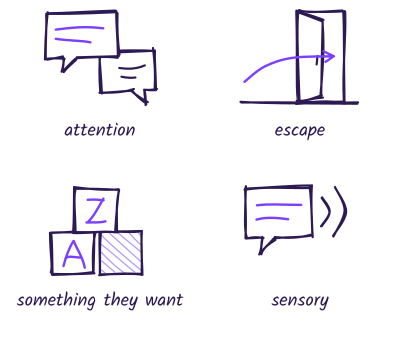
Functions of behavior
A behavior's function is the payoff that keeps it going, like attention, escape from a demand, an item, or a reward the behavior creates itself.
Definition →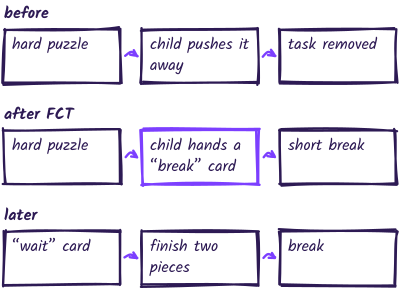
Functional communication training (FCT)
Functional communication training (FCT) teaches a child a clear way to ask for what a challenging behavior was getting them.
Definition →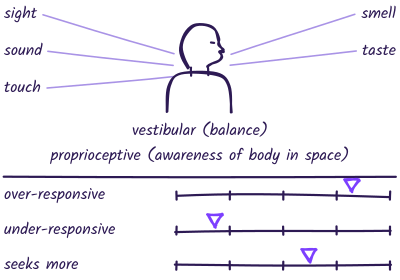
Sensory processing differences
Sensory processing differences describe how a child notices and reacts to sights, sounds, touch, movement and other input, more or less strongly than others.
Definition →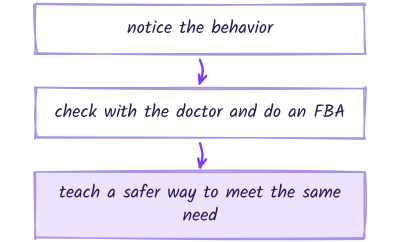
Self-injurious behavior
Self-injurious behavior (SIB) is any behavior a person does that can injure their own body, such as head banging or biting themselves.
Definition →
Functional behavior assessment (FBA)
A functional behavior assessment (FBA) is a structured process for working out why a specific behavior happens, so the team can plan better alternatives.
Definition →