

ABA Therapy Glossaryfor Parents
All termsABA assessment (VB-MAPP, ABLLS-R)
An ABA assessment is how a BCBA measures your child's strengths, missing skills and barriers to learning before writing a treatment plan.
What it means
An applied behavior analysis (ABA) assessment is a close look at your child's skills. Your Board Certified Behavior Analyst (BCBA) does it before writing a plan. It looks at your child's strengths, the skills they still need and anything that gets in the way of progress. It can include records, parent interviews, rating forms, watching your child and skills tests. The results go in writing and set the starting point for goals.
One skills tool is the Verbal Behavior Milestones Assessment and Placement Program (VB-MAPP). Another is the Assessment of Basic Language and Learning Skills, Revised (ABLLS-R). The VB-MAPP covers 170 language and learning milestones in three levels, from birth to 48 months of typical development. The ABLLS-R reviews 544 skills in 25 areas, such as language, social, self-help and motor skills. These are skills most children learn before kindergarten. Both track which skills a child has, and neither one diagnoses autism.
What it looks like for your child
The BCBA may ask about your child's history and routines and give you rating forms to fill out. They'll also watch your child play and ask them to try tasks, like naming objects or following directions. Parts of the assessment are repeated later to measure progress. Medicaid programs may require a standard tool for that. A single score from one test, such as an intelligence test, shouldn't decide on its own whether ABA continues.
What to ask your BCBA
- Which tools you'll use: Ask which skills assessment fits your child and why.
- The written results: Ask for a copy of the written summary and how it shapes the goals.
- When it's repeated: Ask when parts of the assessment will be done again to check progress.
Ready to see where your child's skills are today?
A BCBA starts with the assessment and builds your child's goals from what they find.

Sources
- Centers for Medicare & Medicaid Services (CMS), Medicaid ABA Toolkit, pp. 42 to 43, Table 4 (August 2026).
- Behavior Analyst Certification Board (BACB), Ethics Code for Behavior Analysts, p. 12, section 2.13.
- Sundberg, VB-MAPP author page.
- Partington, ABLLS-R publisher page.
Related terms
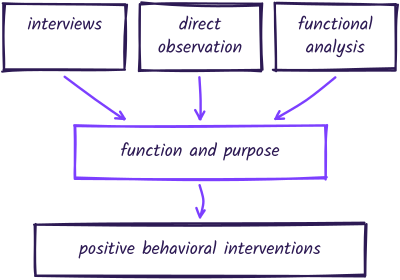
Functional behavior assessment (FBA)
A functional behavior assessment (FBA) is a structured process for working out why a specific behavior happens, so the team can plan better alternatives.
Definition →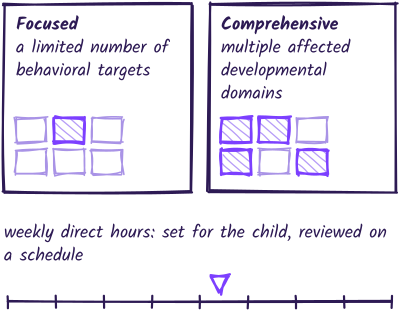
Treatment plan (comprehensive vs focused ABA)
An ABA treatment plan is the written, individualized plan your BCBA builds before services start, setting goals, methods, weekly hours and a review schedule.
Definition →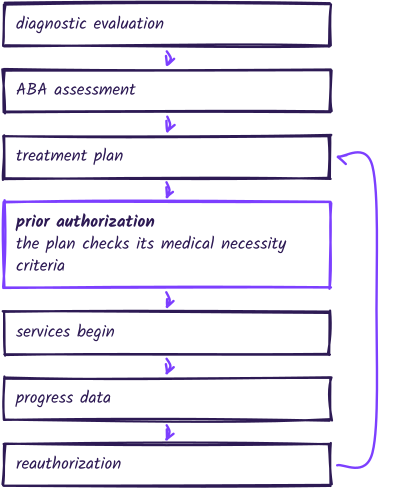
Medical necessity and prior authorization
Medical necessity means care is needed to diagnose or treat a condition, and prior authorization is your plan's approval of a service before it begins.
Definition →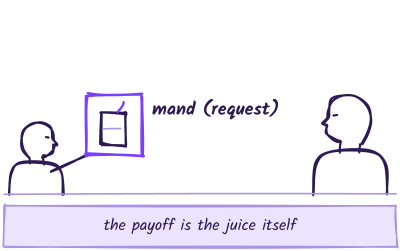
Mand (manding)
A mand is a request: your child communicates what they want right now, and the payoff is getting that exact thing.
Definition →
Adaptive and daily living skills
Adaptive skills are the everyday skills a person needs to get through the day. Daily living skills, like dressing and hygiene, are one part.
Definition →