

ABA Therapy Glossaryfor Parents
All termsSelf-injurious behavior
Self-injurious behavior (SIB) is any behavior a person does that can injure their own body, such as head banging or biting themselves.
What it means
Self-injurious behavior (SIB) is any behavior a person does that can hurt their own body. Common forms include head banging, hitting oneself, biting, scratching and skin picking. It's more common in autistic children than in other children, even those with other developmental disabilities. Per a 2020 review of 37 studies, about 42 percent of autistic people in them showed self-injury. That figure depends on how each study defined and counted it.
The behavior usually does something for the child. It can get attention, end a demand, get an item or create its own sensation. It can also come with strong emotion. One research team found that about a quarter of SIB keeps going because of the sensation it creates.
What it looks like for your child
See your child's doctor about any injury, and about self-injury that's new or getting worse. A medical check is part of the assessment. Next, a behavior analyst does a functional behavior assessment (FBA) to find what the behavior gets or avoids for your child. The plan then teaches safer ways to meet the same need.
A doctor may also treat self-injury with medicine, says the National Institute of Mental Health. For a child with autism, self-injury can be part of being overwhelmed. So calming and communication supports, like those used for meltdowns, often belong in the plan.
What to ask your BCBA
- Safety now: Ask your Board Certified Behavior Analyst (BCBA) how the plan keeps your child safe right now.
- The new skill: Ask which skill will replace the behavior and meet the same need.
- At home: Ask whether parent training covers what to do at home when self-injury happens.
Worried about head banging or other self-injury?
A BCBA does an assessment to learn what the behavior does for your child and plans a safer skill.

Sources
- Minshawi et al. (2014), self-injurious behaviors and autism, Psychology Research and Behavior Management 7.
- Steenfeldt-Kristensen, Jones and Richards (2020), prevalence of self-injury in autism, Journal of Autism and Developmental Disorders 50(11).
- Hagopian, Rooker and Zarcone (2015), subtypes of self-injurious behavior, Journal of Applied Behavior Analysis 48(3).
- National Institute of Mental Health, Autism Spectrum Disorder (2025).
Related terms
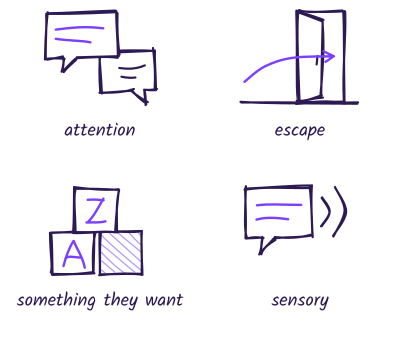
Functions of behavior
A behavior's function is the payoff that keeps it going, like attention, escape from a demand, an item, or a reward the behavior creates itself.
Definition →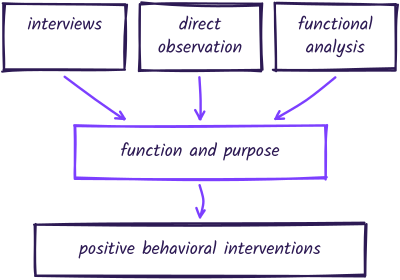
Functional behavior assessment (FBA)
A functional behavior assessment (FBA) is a structured process for working out why a specific behavior happens, so the team can plan better alternatives.
Definition →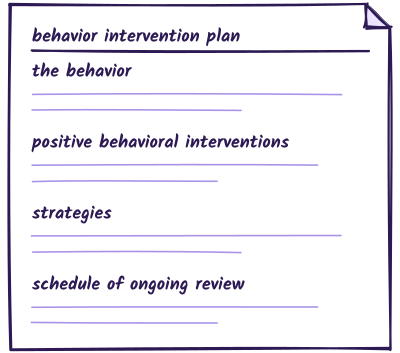
Behavior intervention plan (BIP)
A behavior intervention plan (BIP) is a written plan that names a behavior of concern and the positive strategies used to address it.
Definition →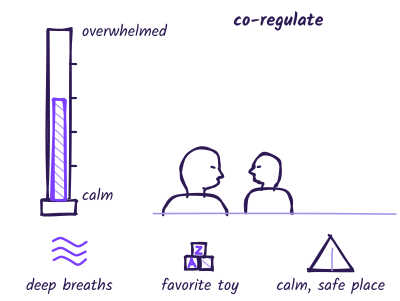
Emotional regulation
Emotional regulation is the ability to notice a strong feeling and bring it back to a manageable level, like calming down after being upset.
Definition →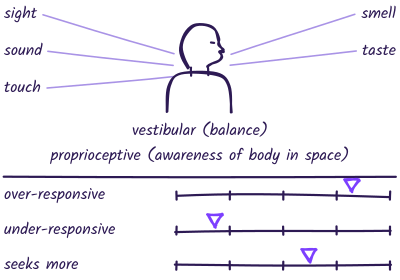
Sensory processing differences
Sensory processing differences describe how a child notices and reacts to sights, sounds, touch, movement and other input, more or less strongly than others.
Definition →