

ABA Therapy Glossaryfor Parents
All termsTreatment plan (comprehensive vs focused ABA)
An ABA treatment plan is the written, individualized plan your BCBA builds before services start, setting goals, methods, weekly hours and a review schedule.
What it means
An applied behavior analysis (ABA) treatment plan is the written plan your child's Board Certified Behavior Analyst (BCBA) builds from the assessment. It's done before services start, and it sets measurable goals with a starting level for each. It also names the teaching methods, who works with your child and where, the weekly hours and when progress gets reviewed. Your BCBA explains the plan in writing and asks for your informed consent first.
A plan's scope is either focused ABA or comprehensive ABA. Focused ABA works on a limited number of skills or a priority behavior. Comprehensive ABA works on many skills in more than one area of development. The weekly hours count time spent working directly with your child, not supervision or parent training. Sources disagree on how many hours to expect: an autism provider group's guidelines give typical ranges, while a 2026 Medicaid toolkit says there's no agreed number. Both say the hours should fit the child.
What it looks like for your child
You might see a goal like asking for a break with words, written so anyone can see and measure it, next to your child's current level. The plan also lists the weekly schedule and who works with your child. A very heavy schedule can leave little time for school and family life. So it's fair to ask how the hours fit your child's day. Hours can go up or down as your child responds.
What to ask your BCBA
- Focused or comprehensive ABA: Ask which scope your child's plan uses and why it fits their goals.
- How the hours were chosen: Ask how the team picked the weekly hours and what would make them change.
- The review schedule: Ask when the plan will be reviewed and how you'll see the progress data.
Want a plan built around your child, not a number of hours?
A BCBA sets measurable goals from the assessment and reviews progress with you.

Sources
- Centers for Medicare & Medicaid Services (CMS), Medicaid ABA Toolkit, pp. 11 and 33 to 39 (August 2026).
- Council of Autism Service Providers (CASP), ABA practice guidelines, 2nd ed., pp. 12 to 14 and 25.
- Behavior Analyst Certification Board (BACB), Ethics Code for Behavior Analysts, p. 12, sections 2.14 to 2.16.
- BACB, BCBA Test Content Outline, 6th ed., tasks H.1, H.2 and H.7.
Related terms
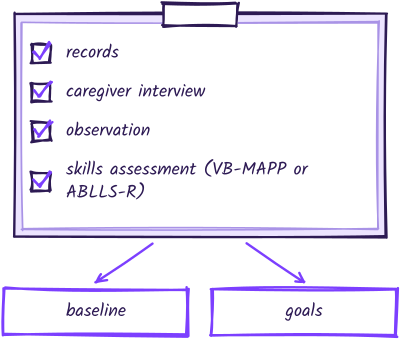
ABA assessment (VB-MAPP, ABLLS-R)
An ABA assessment is how a BCBA measures your child's strengths, missing skills and barriers to learning before writing a treatment plan.
Definition →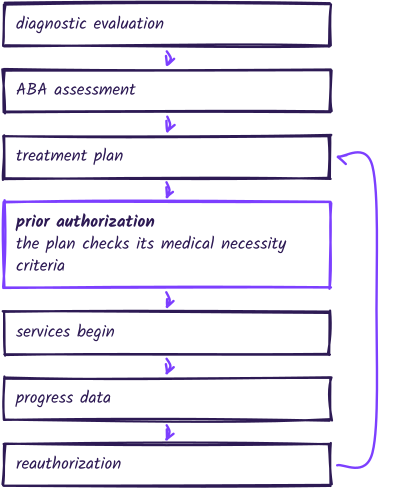
Medical necessity and prior authorization
Medical necessity means care is needed to diagnose or treat a condition, and prior authorization is your plan's approval of a service before it begins.
Definition →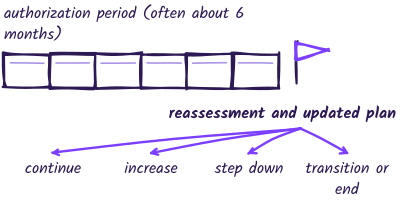
Reauthorization
Reauthorization is your health plan's or Medicaid program's review, near the end of an approved period of ABA, of whether to approve another.
Definition →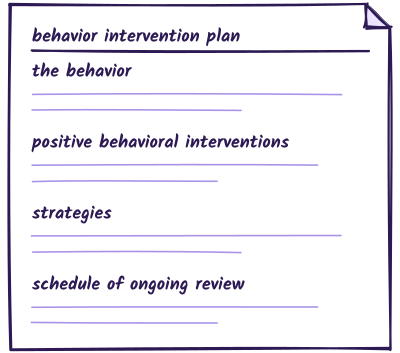
Behavior intervention plan (BIP)
A behavior intervention plan (BIP) is a written plan that names a behavior of concern and the positive strategies used to address it.
Definition →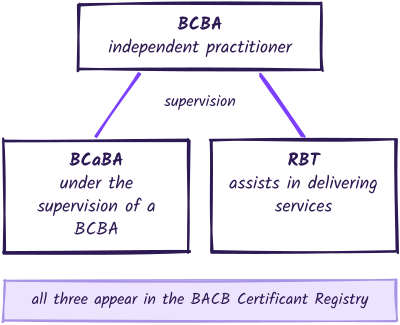
BCBA
A BCBA (Board Certified Behavior Analyst) holds a graduate-level certification and designs and oversees ABA programs, including supervising behavior technicians.
Definition →