

ABA Therapy Glossaryfor Parents
All termsData collection and session notes
In ABA, data collection is the steady, measurable record of what happens each session, and a session note is the written record of that session.
What it means
In applied behavior analysis (ABA), data collection means the therapist records what happens in each session in a steady, measurable way. That might be how often a behavior happens, how long it lasts, how long it takes to start, or how many teaching tries went right. Your child's treatment plan should say which methods it uses. Your Board Certified Behavior Analyst (BCBA) graphs the data to see whether each goal is being met. If it isn't, the BCBA changes the plan.
A session note is the written record of one session. It covers who gave the session, when and where, how long it lasted, which goals were worked on, what happened and how your child responded. Notes are part of your child's clinical record. Insurers and Medicaid also use them as the main proof that services were delivered. Each state, payer and employer sets what a note must include.
What it looks like for your child
During a session, such as an in-home ABA session, the Registered Behavior Technician (RBT) might count a behavior, time it or mark each try. The RBT then writes the note under the BCBA's supervision. Tell the team about illness, medicine or schedule changes. RBTs are expected to report these, since they can affect progress. You can also ask to see the graphs, which show how progress builds over time.
What to ask your BCBA
- Seeing the data: Ask your BCBA how often you'll see your child's progress graphs and who will explain them.
- What's measured: Ask your BCBA which data methods the plan uses for each goal.
- Notes and billing: Ask the billing team what your plan requires in a session note before it pays for a session.
Want to see how your child's progress is tracked?
A BCBA graphs your child's session data and walks you through what it shows.

Sources
- Behavior Analyst Certification Board (BACB), RBT Test Content Outline, 3rd ed., A.1 to A.5, E.3 and E.4.
- BACB, Ethics Code for Behavior Analysts, p. 12, section 2.17.
- Centers for Medicare & Medicaid Services (CMS), Medicaid ABA Toolkit, pp. 124 to 125 (August 2026).
- Council of Autism Service Providers (CASP), ABA practice guidelines, 2nd ed., pp. 11 and 23 to 24.
Related terms
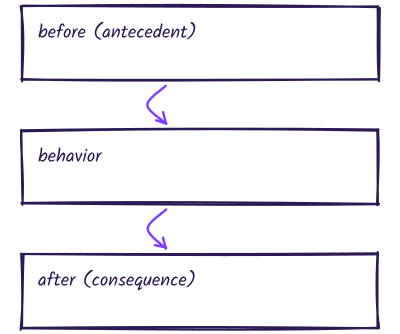
ABC data
ABC (antecedent, behavior, consequence) data is a record of what happened just before a behavior, the behavior itself, and what came right after.
Definition →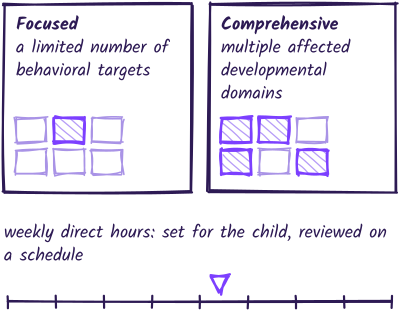
Treatment plan (comprehensive vs focused ABA)
An ABA treatment plan is the written, individualized plan your BCBA builds before services start, setting goals, methods, weekly hours and a review schedule.
Definition →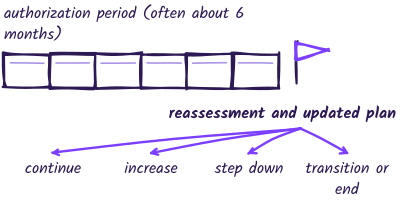
Reauthorization
Reauthorization is your health plan's or Medicaid program's review, near the end of an approved period of ABA, of whether to approve another.
Definition →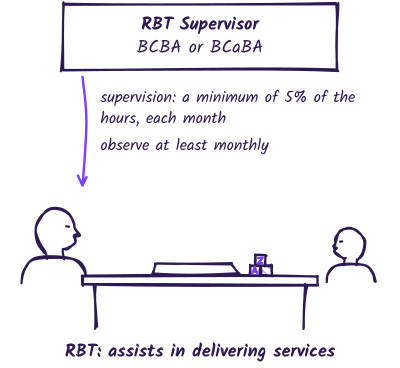
RBT (behavior technician)
An RBT (Registered Behavior Technician) is a certified paraprofessional who delivers day-to-day ABA sessions under close supervision from a BCBA or BCaBA.
Definition →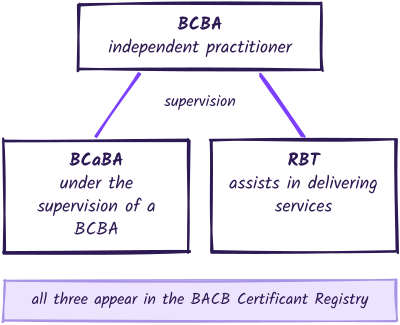
BCBA
A BCBA (Board Certified Behavior Analyst) holds a graduate-level certification and designs and oversees ABA programs, including supervising behavior technicians.
Definition →