

ABA Therapy Glossaryfor Parents
All termsDischarge and fading services
Discharge is the planned end of ABA services, and fading is the gradual step-down that leads to it, with fewer hours and more caregiver coaching.
What it means
Discharge is the planned end of applied behavior analysis (ABA), and fading is the slow step-down that leads to it. As services fade, your child gets fewer hours and less direct therapy. You get more caregiver coaching, and your child practices more in everyday places. That helps skills hold up as formal treatment decreases. One provider group's guidelines say discharge goals should be set when services begin.
Services can also end for other reasons. Those guidelines and the behavior analysts' ethics code both list goals being met, a child not benefiting and a family asking to stop. The ethics code also lists funding ending. In every case, the behavior analyst should give you a written plan for ending or moving services. They should also review it as services decrease.
What it looks like for your child
Fading usually means fewer weekly hours over time, such as stepping down from a broad program to a focused one. You'll also spend more time in parent training. The same guidelines say planning should start three to six months before the first change, while a 2026 Medicaid toolkit sets no fixed timeline. They also say leaving comprehensive ABA often takes six months or longer.
Sometimes services must stop suddenly, such as after a move or a funding change. Even then, the behavior analyst is expected to help avoid a gap in care.
What to ask your BCBA
- Discharge goals: Ask your Board Certified Behavior Analyst (BCBA) at intake what the discharge goals are and how you'll know they're met.
- The written plan: Ask your BCBA when you'll get a written transition and discharge plan and how often it will be reviewed.
- Coverage changes: Ask the billing team what happens to services if your coverage changes or ends.
Want to know how ABA will wind down before it starts?
A BCBA sets discharge goals early and plans each step down with you.

Sources
- Council of Autism Service Providers (CASP), ABA practice guidelines, 2nd ed., pp. 24 to 25 and 41.
- Behavior Analyst Certification Board (BACB), Ethics Code for Behavior Analysts, p. 14, sections 3.14 to 3.16.
- Centers for Medicare & Medicaid Services (CMS), Medicaid ABA Toolkit, pp. 32, 34, 41 and 47 (August 2026).
Related terms
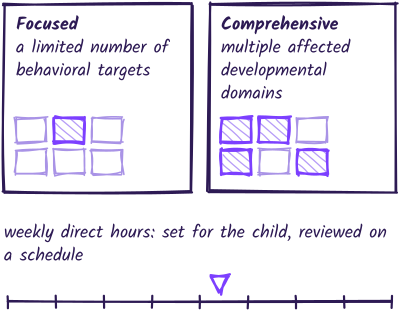
Treatment plan (comprehensive vs focused ABA)
An ABA treatment plan is the written, individualized plan your BCBA builds before services start, setting goals, methods, weekly hours and a review schedule.
Definition →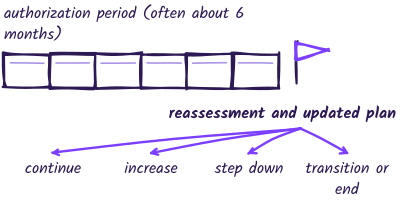
Reauthorization
Reauthorization is your health plan's or Medicaid program's review, near the end of an approved period of ABA, of whether to approve another.
Definition →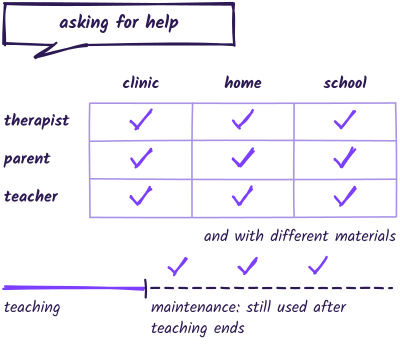
Generalization and maintenance
Generalization means your child uses a skill beyond where it was taught, and maintenance means they keep using it over time after teaching ends.
Definition →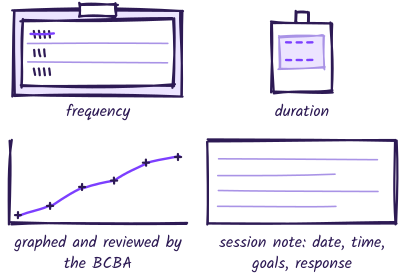
Data collection and session notes
In ABA, data collection is the steady, measurable record of what happens each session, and a session note is the written record of that session.
Definition →