



Colorado families have more choices than ever in finding the right school for your child. If your local school is not working, Colorado has other options that may fit your child better. From microschools and specialized private programs to public charter and online schools, families can find learning environments that match their child’s strengths, interests, and needs.
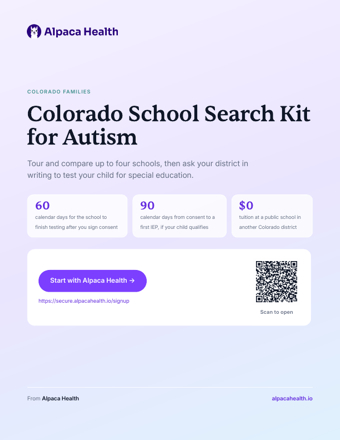
Compare up to four Colorado schools and ask your district to test your child.
We also sent the link to your email.
We include examples, direct links, and information about where each program is located so you can explore the opportunities that feel like the best fit for your family.
Understanding Colorado’s Education Landscape
Colorado is known for having one of the strongest school choice systems in the country. Families can enroll across district lines, apply to charter schools, choose online public schools, create a homeschool plan, or opt for private and alternative programs.
Key things to know:
- You can submit a School Choice application to any public school in Colorado, even outside your home district.
- Charter schools are tuition free and open to all Colorado families.
- Homeschooling and microschooling fall under Colorado’s Nonpublic School Law, which gives families flexibility with curriculum and structure.
- Private schools set their own tuition and admissions policies.
- Students with IEPs have federally protected rights in public schools.
You don't have to figure this out alone.
Alpaca Health matches your family with a vetted, in-network BCBA. We handle the insurance paperwork so you can focus on your child.
Get matched with a BCBA →
Microschools in Colorado
What Are Microschools?
Microschools emerged in the early 2000s as a response to families seeking more flexible, personalized, and community-based education. Influenced by the one-room schoolhouse model, they emphasize small class sizes, individualized instruction, and close relationships between teachers, students, and families. Early innovators drew inspiration from homeschooling, Montessori programs, and learner-driven education. Today, microschools operate in many forms. Some are independent private programs, others run through co-ops, learning pods, or faith-based communities, and some partner with online curricula or charter networks. Resources like EdChoice and My School Choice provide helpful national context on how these models have grown, who they serve, and what they typically cost.
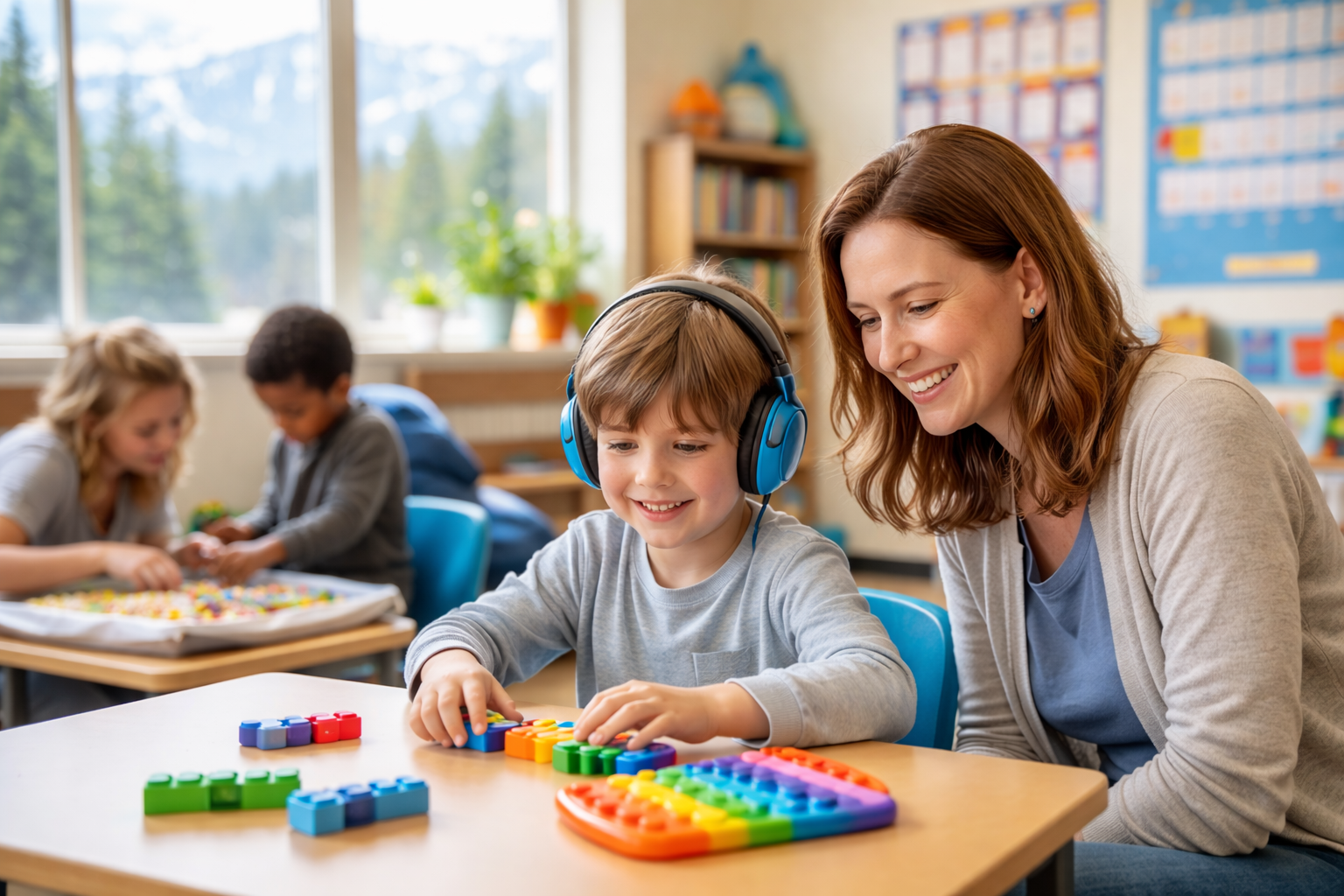
For autistic students or students with disabilities, microschools can offer both strengths and challenges. Many families appreciate the highly individualized instruction, reduced sensory load, and relationship-based environments that small programs provide.
However, microschools vary widely in their ability to deliver formal special education services. Some have strong experience with neurodiverse learners, while others may lack trained staff or structured support. As a result, families often look closely at each program’s approach, staffing, and flexibility. The overall concept resonates with many parents of autistic students, but quality and fit depend heavily on the specific school. National microschool hubs like Microschools.com help illustrate how diverse the landscape has become.
What microschools offer
Pros:
- Small class sizes.
- Flexible curriculum.
- More one-on-one attention.
- Strong relationships between educators, students, and families.
- Often more affordable than traditional private schools.
Cons:
- Tuition varies.
- May not provide special education services unless privately arranged.
- Quality varies from school to school.
- Less oversight compared to public programs.
Below are some Colorado microschools and micro-style programs. Tuition is included only when the school publicly posts it.
Examples of Colorado Microschools
- Lantern School (Denver)
A secular microschool focused on child led learning and mixed age classrooms. - Northbridge Microschool (Longmont)
A project based and hands-on microschool started by a longtime educator. - Ascend Microschool (CO Springs)
A highly individualized microschool with multi age cohorts that emphasizes mastery based learning. - Tshanywhere Microschools List (Statewide)
A statewide resource that profiles microschools across Colorado.
Compare up to four Colorado schools and ask your district to test your child.
We also sent the link to your email.
Alternative School Models in Colorado
Colorado has a growing number of specialized private programs, including outdoor schools, strength based schools, and programs designed specifically for neurodivergent students.
Outdoor and Nature Based Schools
- Worldmind Nature Immersion School (Denver)
Outdoor learning program that combines academics with ecological and play based education.
Strength Based or Neurodiversity Focused Schools
- Temple Grandin School (Boulder)
A private middle and high school designed for students with autism and similar profiles who thrive in smaller, supportive settings. Tuition is listed publicly at $48,880 per year. - Havern School (Littleton)
A private school specializing in learning disabilities, executive functioning, and social emotional support for grades 1 to 8. - The Joshua School (Englewood and Boulder)
A nonprofit school serving students with autism spectrum disorder and developmental disabilities through highly individualized programming. - Kishami Academy (Colorado Springs)
A strength based private school and nonprofit supporting neurodivergent students. - Blue Mountain Elementary, St. Vrain Valley School District (Longmont area)
A public school with strong special education programming and district supported services.
The Alpaca Health guide to Colorado Autism Resources may be helpful.
Compare up to four Colorado schools and ask your district to test your child.
We also sent the link to your email.
School Choice in Colorado
If your neighborhood school is not a good fit, public options may still meet your child’s needs at no cost.
Charter Schools
Charter schools are public, tuition free, and operate independently with their own teaching models. Colorado has more than 250 charter schools, including:
- STEM focused schools.
- Arts integrated schools.
- Expeditionary learning programs.
- Classical or college preparatory models.
Each district lists its charter schools on its website.
Open Enrollment Across Districts
Colorado’s open enrollment policies allow you to apply to any public school in the state. Acceptance is based on space, but transportation may not be provided.
Online Public Schools
Colorado offers multiple state authorized online schools such as:
- Colorado Virtual Academy (Statewide).
- Colorado Connections Academy (Statewide).
These schools are tuition free and follow state standards.
Special Education Rights and Advocacy in Colorado
If your child has an IEP or may need one, public schools are required by federal law to evaluate, support, and provide accommodations. Families also have the right to request evaluations, attend all meetings, and receive progress updates.
Additional guides can help you understand your rights:
- Understood.org IEP guide.
- Colorado Department of Education - IEP process.
How to Choose the Right School Option
When exploring school options, consider:
- Your child’s learning style.
- The level of support they need.
- Class size and staffing.
- School culture and values.
- Cost and location.
- Availability of special education or therapy services.
- Whether the school can collaborate with outside providers.
It often helps to tour programs, talk to teachers, and ask how they support children with similar needs or challenges.
Final Thoughts
Colorado offers a wide range of educational choices for learners who may not fit the mold of your local school district. There are options across the state that can help your child learn.
You don't have to figure this out alone.
Alpaca Health matches your family with a vetted, in-network BCBA. We handle the insurance paperwork so you can focus on your child.
Get matched with a BCBA →RELATED ARTICLES