





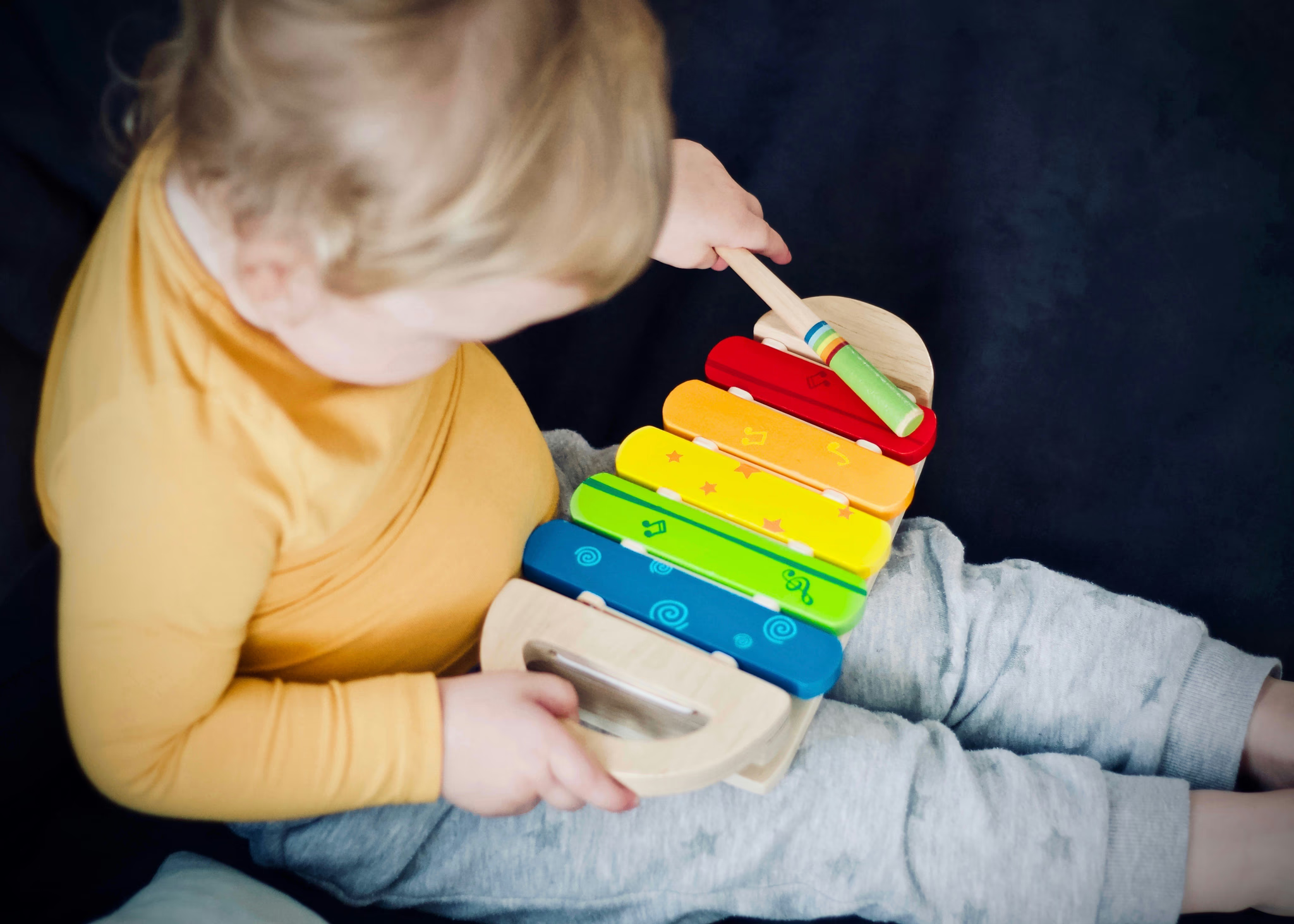
Early signs of autism in babies and toddlers usually show up in how a child connects and communicates with you. The Centers for Disease Control and Prevention (CDC) lists signs such as not responding to their name by 9 months or using few or no gestures by 12 months. Not sharing interests with you by 15 months and not pointing to show you something interesting by 18 months are on the list too.
Some children show signs in their first year, and others show none until 24 months or later. A list of signs can't diagnose autism. If you notice any of them, talk with your pediatrician and ask about an autism screening.
Key Takeaways
- Signs can show up in babyhood or later: Some babies show differences before their first birthday. Others seem on track until talking and play get more complex. Girls are often diagnosed later.
- The clearest early clues are social: Watch how your baby looks at faces, smiles back, turns when you call their name and points to share something with you.
- Losing skills is a reason to call now: If your child stops using words or skills they once had, tell your pediatrician right away, whatever their age.
- A list can't diagnose autism: Your pediatrician can screen your child and refer you for an evaluation. When you're ready for therapy, Alpaca Health can match you with a behavior analyst once you start your intake.
You don't have to figure this out alone.
Alpaca Health matches your family with a vetted, in-network BCBA. We handle the insurance paperwork so you can focus on your child.
Get matched with a BCBA →
Signs of autism by age
Most early differences show up as social milestones that come late. The CDC defines a milestone as something most children (75% or more) can do by a certain age.
This table uses the CDC's "Learn the Signs. Act Early." milestone checklists, updated May 16, 2026, and the CDC's list of autism signs, dated May 16, 2024. At 9, 12, 15, 18, 24 and 36 months, the right column is a sign from that list. The list names no sign at 2, 4, 6 and 30 months, so at those ages the right column is a missed social milestone from that age's checklist.
| Age | What most children do by this age | Mention to your pediatrician if your child |
|---|---|---|
| 2 months | Looks at your face, smiles when you talk to or smile at them, watches you as you move, makes sounds other than crying | Doesn't look at your face or smile when you talk to or smile at them |
| 4 months | Smiles on their own to get your attention, coos ("oooo," "aahh"), makes sounds back when you talk, turns toward your voice | Doesn't smile to get your attention or make sounds back when you talk |
| 6 months | Knows familiar people, laughs, takes turns making sounds with you, makes squealing noises | Doesn't laugh or take turns making sounds with you |
| 9 months | Looks when you call their name, shows several facial expressions, smiles or laughs at peek-a-boo, makes sounds like "mamamama," lifts arms up to be picked up | Doesn't respond to their name, or doesn't show facial expressions such as happy, sad, angry and surprised |
| 12 months | Plays games like pat-a-cake, waves "bye-bye," calls a parent "mama" or "dada" or another special name, understands "no" | Doesn't play simple games like pat-a-cake, or uses few or no gestures, such as not waving goodbye |
| 15 months | Shows you an object they like, tries to say one or two words besides "mama" or "dada," points to ask for something or to get help | Doesn't share interests with you, such as showing you an object they like |
| 18 months | Points to show you something interesting, tries to say three or more words besides "mama" or "dada," follows one-step directions without gestures, plays with toys in a simple way | Doesn't point to show you something interesting |
| 24 months | Notices when others are hurt or upset, says at least two words together like "More milk," uses more gestures than waving and pointing | Doesn't notice when others are hurt or upset |
| 30 months | Says about 50 words, uses things to pretend like feeding a block to a doll, plays next to other children and sometimes with them | Doesn't use things to pretend or play next to other children |
| 36 months | Notices other children and joins them to play, talks with you using at least two back-and-forth exchanges | Doesn't notice other children and join them in play |
Missing one milestone doesn't mean your child has autism. Autistic children also may not have all or any of the behaviors on the CDC's list. Use the table as a guide for what to bring up at a checkup. If your child loses a skill they once had, tell your pediatrician right away, at any age.
Can you tell if a newborn has autism?
No, a doctor can't tell at birth. Research suggests the behavioral signs aren't there yet. A study that followed babies from 6 months compared babies later diagnosed with autism to other babies. At 6 months, both groups looked at faces, shared smiles and made sounds about as often. Those behaviors then dropped over time, and the differences were clear by 12 months.
A 2013 study of eye-looking found a change even earlier. Babies later diagnosed with autism started out looking at people's eyes at typical levels, and their looking dropped between 2 and 6 months. The researchers measured this with eye-tracking equipment in a lab.
At home, you can watch the early social milestones. By 2 months, most babies look at your face and smile when you talk to them. By 4 months, most smile on their own to get your attention. If your baby isn't doing these yet, mention it at the next well visit.
Early signs of autism in babies under 12 months
Before the first birthday, differences show up in the small back-and-forth moments between you and your baby. Write down anything you notice, with the date, so your doctor has something specific to look at.
Less eye contact or social smiling
By 2 months, most babies look at your face, smile when you talk to or smile at them, and watch you as you move. These are a baby's first social skills.
If your baby makes less eye contact or doesn't smile back as much as you'd expect, note when you first saw it. Some of these babies seem more inward and less tuned in to your face and voice. On its own, it doesn't mean your child has autism, and it's something to mention to your doctor.
Not looking when you call their name
By 9 months, most babies look when you call their name. Not responding to their name by 9 months is one of the early signs of autism the CDC lists. If your baby doesn't turn to their name most of the time, your pediatrician may check their hearing first.
The American Academy of Pediatrics (AAP) notes that a child who seems to ignore you can leave parents worried about hearing. If hearing checks out fine, you and your doctor can look at what else might be going on.
Few sounds, babbling or gestures
Babies "talk" with sounds and gestures before they have words. By 6 months, most take turns making sounds with you and make squealing noises. By 9 months, most make lots of sounds like "mamamama" and "bababababa." They also lift their arms to be picked up and show faces for happy, sad, angry and surprised.
By 12 months, most babies wave "bye-bye." Using few or no gestures by that age is also on the CDC's list. If your baby isn't trying out sounds or gestures, or seems much quieter than other babies their age, bring it up with your doctor.
Little interest in games like peek-a-boo
By 9 months, most babies smile or laugh when you play peek-a-boo. By 12 months, most play games like pat-a-cake with you. Not playing simple games like this by 12 months is a sign of autism the CDC lists. If your baby rarely joins in when you start one of these games, mention it at the next visit.
Signs of autism in a 1-year-old
Between 12 and 18 months, the clearest clues involve sharing attention with you and using first words. This is when most children start using a point and a look to bring you into what they see.
Not pointing to show you things
Pointing to share something is part of joint attention, which means you and your child looking at the same thing together. Most children look where you point by 12 months and point to things they want by 15 months. By 18 months, they point at something interesting and check that you're looking too.
An autistic toddler may take your hand and lead you to the thing they want, with little eye contact. Not sharing interests by 15 months, such as not showing you a toy they like, is on the CDC's list of autism signs. Not pointing to show you something interesting by 18 months is on the list too.
Few or no words
By 15 months, most children try to say one or two words besides "mama" or "dada." By 18 months, most try to say three or more words. They also follow one-step directions without gestures, like handing you a toy when you say, "Give it to me."
Speech delays happen for many reasons. If late talking comes along with social or behavior differences, though, it could be an early sign of autism and is worth raising with your pediatrician.
What happens at the 18- and 24-month checkups?
Your pediatrician screens for autism at these two visits. The AAP recommends that all children be screened for autism at their 18-month and 24-month checkups. One screener used at these visits is the Modified Checklist for Autism in Toddlers, Revised with Follow-Up (M-CHAT-R/F). It's a parent questionnaire that was tested on 16,071 toddlers at these checkups.
The CDC's 18-month checklist suggests questions to think about before the visit. One asks, "Has your child lost any skills he/she once had?" Another asks, "Is there anything your child does or does not do that concerns you?" Thinking through your answers ahead of time can make the visit easier.
Signs of autism in a 2-year-old
By the second birthday, differences often show in words, play and how a child handles change. Most 2-year-olds say at least two words together, like "More milk," and notice when someone is hurt or upset. Not noticing when others are hurt or upset by 24 months is on the CDC's list of autism signs.
Speech that isn't building into phrases
By 30 months, most children say about 50 words. They also put two or more words together with an action word, like "Doggie run." Some autistic toddlers have words but don't use them much to talk with you.
They may repeat words or phrases over and over, which is called echolalia. Autistic children may keep repeating what they hear for longer than other children. If your child used words and then stopped using them, tell your pediatrician right away.
Repetitive behaviors and intense interests
Many autistic toddlers have repetitive movements, also called stimming. These movements can be their way of managing sensory input. The CDC's list of autism signs includes these repetitive behaviors:
- Flapping hands, rocking or spinning in circles.
- Lining up toys and getting upset when the order changes.
- Playing with toys the same way every time.
- Focusing on parts of objects, like wheels.
- Getting upset by small changes.
- Needing to follow certain routines.
Autistic toddlers may also get very focused on specific routines and objects, like watching a spinning fan. Most toddlers like routines, so watch for real rigidity, like a meltdown whenever something changes.
Pretend play and playing with others
By 30 months, most children use things to pretend, like feeding a block to a doll as if it were food. They play next to other children and sometimes with them. By 3 years, most notice other children and join them to play. Not doing this by 36 months is on the CDC's list.
An autistic toddler may prefer to play alone, even at daycare or on playdates. Their play may also be repetitive and focused more on objects than on people.
Strong reactions to sounds or textures
Unusual reactions to the way things sound, smell, taste, look or feel are on the CDC's list as well. For example, a toddler might cover their ears at the sound of a vacuum or refuse clothes with certain textures. The CDC also lists unusual eating and sleeping habits among the other traits many autistic people have.
What if your child loses words or skills?
Tell your pediatrician right away if your child stops doing something they used to do, whatever their age. Some autistic children gain skills until around 18 to 24 months and then stop gaining new skills or lose ones they had.
The AAP says about 25% of children later diagnosed with autism develop some language and then stop using it. This usually happens between 15 and 24 months, and the loss can be sudden or gradual.
A 2013 review of 85 studies covered 29,035 autistic people. It found a loss of skills in about 32% of them, at an average age of 1.78 years, or about 21 months. Writing down what your child could do, and when, gives the doctor a clearer picture.
What else can look like autism?
Several other conditions share some of the same early differences. An evaluation is how they get told apart. A hearing problem can make a baby seem to ignore their name, which is one reason the doctor may check hearing first.
A speech delay on its own means late words without the social differences of autism, like not pointing or not sharing attention. Global developmental delay means delays across several areas, such as movement, learning and language. It can overlap with some signs of autism. If your child has delays in more than one area, ask your doctor which kind of evaluation fits.
What to do if you notice signs
Start with a conversation with your pediatrician, and you don't need to wait for the next checkup. Trust your gut, even if friends and family say "let's wait and see." You can take these steps in order:
- Write down what you see: Note what your child does or doesn't do and when you first noticed it. The CDC's free Milestone Tracker app lets you check milestones from 2 months to 5 years.
- Talk to your pediatrician and ask about screening: The AAP recommends autism screening at 18 and 24 months, or any time a parent has a concern. The CDC notes that milestone checklists don't replace a proper screening tool. Before the visit, you can try Alpaca Health's free at-home M-CHAT-R screener, which is for toddlers 16 to 30 months old. A screener can't diagnose autism. Its result gives you something concrete to bring to the appointment.
- Contact your state's early intervention program: For children under 3, each state runs an early intervention program. These programs come from Part C of a federal law, the Individuals with Disabilities Education Act (IDEA). You don't need a doctor's referral or a diagnosis to call, and the CDC lists contacts for each state. If your child is 3 or older, call any local public elementary school and ask for an evaluation.
- Ask for a referral for an evaluation: Your pediatrician can refer you to a developmental pediatrician, a child neurologist, or a child psychologist or psychiatrist. By age 2, an autism diagnosis by an experienced professional can be considered reliable. Before you book, ask what the evaluation costs and whether your insurance covers it.
Why early detection of autism matters
The sooner differences are noticed, the sooner your child can get support, and early intervention doesn't require an autism diagnosis. Early diagnosis and support are more likely to have major long-term positive effects on symptoms and later skills. State early intervention programs serve children from birth through age 2 with developmental delays or disabilities. That means a toddler can get help while the question of autism is still open.
Therapies that help young autistic children with communication and play include:
- Applied behavior analysis: ABA therapy for toddlers uses play and daily routines to build talking and everyday skills.
- Speech therapy: A speech-language pathologist works on understanding and using language, including gestures.
- Occupational therapy: An occupational therapist works on everyday skills like feeding and dressing, and on how your child handles sensory input.
- Play therapy: A therapist uses the play your child already enjoys to build back-and-forth interaction.
Why some signs show up later
Some children meet their early milestones and show communication or social differences only as talking and play get more complex. Autism begins before age 3, and its symptoms can change over time. It's called a spectrum because autistic children differ widely in their strengths and in the support they need.
For some children, differences become easier to see once they start school and play with other children every day. Alpaca Health's free at-home screener for older children is for ages 4 to 11. Whatever your child's age, careful notes and a talk with your doctor are the place to start.
You don't have to figure this out alone.
Alpaca Health matches your family with a vetted, in-network BCBA. We handle the insurance paperwork so you can focus on your child.
Get matched with a BCBA →How Alpaca Health helps families from the start
Alpaca Health helps families once they're ready to look into ABA therapy. It matches your family with a vetted, in-network Board Certified Behavior Analyst (BCBA), a clinician who designs and oversees ABA therapy. It also handles the insurance paperwork so you can focus on your child.
Alpaca Health simplifies care coordination and offers resources, including free at-home autism screeners, to help you make informed decisions. If you're ready to explore ABA therapy for your child, you can start your intake.
Frequently asked questions about early signs of autism
When can you first see symptoms of autism?
Some children show signs of autism within their first 12 months, and others show none until 24 months or later. In one study, babies later diagnosed with autism looked at faces and smiled about as often as other babies at 6 months. The differences were clear by 12 months.
Do autistic babies laugh and smile?
Yes, many do. In the same study, babies later diagnosed with autism shared smiles about as often as other babies at 6 months. Their smiling then dropped over time. Mention it to your doctor if your baby smiles back less and less, or doesn't smile on their own to get your attention by 4 months.
Do babies and toddlers with autism like to be held?
Many autistic children love being held and cuddled. Some prefer less touch because of sensory sensitivities, and unusual reactions to the way things feel are on the CDC's list of signs. How much touch a child likes varies a lot from one child to the next.
Do babies and toddlers with autism sleep less?
Sleep problems are common in autistic children, based on a 2022 review of sleep research. They might have trouble falling asleep or staying asleep, but it depends on the child.
Are babies and toddlers with autism more fussy?
Fussiness on its own isn't a reliable sign of autism. Some autistic children get more irritable because of sensory sensitivities and fewer ways to cope, while others seem unusually calm or passive. If fussiness comes along with social differences, like not smiling back, mention both to your doctor.
What is the earliest age autism can be diagnosed?
The CDC says autism can sometimes be detected at 18 months or younger. By age 2, a diagnosis by an experienced professional can be considered reliable. The AAP's 2020 clinical report also says autism can be diagnosed as young as 18 months. Once your child has a diagnosis, you can start your intake with Alpaca Health to find an in-network BCBA.
Which signs in a 2-year-old should you tell the doctor about?
Tell your pediatrician if your 2-year-old doesn't say two words together, doesn't notice when others are hurt or upset, or has lost words or skills. Lining up toys and getting very upset over small changes are on the CDC's list too. The AAP recommends an autism screening at the 24-month checkup for every child.
Support for the hard days.
When you're ready for expert support, Alpaca Health matches your family with a BCBA who can help with the hardest moments, at home or in a clinic.
Get matched with a BCBA →
RELATED ARTICLES



NEW TO THE TERMS?
ABA Glossary for Parents →The words you will hear from your child's care team, explained in plain language.