





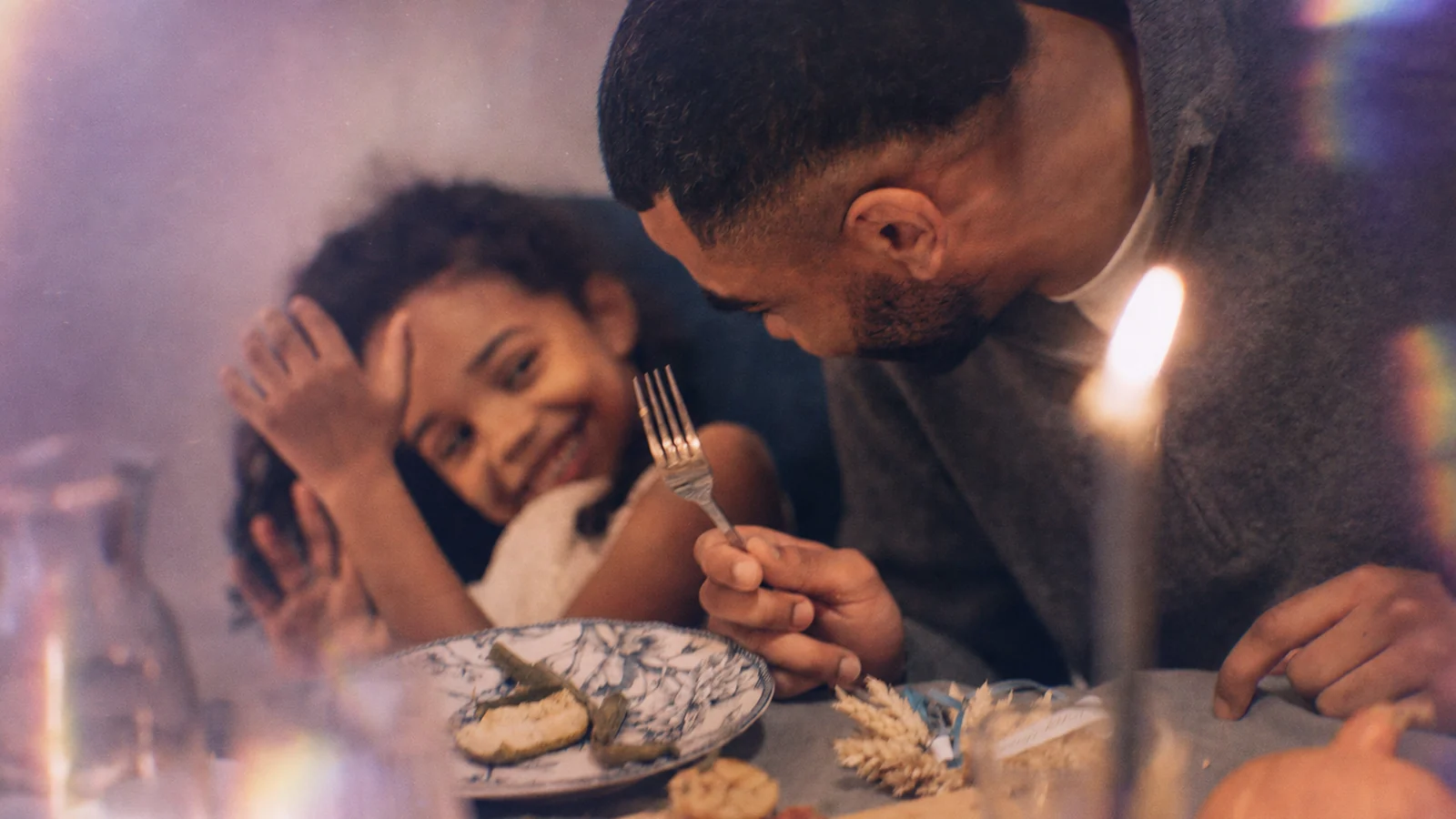
If Thanksgiving is a few days away, you may already be picturing the drive, the crowded kitchen, the turkey your child won’t touch and the aunt who always wants a hug. For an autistic child, one holiday changes the food, the noise, the people and the time dinner happens, all on the same afternoon.
A little dread before the holiday is normal, and most of it eases once you have a plan. An autism-friendly Thanksgiving is built around what your child can handle, with a few safe foods, a room for breaks and a clear time to head home. Keeping the day small or leaving early still counts as a good Thanksgiving.
Key Takeaways
- Pick the setting first: Decide whether to host, visit or keep the day small, because that choice shapes everything else you plan.
- Prepare your child and tell relatives ahead: A social story, a countdown calendar and a short message to the host make the day more predictable for everyone.
- Bring safe foods and plan breaks: Pack the foods your child already eats, set up a calm room and agree on a break signal before you arrive.
- Get help with holiday routines: If you’d like support practicing family gatherings with your child, you can start your intake with Alpaca Health.
Why is Thanksgiving hard for many autistic kids?
Almost everything about the day is different from a normal Thursday, and many autistic children rely on things staying the same. The Centers for Disease Control and Prevention (CDC) lists getting upset by minor changes, needing certain routines and unusual reactions to how things sound, smell, taste, look or feel among the signs of autism. Thanksgiving brings all of those at once, usually in someone else’s house.
| Trigger | Why it’s hard | One quick fix |
|---|---|---|
| Cooking smells | Turkey, onions and pie fill the house for hours | Open a window, or arrive after most of the cooking is done |
| Candles and bright lights | Scented candles add smell, and bright or flickering lights add glare | Ask the host to skip scented candles and dim the overhead lights |
| A loud, crowded house | Many voices talk over each other, with no way to tune them out | Headphones and a calm room your child can use any time |
| The parade and football on TV | The TV runs loud all day, with crowds cheering | Ask for the volume down, or keep the TV in a room your child doesn’t need |
| Hugs and questions from relatives | Touch and small talk from people your child sees once a year | Tell relatives ahead how your child likes to say hello |
| New foods and a long sit-down meal | Unfamiliar smells and textures, and dinner at a different time than at home | Bring safe foods and agree on a short time at the table |
| Chewing sounds and being watched | The sound of chewing and scraping plates, and comments on what your child eats | Seat your child at the end of the table with headphones, and ask relatives not to comment on plates |
Support for the hard days.
When you're ready for expert support, Alpaca Health matches your family with a BCBA who can help with the hardest moments, at home or in a clinic.
Get matched with a BCBA →
Should you host Thanksgiving or visit family?
Where you spend the day decides most of what you’ll prepare, so pick the setting first. Is a new place harder for your child, or a full house at home? If new places are harder, hosting or a small day at home usually works best. If your child mostly needs a way out, a nearby visit you can leave in ten minutes is often easier.
| Option | Noise | Control over food and timing | A place for breaks | How easy it is to leave |
|---|---|---|---|---|
| Hosting at home | Loud, but in a house your child knows | Full control | Your child’s own room | Your child stays, and guests leave at the end time |
| Visiting family nearby | Depends on the host | Some, if you ask ahead | A room the host sets aside | Easy, with a short drive home |
| Traveling far | Loud, plus the travel itself | Little | A guest room or hotel room | Hard, since you’re far from home |
| A small day at home | Low | Full control | Anywhere at home | Nothing to leave |
Hosting at your house
Hosting gives you control over the menu, the meal time and the noise, and your child’s bedroom becomes the calm room. Put an end time in the invitation so your child knows when the house will empty, and let your child stay in their room while guests arrive.
Visiting family nearby
Ask the host for a room your child can use for breaks, and arrive before most guests so your child settles in while the house is still calm. If two adults are going, take two cars so one of you can leave early with your child without ending the day for everyone.
Traveling to see family
For 2026, AAA, the auto club, expects 72.9 million people to drive for Thanksgiving. It lists the worst traffic on Wednesday from noon to 7 pm, with very little on Thanksgiving Day. Leave before noon on Wednesday or drive on Thursday morning, and head home on Sunday before 11 am. If you’re flying, start early with the basics of traveling with your child.
Keeping Thanksgiving small at home
Staying home is a real option. A 2023 review of studies found fear, stress and anxiety among mothers of autistic children around family gatherings, and some mothers stopped going, so you’re far from the only parent who has skipped one. You can cook your child’s favorites, video call the grandparents or drop by for dessert only.
How do you prepare an autistic child for Thanksgiving?
Start about a week ahead, so the day feels familiar before it arrives. Most of the work is showing your child what will happen, in order, and telling relatives what helps.
Explain Thanksgiving with a social story
A social story is a short story with pictures that tells your child what will happen and what to do if it feels like too much. The autism research center at Children’s Hospital of Philadelphia suggests a story that covers the whole day. It starts with waking up on a day with no school and runs through the car ride, the people, the food, saying goodbye and coming home. For a child who doesn’t read yet, try one line, such as “First we drive to Grandma’s, then we eat, then we play, then we go home.”
Count down the days on a calendar
Mark Thanksgiving on a calendar and let your child cross off one day each morning. Add the last school day, any class party, the drive and the first day back. You can also put a picture of each part of Thanksgiving Day on your child’s visual schedule.
Look at photos of the people and places
Show photos of the relatives your child will see, with their names, plus the house, the dog and the calm room. A face and a name ahead of time make the first hello with a once-a-year relative much easier.
Practice the meal at home
Set the table one evening and practice the parts that will be new. Your child can sit for a few minutes with a timer, pass a bowl, say “no, thank you” and use the break signal. Try any new outfit on at home first, too.
Tell the host and relatives what helps
A short text to the host a few days ahead saves you from explaining at the door.
| What to tell them | What you might say |
|---|---|
| The foods your child eats | “We’ll bring his own food, so please don’t worry if he skips the turkey.” |
| A room for breaks | “Could we use a bedroom as a calm room? She may go in and out all day.” |
| How your child says hello | “He waves hello. Please don’t ask him for hugs or kisses.” |
| The topics your child loves | “Ask her about trains. She’ll be thrilled to tell you everything.” |
| What your child will skip | “He’ll sit out the go-around-the-table thanks, and that’s fine with us.” |
| When you plan to leave | “We’re planning to head home around five, maybe sooner.” |
If your child uses AAC (augmentative and alternative communication, such as a talker app or picture board), add words like hi, turkey, pie, break and all done, and show relatives how it works. Kids who use the Picture Exchange Communication System can bring cards for the same words. Tips on talking with extended family can help you explain autism to relatives before the visit.
How do you plan Thanksgiving Day so your child can cope?
A good day usually looks like a normal morning, a short visit with breaks built in, and a drive home before your child runs out of energy. Write down who is watching your child at each point, because in a busy house each adult tends to think someone else is watching. This example assumes a 3 pm meal about an hour’s drive away.
| When | What happens | Who is with your child |
|---|---|---|
| Usual wake-up time | Usual breakfast and morning routine, then read the social story once | You |
| Late morning | Pack the calm-down bag and safe foods, and change into comfortable clothes | You or your partner |
| Noon | Drive over with a snack, headphones and a favorite show | The driver, plus one adult in the back if your child needs it |
| About 1 pm | Arrive before most guests, say hello your child’s way, then visit the calm room | You |
| Early afternoon | Play, a kitchen job, a walk outside and breaks as needed | One named adult at a time, taking turns |
| 3 pm | Sit at the table for the agreed time with safe foods, then leave the table | An adult sitting next to your child |
| After the meal | Calm room or a movement break, with dessert optional | The next adult on watch |
| By 5 pm, or sooner | Goodbyes and the drive home | You |
| Evening | Usual bedtime routine, as close to normal as you can manage | You |
Set up a calm room for breaks
Pick a room away from the kitchen and the TV, ideally with a door, and bring a blanket, a few comfort items and the tablet. Walk your child there when you arrive, and put a sign on the door asking cousins to knock. Treat it as a place your child can choose any time, so it never feels like a time-out.
Agree on a break signal
Pick one signal, such as a word, a card or a squeeze of your hand, and practice it at home. When your child uses it on Thanksgiving, go right away. If your child can’t signal yet, watch for early signs like covering their ears, pacing or going still, and offer the break yourself.
Pack a calm-down bag
Most families pack noise-canceling headphones, fidgets, a favorite toy, a tablet and charger, safe snacks, wipes and a change of clothes. Add the calming tools from your child’s sensory diet, which is the daily mix of movement and calming activities their body relies on, such as a weighted lap pad.
Pick comfortable clothes
Let your child wear soft clothes they already wear often, with the tags cut out. If relatives want a dressed-up photo, pack a nicer shirt for a quick change before the photo and change back right after.
Take turns watching your child
A full house with doors opening all day makes it easy for a child who tends to wander to slip out. In a 2012 study of autistic children, 49 percent had tried to wander off at least once after age 4. The American Academy of Pediatrics recommends a tag team approach, so a trusted adult is always watching. It also notes that drowning causes almost 3 in 4 deaths of autistic children who wander off alone.
Name one adult at a time, and have them hand off out loud when their turn ends. Ask the host about pools, ponds or creeks nearby. The National Autism Association suggests you bring door chimes to a relative’s home and keep ID on your child. If your child goes missing, call 911 and search nearby water first.
Reward small steps with praise or a favorite activity
Reward small wins right away with specific praise or a favorite activity. A hello your child’s way, five minutes at the table, using the break card and the car ride all count. A first-then card helps, such as first five minutes at the table, then tablet time. Keep rewards away from eating, hugs and eye contact, and bring your child’s token board if they use one.
How do you make the Thanksgiving meal work for a picky eater?
Food is often the hardest part of the day. One analysis of 17 studies found that autistic children had about five times the odds of feeding problems compared with other children. Thanksgiving is a hard day to try new foods, so aim for your child eating something they like, near the family, without a fight.
Bring the safe foods your child already eats
Bring the exact safe foods your child eats at home, down to the brand of nuggets and the plate they like, since a homemade copy often gets refused. Tell the host, and put your child’s food on the table in a serving dish so it’s part of the meal.
Offer a tiny taste plate with no pressure
If your child is curious, set a small plate beside theirs with a pea-sized bit of turkey, potatoes or pie. Looking at it, smelling it, touching it or ignoring it are all fine. Skip the one-bite rule, and serve foods so they don’t touch.
Choose where your child sits and for how long
Seat your child at the end of the table next to you, near the door and away from the loudest relative. Agree with the host that your child can leave the table when they’re done, even after ten minutes, and that headphones are fine. If dinner runs late, give a snack first or let your child eat early and join the table for dessert.
If your child eats only a handful of foods, ask your pediatrician after the holiday whether feeding therapy could help. A BCBA (Board Certified Behavior Analyst, a clinician who designs behavior therapy plans) can also work on new foods slowly, over weeks.
Turn these ideas into a plan built for your child.
Activities at home are a good start, and a Board Certified Behavior Analyst can shape them into a program around your child's goals. Alpaca Health matches you with one.
Get matched with a BCBA →
What are some autism Thanksgiving activities for kids?
Good activities give your child something to do with their hands while the house is busy, and they’re easy to stop. Start from what your child already enjoys, and keep glue, paint and anything sticky optional.
Low-mess turkey crafts
Trace your child’s hand and color it into a turkey with markers, or make a paper plate turkey with precut feathers and a glue stick. Sticker turkeys work for kids who hate sticky hands, and free coloring pages fit in the calm-down bag.
A thankful tree that works without words
Put bare branches in a jar or draw a tree on paper, then cut out paper leaves. Your child can draw on a leaf, add a photo, point to a picture card or tell you what to write. Going around the table to say thanks is the hard moment for many kids, so let your child hand over a leaf or pass.
Thanksgiving sensory bins
Fill a bin with dry rice or dried beans, small gourds, fake leaves and scoops, and set it up in the calm room. For a child who still puts things in their mouth, use larger items and stay close, or try a bin of water with plastic vegetables to scrub.
Jobs in the kitchen and at the table
A job gives your child a reason to be in the room without being the center of attention. Your child can wash potatoes, tear bread for stuffing, count rolls, set out place cards or match lids to leftover containers after dinner, and kids who hate mess can stick to the dry jobs.
Games, walks and movement breaks
Take a walk before the meal, toss a football in the yard, or send your child on a scavenger hunt for a pinecone, a red leaf and an acorn. A board game with one relative is a good way to spend time together without much talking.
What should you do if your child melts down at Thanksgiving?
A meltdown is an intense reaction to feeling overwhelmed, and the National Autistic Society is clear that it isn’t bad behavior. Early signs can include pacing, asking the same question over and over, rocking or going very still, and a break offered at that point can stop it from building.
If a meltdown starts, move your child somewhere calmer, like the break room or the car, and cut the input with dim lights, less noise and fewer words. Stay close, ask relatives to give you space, and save questions until your child settles, since recovery can take a while.
Afterward, going back in and heading home are both fine choices. Ask one relative ahead of time to tell the others “They need a few minutes, and they’re OK,” so you don’t have to explain. Later, note what came right before it, so you can plan for autistic meltdowns at the next gathering.
What helps autistic teens and young adults at Thanksgiving?
Older kids usually know what wears them out, so ask your teen what they want the day to look like. Many autistic teens find the hardest parts are relatives crowding the room they escape to, the sound of chewing, being watched while they eat and a day that drags on for hours. Agree on an exit time and a break plan your teen controls. That can include stepping outside alone with a simple line like “I need a few minutes, and I’ll be back.”
An autistic self-advocate interviewed by Autism Speaks suggests setting limits before you go, picking an ally who can explain things to relatives, and planning downtime for the day after. A role helps too, like running the music or making their own dish, and a young adult who drives can bring their own car. Small talk can wait, and you can work on social skills for teens later, at your teen’s pace.
How do you get through Thanksgiving break and Black Friday?
For many families the whole week changes, with school closed for some or all of it and therapy sessions sometimes paused. Ask your child’s therapy provider ahead of time whether sessions run during the holiday week.
Keeping a loose routine all week
Keep wake-up time, meals and bedtime close to normal, and use a simple picture schedule for each day off. One outing a day is plenty for most kids, and the day after Thanksgiving works well as a rest day at home.
Black Friday crowds and shopping
Stores are loud and packed on Black Friday morning when the big sales open, so shop online or wait until later in the weekend. For the grocery run, Walmart says its U.S. stores run sensory-friendly hours from 8 to 10 am daily, with the radio off, the TV walls on a still image and the lights lowered where possible. Its page lists no holiday exceptions, so call your store first.
Going back to school after the break
Count down to school over the weekend and lay out clothes and the backpack on Sunday. Ask the teacher about schedule changes ahead, since December brings assemblies, class parties and Christmas plans, and give extra downtime after school that first week.
How Alpaca Health helps with holidays and family gatherings
Alpaca Health connects families with independent BCBAs who provide ABA therapy at home, in a clinic or in the community. ABA (applied behavior analysis) teaches skills in small steps with lots of practice. Parent coaching is part of that care, so you and your child’s BCBA can practice the hard parts of a holiday ahead of time, with a social story, a break card and a first-then plan for the meal. Alpaca Health also checks your insurance coverage at intake. If you’d like help getting your child ready for the next family holiday, you can start your intake today.
You don't have to figure this out alone.
Alpaca Health matches your family with a vetted, in-network BCBA. We handle the insurance paperwork so you can focus on your child.
Get matched with a BCBA →
Frequently Asked Questions About Autism and Thanksgiving
Where can you find a free Thanksgiving social story?
The Human Development Center at LSU Health New Orleans offers a free one-page Thanksgiving social story about the days off school, plus a matching visual schedule. For the gathering itself, a story made with your own photos works well, since it shows the real house and the real people. Take pictures of the car, the host’s front door and the calm room, add one plain sentence to each, and read it together every day that week.
Are there sensory-friendly Thanksgiving events?
Few organizers run sensory-friendly events on Thanksgiving Day, so the long weekend is the better time for an outing. AMC Theatres’ Sensory Friendly Films turn the lights up and the sound down, and AMC lists family showings on the second and fourth Saturday of each month, which in 2026 puts one on November 28. Check your local theater’s showtimes first.
KultureCity, a nonprofit, certifies venues with trained staff and sensory bags, and you can search for venues near you. Your library or parks department may list sensory-friendly programs too. In Texas, the guides to autism-friendly places in San Antonio, Houston, Austin and Dallas-Fort Worth list sensory hours and holiday events in each city. At home, the 100th Macy’s Thanksgiving Day Parade airs at 8:30 am in all time zones on NBC and Peacock, with an encore at 2 pm ET/PT.
What do you say when relatives comment on your child’s behavior?
Keep your answer short and friendly, so it doesn’t turn into a debate at the table. You might say “This is how he handles a busy day, and we’ve got it,” or “She eats what works for her, and we’re happy with that.” If a relative keeps going, change the subject or step away with your child, and ask one supportive relative ahead of time to help steer the conversation elsewhere.
Can ABA therapy help your child handle Thanksgiving?
Yes, ABA can help with the skills a holiday asks for, like waiting, handling a change in routine, sitting at the table for a set time, asking for a break and greeting people in a way that works for your child. These skills take weeks of practice, so it’s best to start well before the next big holiday. A BCBA can also write a social story with you and coach you on rewarding small steps at home. If that’s the support you’re looking for, you can sign up with Alpaca Health.
RELATED ARTICLES




NEW TO THE TERMS?
ABA Glossary for Parents →The words you will hear from your child's care team, explained in plain language.