




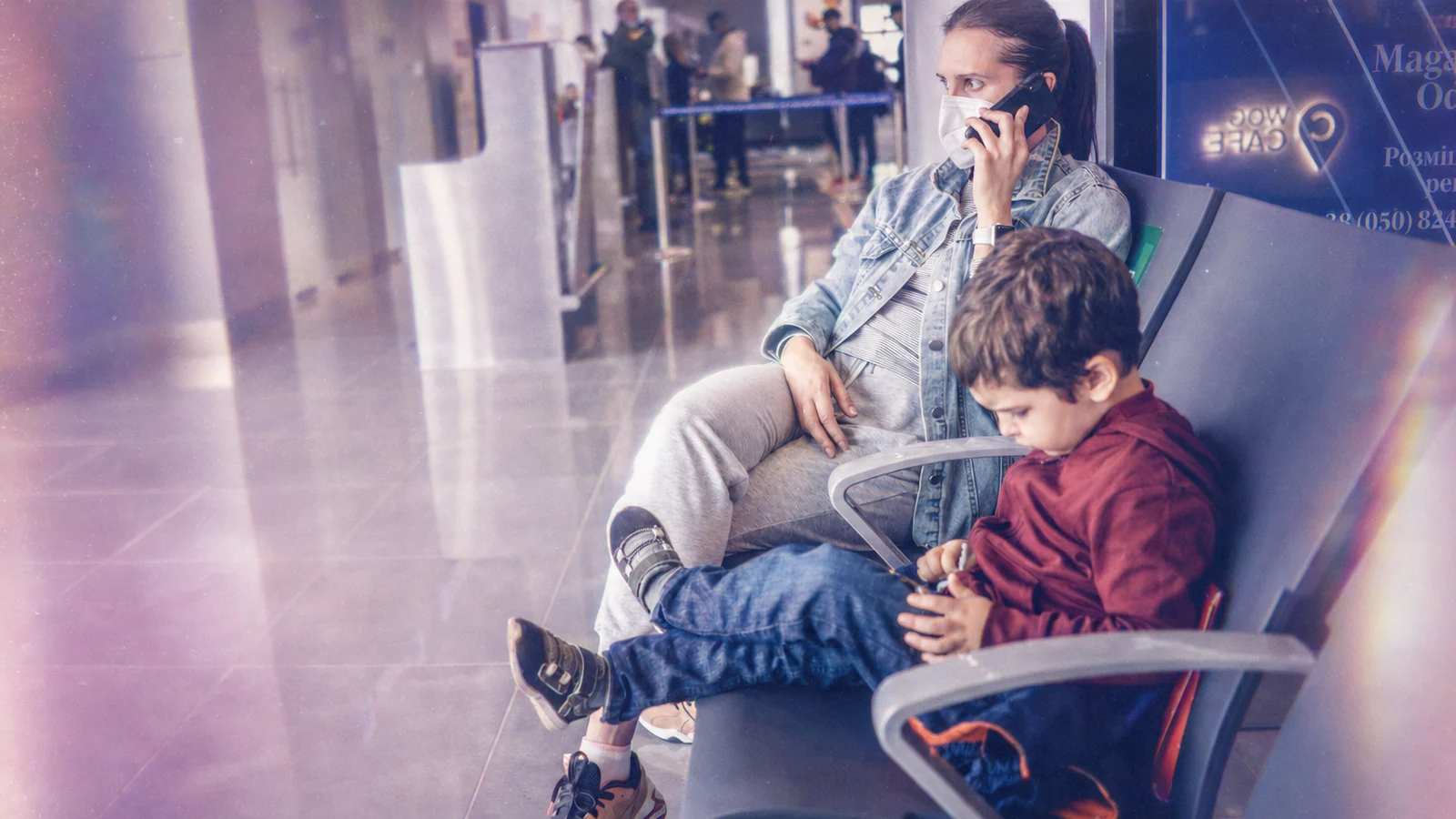
Are you planning a trip with your autistic child and wondering how to get through it? Travel breaks almost every routine a child depends on. It adds noise, crowds, waiting, new places, and new rules, all in one day.
If you are already lying awake worrying about how it will go, that worry makes sense. Traveling with an autistic child is a big deal, and the anxiety that comes with it is real. Taking care of yourself matters too.
Key Takeaways
- Plan around your child: Pick a place, travel days and seats that fit what your child already handles well.
- Practice before you go: Social stories, picture schedules and airport rehearsal events help your child know what will happen on the day.
- Use the help that exists: Airport security and airlines offer screening help, early boarding and room for communication devices on board.
- Get support for the skills behind travel: If you’re still figuring out what support fits your child, you can start your intake with Alpaca Health.
What makes traveling with autistic children hard?
Travel stacks several hard things into one day. The airport is loud and crowded, and the plane is a small space with no way out until it lands. A child who cannot yet tell you what is wrong may show it instead, by crying, covering their ears, running, or shutting down.
Support for the hard days.
When you're ready for expert support, Alpaca Health matches your family with a BCBA who can help with the hardest moments, at home or in a clinic.
Get matched with a BCBA →
How do you plan a trip that fits your child?
Choosing a place that suits your child
Start with what your child already handles well. A child who loves water may do better at a beach than at a busy city.
Deciding whether to fly, drive or take the train
Flying is fastest but packs the most sensory input into the shortest time. Driving is slower but you control the stops, the sound, and the schedule.
Bringing another adult or traveling alone with your child
Two adults make the trip much easier. If you are traveling alone, plan for the moments when you will need both hands.
Picking travel days, flight times and seats
Midweek and early morning flights are often less crowded than weekend and evening flights.
Telling the airline, airport and hotel ahead
Tell each place what your child needs before you arrive. Call the airline and note on the reservation that your child is autistic and what helps them.
Planning rest days before and after the trip
Do not pack the days around the trip. A rest day before you leave gives you time to pack slowly and practice the plan with your child.
How do you prepare your child before you leave?
Start early, because a trip your child has heard about for weeks is less frightening than one announced the night before. In the last week, walk through the actual steps, and in the last day, pack together and do a final practice run.
In the weeks before, talk about the trip in simple words. Show your child photos of the plane, the airport, and the place you are staying. Read a social story about flying or driving, and mark the trip on a calendar.
In the days before, pack the carry on bag together and let your child pick a comfort item to bring.
Social stories and picture schedules
A social story is a short story that tells your child what will happen, in order, using plain words and pictures. It also tells your child what to do if they feel scared, such as putting on headphones or holding a comfort item. A picture schedule shows the same steps as a row of pictures your child can check off on travel day.
A countdown calendar
A countdown calendar shows your child how many days are left until the trip. Each morning, your child removes or crosses off one day.
Practice runs at home
Practice the parts of the trip your child has never done. Sit in a row of chairs and pretend it is a plane. Practice putting on a seat belt and keeping it on.
Airport rehearsal events such as Wings for Autism
A rehearsal event lets your child practice the whole airport experience without taking a real flight. At a Wings event, families check in, get boarding passes, and go through security. They wait at the gate and board a plane that does not take off. The Arc lists upcoming Wings for Autism events and keeps an alert list for new dates.
What should you pack when traveling with autistic children?
Keep these items in the carry on bag so you can reach them during the trip.
- Noise protection: noise canceling headphones or ear defenders, plus a backup pair of earplugs.
- Comfort items from home: a favorite toy, blanket, or fidget your child already trusts.
- Safe snacks and drinks: foods your child already eats, in containers you can open quickly.
- A change of clothes: a full change for your child and a spare shirt for you.
- Medicines: all medicines your child needs for the trip, in your carry on, not in checked luggage.
- Chargers and downloads: chargers, a power bank, and movies or shows downloaded before you leave, in case plane wifi is not available.
- An ID card: a card in your child's pocket with your name and phone number.
- Wipes and a small bag: baby wipes for hands and faces, disinfecting wipes for the tray table and armrests, a plastic bag for dirty clothes, and hand sanitizer.
A sensory kit for noise and crowds
A sensory kit is a small bag of tools that help your child cope with noise, light, and crowds. The core is hearing protection, since noise canceling headphones cut the roar of the plane and the airport without cutting out your voice.
Comfort items from home
Bring the things your child already uses to calm down at home. If your child uses a tablet or a speech device, bring it and its charger.
Safe foods and drinks
Bring the snacks your child already likes, in enough quantity for the trip plus a delay. Liquid medicine is exempt from the 3.4 ounce liquids limit, but tell the officer about it at the start of screening.
How do you get through the airport with an autistic child?
The airport is often the hardest part of a flight, since it is loud, crowded, and full of waiting.
| Tool | What it does | How to get it | How far ahead to set it up |
|---|---|---|---|
| TSA Cares | A Passenger Support Specialist walks with you through security screening | Call (855) 787-2227 or fill out the form on the Transportation Security Administration site | At least 72 hours before you fly |
| TSA notification card | A printed card you hand to the officer so you do not have to explain your child's needs out loud | Download and print the free card from the Transportation Security Administration site | Print it before you leave home |
| TSA PreCheck | A shorter security line with shoes on and liquids and laptops kept in your bag | Enroll online and finish with a short in person appointment | Weeks before you fly, since enrollment takes time |
| Hidden Disabilities Sunflower lanyard | A green lanyard with yellow sunflowers that discreetly signals a hidden disability to staff | Buy one from the program site, or check whether a participating airport gives them out free | Get one before the trip, or pick one up at the airport |
TSA Cares and a Passenger Support Specialist
TSA Cares is a free program from the Transportation Security Administration that helps travelers with disabilities and medical conditions get through security screening. To request help, contact TSA Cares at least 72 hours before you fly and ask for a Passenger Support Specialist. A Passenger Support Specialist does not exempt your child from screening, and the program does not give you a faster line.
The TSA notification card
The TSA notification card is a free printable card for people with disabilities and medical conditions. You hand it to the officer at the start of screening instead of explaining your child's needs out loud. You can download and print the card from the Transportation Security Administration site.
How TSA screens children
The Transportation Security Administration uses modified screening for children who appear to be 12 years old and younger. Tell the officer at the start if your child has a disability, a medical condition, or a medical device. On July 8, 2025, the Department of Homeland Security ended the routine shoe removal rule for all passengers at domestic airports, so adults can now keep their shoes on too.
Hidden Disabilities Sunflower lanyards at US airports
The Hidden Disabilities Sunflower lanyard is a green lanyard with yellow sunflowers that a traveler wears to discreetly signal a hidden disability. Wearing it is voluntary, and no one has to disclose details about their disability. The lanyard does not work as a fast pass, so it does not let you skip a line or skip security screening.
Sensory rooms and calm spaces in airports
A growing number of airports have a sensory room or a calm space where a child can recover from noise and crowds. Hartsfield-Jackson Atlanta International Airport has a sensory room on the Concourse F departure level. Delta also lists multi sensory rooms at Atlanta, Detroit, and New York LaGuardia.
What rights does the Air Carrier Access Act give your child?
The Air Carrier Access Act, often shortened to ACAA, is the federal law that bars airlines from discriminating against passengers with disabilities. The United States Department of Transportation, often shortened to DOT, has stated that people on the autism spectrum are protected under this law.
Boarding first or last
The Air Carrier Access Act gives your child the right to board early. The regulation, 14 CFR 382.93, says an airline must offer preboarding to a passenger with a disability who tells staff at the gate that they need extra time or help. The Air Carrier Access Act does not require an airline to let you board last.
Sitting next to your child
There is no federal rule in force today that requires an airline to seat your child next to you for free. The Department of Transportation proposed such a rule on August 9, 2024. It would have required airlines to seat children 13 and under next to an accompanying adult at no extra cost. As of now, that rule has not been made final.
A letter from Senator Ed Markey to the Secretary of Transportation, dated May 22, 2026, states that the Department of Transportation appears to have abandoned the rulemaking.
The Department of Transportation tracks airline policies on its family seating dashboard. As of its last update on September 5, 2025, Alaska Airlines, American Airlines, Frontier, Hawaiian Airlines, and JetBlue commit to seating a child 13 or under next to an accompanying adult at no extra cost, while Allegiant, Delta, Southwest, and United do not.
Bringing speech devices and other aids on board
The Air Carrier Access Act requires airlines to let you bring assistive devices into the cabin free of charge. An assistive device is any device that helps a person with a disability, such as a wheelchair, a medical device, or a speech generating device. An assistive device does not count against your carry on limit.
Getting a problem fixed with the airline
If something goes wrong, start at the airport. Ask to speak with the airline's Complaints Resolution Official, often shortened to CRO. If the problem is not fixed at the airport, put it in writing to the airline, and you can also file a complaint with the Department of Transportation.
Turn these ideas into a plan built for your child.
Activities at home are a good start, and a Board Certified Behavior Analyst can shape them into a program around your child's goals. Alpaca Health matches you with one.
Get matched with a BCBA →
How do you help your child on the plane?
Ear pressure during takeoff and landing
Ear pressure hurts many children during takeoff and landing, because the change in air pressure pushes on the eardrum. Give your child something to chew or drink during takeoff and landing. A snack, a drink through a straw, or a lollipop can help.
Keeping busy during the flight
Download everything before you leave. Shows, games, and music that need wifi will not work in the air unless you pay for it. Download your child's favorites the night before and test them with wifi off. Bring headphones your child will wear.
Delays and long waits
When a delay happens, tell your child what is happening in plain words. Say the plane is late and you will wait a little longer, and give your child something to do while you wait. If your child is melting down in a crowded gate, step away, because a hallway, a family restroom, or an empty gate can give your child the space they need.
If your child has a meltdown on the plane
A meltdown on a plane is hard, and it is not your fault. Stay as calm as you can and lower the input by putting on your child's headphones, offering a comfort item, or holding your child if that helps them.
You can also offer a cold drink, a sweet candy, or an ice pack to hold. Cold on the face can help calm the nervous system by triggering the dive reflex, which slows the heart rate, though the studies behind it are small. Tell the flight crew what helps your child.
How do you make a road trip easier?
Planning stops and movement breaks
Plan the route around stops as well as miles, since a child who can sit for an hour needs a break every hour.
Showing how much of the drive is left
A long drive feels endless to a child who cannot tell time, so show them how much is left in a way they can see. Use a timer on a phone or tablet, or move a picture along a drawn map as you pass each town.
Keeping your child buckled in safely
Your child must stay buckled in while the car is moving. The National Highway Traffic Safety Administration, often shortened to NHTSA, gives guidance on car seats, and it recommends keeping a child rear facing as long as the seat allows. After that, keep the child forward facing with a harness until they reach the seat's limits, then use a booster seat until the adult seat belt fits correctly.
Keep your child in the back seat at least through age 12. Children in booster seats in the back seat are 45 percent less likely to be injured in a crash than children using a seat belt alone, according to Safe Kids Worldwide.
How do you help your child settle in once you arrive?
Settling in starts before you book, so ask the hotel or rental these questions ahead of time.
- How far is the room from the elevator, the pool, and other noise?
- Which doors lock or have alarms?
- Is there a fridge in the room?
- How loud does it get at night?
- Is there a calm area to retreat to?
- Can the hotel send a social story or a visual guide?
- Is the hotel sensory friendly?
Setting up the hotel room or rental
When you arrive, set up the room before your child settles in. Put your child's blanket and comfort items on the bed. Make sure the door locks and that your child cannot open it easily at night.
Keeping sleep and meal routines
Keep sleep and meal times as close to home as you can. A child who is overtired or hungry will struggle more the next day.
Planning downtime into each day
Instead of filling every hour, plan one main activity a day and leave the rest open. Watch for the signs that your child is reaching their limit. Covering ears, pacing, repeating a phrase, or going silent can mean your child needs a break right away.
Travel safety beds for children who wander at night
If your child wanders at night, a hotel room can be unsafe, because a child can leave the room, find a stairwell, or reach a pool while everyone else is asleep. A travel safety bed can help.
The Safety Sleeper is a portable enclosed bed made for travel.
The SafePlace Adaptive Bed is another portable enclosed bed made for travel. It is fully enclosed with reinforced mesh and locking zippers that open only from the outside, so it helps prevent nighttime wandering. The maker lists it at $599.
Do not confuse a travel bed with a home safety bed such as the Cubby Bed, which is a smart enclosed bed for home use and has no portable or travel version.
How do you keep your child safe from wandering on a trip?
Wandering is one of the most serious risks for an autistic child on a trip. A child can slip out of a hotel room, walk away from a rest stop, or run toward water or traffic in seconds. In a 2012 study of 1,218 children with autism, published in Pediatrics, 49 percent had tried to wander away at least once after age 4. Of the children who went missing, 65 percent were in danger of traffic injury and 24 percent were in danger of drowning.
On travel day, these steps help keep your child safe.
- Take a photo that morning.
- Give your child an ID card or bracelet.
- Assign one adult to watch your child at all times.
- Tell hotel staff that your child wanders.
- Tell airport and airline staff too.
- Carry a safety plan handout.
- Consider a GPS tracker. A GPS tracker such as AngelSense locks into clothing and sends your child's location to an app on your phone.
How Alpaca Health helps your child get ready for travel
Travel is easier when your child has the right support before you leave. Alpaca Health matches your family with a vetted, in network Board Certified Behavior Analyst, often shortened to BCBA. A BCBA is a professional trained in behavior analysis who designs and oversees autism therapy. Your child's care team can help you practice the trip and build a social story, and the team can also work on the skills that make travel easier.
If your child does not yet have a care team, Alpaca Health can match you with one and check your insurance coverage first. If you are still figuring out what support fits your child, a care team member will talk it through with you when you sign up with Alpaca Health.
You don't have to figure this out alone.
Alpaca Health matches your family with a vetted, in-network BCBA. We handle the insurance paperwork so you can focus on your child.
Get matched with a BCBA →
Frequently Asked Questions About Traveling With an Autistic Child
Which airline is most autism friendly?
There is no official ranking of airlines by how autism friendly they are, and no federal agency publishes one. Different airlines are better at different things, so the best choice depends on what your child needs most.
For seating, Alaska Airlines, American Airlines, Frontier, Hawaiian Airlines, and JetBlue commit to seating a child 13 or under next to an accompanying adult at no extra cost. Allegiant, Delta, Southwest, and United do not make that commitment.
Is there a free autism passport for travel?
Yes, Autism Double-Checked offers an Autism Passport, and its site lists no fee to register. Autism Double-Checked is a private program that certifies airlines, airports, and hotels as autism friendly. A family registers once on the Autism Double-Checked site and can share the passport with any certified airline, airport, or hotel.
The Autism Passport is a communication tool and is not a government document, so it does not replace asking the airline or the Transportation Security Administration for the specific help your child needs.
Do kids with autism fly free?
No, autism does not change the fare. Children age 2 and older need a ticket and their own seat. The Federal Aviation Administration, often shortened to FAA, says the safest place for a child under 2 is an approved child restraint rather than a lap, and buying a ticket is the only way to guarantee that seat.
Do you need proof of autism to get help at the airport?
No, not for the Transportation Security Administration. You may tell the officer about your child's disability out loud, with the TSA notification card, or with medical documentation, so there is no formal approval, membership, or document required.
Airlines follow the Air Carrier Access Act, and under it an airline generally may not require advance notice or a medical certificate to provide an accommodation.
Can an airline remove an autistic child from a flight?
The Air Carrier Access Act bars an airline from discriminating against a passenger because of a disability, including autism. An airline cannot remove your child because of an autism diagnosis alone, though there is a narrow exception.
An airline may deny boarding or remove a passenger only if that passenger poses a direct threat to the health or safety of others. That risk must be one that cannot be fixed by changing a policy or giving extra help. The airline must judge the risk case by case and cannot assume a risk from a diagnosis.
If an airline refuses to carry your child for a disability related reason, it must give you a written statement of the reason within 10 calendar days. You can also call the Department of Transportation disability hotline at 1-800-778-4838. It is open from 9 am to 5 pm Eastern, Monday through Friday, except on federal holidays.
If you want help getting your child ready for a flight, sign up with Alpaca Health and a care team member will talk it through with you.
RELATED ARTICLES




NEW TO THE TERMS?
ABA Glossary for Parents →The words you will hear from your child's care team, explained in plain language.