




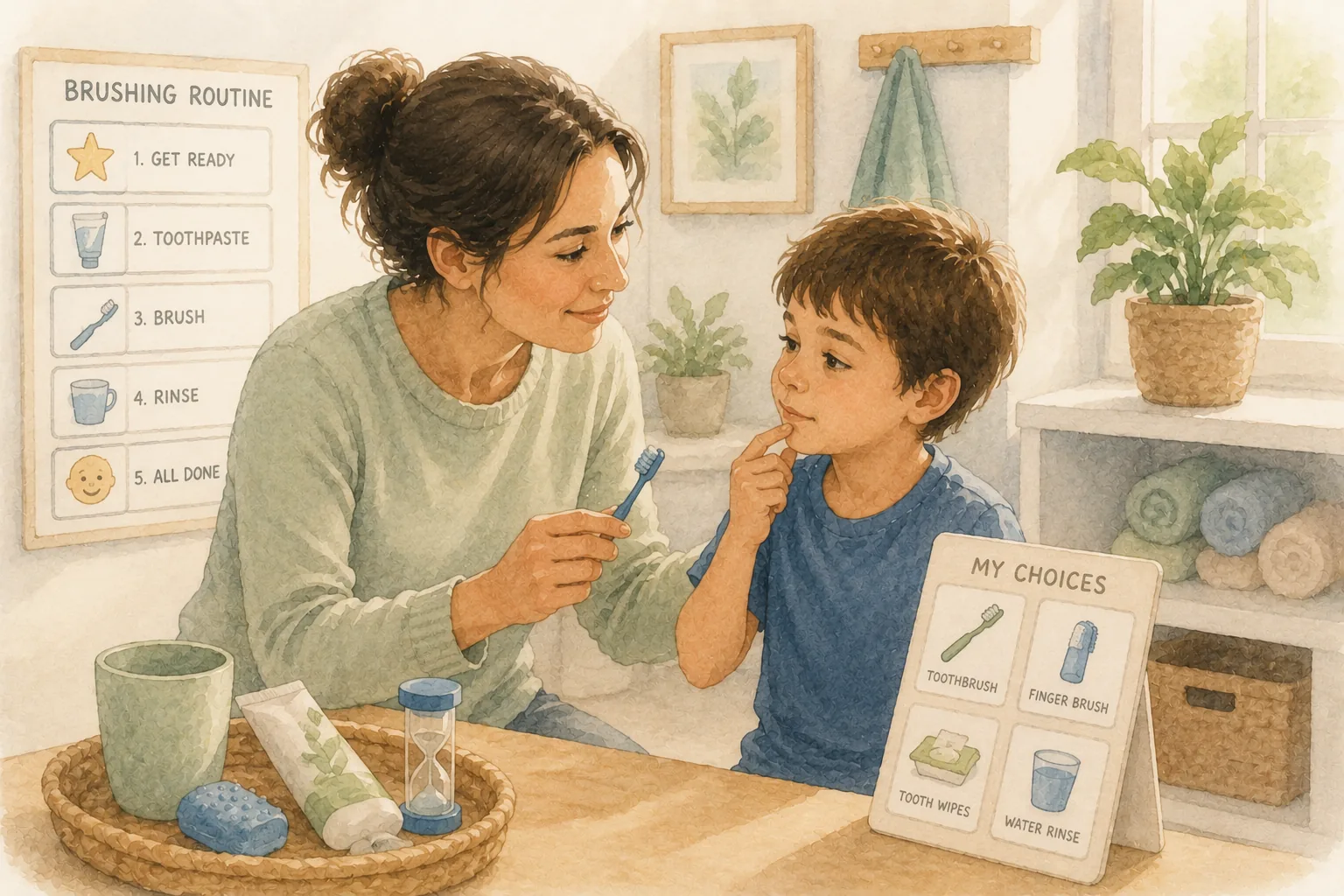
Your autistic child won't brush their teeth, and tonight is the fifth night in a row. They clamped their mouths shut. They ran from the bathroom.
Or they stood there, frozen, while you held the toothbrush and tried to stay calm. You've heard the standard advice: brush twice a day, pea-sized toothpaste. It's not working.
This guide gives you something to try in the next ten minutes and a 21-day plan for when a tooth brushing attempt doesn't land. Both start from the same place: sensory science, not willpower. Before any tactic works, you need to understand which of the five sensory checkpoints your child's mouth is responding to, because that determines everything that comes next. If you're also building a broader daily structure, a sensory diet can support this work alongside your child's routine.
Key Takeaways
- Sensory differences, not defiance: Almost every brushing difficulty in autistic children traces back to sensory overload or a disrupted routine. Identifying which checkpoint is being triggered (taste, texture, smell, sound, or pressure) is where real progress starts.
- Tonight's fallback: Wet brush, no toothpaste, two seconds on the front teeth. That counts. Skipping is what you avoid, not perfect technique.
- Tools matter more than persistence: Standard adult brushes are too stiff for many autistic kids. Soft-bristle, silicone, or low-vibration electric brushes combined with SLS-free or unflavored toothpaste change the sensory experience before anything else can.
- Gradual introduction works: You don't start with brushing. You start with the toothbrush sitting on the counter for three days while your child watches you use yours.
- You don't have to figure this out alone: If three weeks of gradual steps haven't helped, that's the BCBA conversation. Ready to start ABA support at home? Begin your intake.
Why Your Autistic Child Finds Brushing Difficult
Before any tactic works, you need to answer one question: is this a won't-do or a can't-do?
A won't-do is a preference or a power dynamic. Your child understands the request and is choosing not to follow through. A can't-do is a sensory or neurological barrier.
They're not refusing; their nervous system is responding to real input in a way that makes brushing genuinely difficult or painful. Most brushing difficulty in autistic children is can't-do. Once you treat it that way, the whole approach changes.
Sensory Difference or Power Struggle? How to Tell
The tells are different. A won't-do looks like negotiation ("after this show"), deliberate delay, or a clear alternative request. A can't-do looks like gagging, immediate distress, physical pulling away before the brush is even near their mouth, or a full shutdown. The second pattern needs sensory support first, not firmer limits.
Research on brushing tasks in autistic children consistently shows that sensory aversion and verbal cue dependence drive most difficulties, not defiance. If your child experiences an autistic meltdown every time brushing comes up, the sensory load is almost certainly what's driving it.
The Five Sensory Checkpoints: Taste, Texture, Smell, Sound, Pressure
Your kid's mouth has five sensory checkpoints. Any one of them can make a brushing attempt feel impossible before it starts:
- Taste: Most children's toothpastes are mint-forward and intense. For many autistic kids, that's an assault, not a flavor.
- Texture: Standard bristles scratch. The foaming from SLS (sodium lauryl sulfate) adds a tactile layer some kids find genuinely painful.
- Smell: The fluoride-mint combination hits before the brush does. If your child stiffens at the bathroom doorway, smell may be the first checkpoint.
- Sound: Electric brushes hum and vibrate. Even soft-bristle manual brushes scrape audibly inside a mouth. The bathroom amplifies everything.
- Pressure: Even gentle brushing creates pressure against the gums and teeth. For kids with oral hypersensitivity, light touch registers as significant force.
You don't need to address all five at once. Support one checkpoint, hold it for three consecutive days, then move to the next.
When the Routine Itself Is the Trigger
Some kids aren't responding to the brush at all. They're responding to the sequence: bath, pajamas, brush, bed. If anything in that chain runs out of order or gets interrupted, the whole chain becomes difficult. If brushing challenges appear specifically after another transition, examine the routine structure before the tools.
Some days are hard. We can help.
When you're ready for expert support, Alpaca Health matches your family with a caring BCBA who can help with the moments that feel impossible, at home, in clinic, or online.
Get matched with a BCBA →
Build a Sensory-First Toothbrush Profile
The most common reason a toothbrush plan doesn't work isn't the child. It's the wrong brush for that child's specific sensory profile. A standard adult brush is too stiff, too large, and too stimulating for many autistic kids. Here's how to work through the options by feature.
Toothbrush Selection
Start with bristle firmness. The American Academy of Pediatric Dentistry recommends soft bristles for all children. For autistic kids with sensory sensitivity, ultra-soft is the better starting point, because standard "soft" is still firmer than most parents realize. Options worth trialing:
- Soft-bristle manual: Reliable, no noise, no vibration. Easiest starting point for kids who are sensitive to bristles.
- Silicone gum massager: Rubber-tipped or full silicone surface. Very low friction. Good for kids who gag on standard bristles.
- 360-degree brush: Bristles wrap around the head so there's no need to angle. Reduces pressure variability.
- Electric vibrating: Lower effort per stroke, but vibration is a new sensory input to introduce separately. Some kids find the buzz regulating; others find it overwhelming. Trial with a low-speed setting before committing.
Assisted brushing is appropriate for autistic kids well past the age most parenting guides suggest. That's responsive caregiving, not a step backward.
Toothpaste Selection
Toothpaste is where many plans fall apart. Mint is the default, but for kids with taste hypersensitivity, mint can be a barrier. Work through this order:
- Mild fruit flavors: Strawberry, watermelon, or bubblegum are less chemically intense. Many are available with fluoride.
- Unflavored with fluoride: Zero flavor input, full fluoride protection.
- SLS-free: Removes the foaming agent. A significant texture difference for kids who gag on foam.
- Water only: Multiple independent BCBAs and pediatric resources recommend water-only brushing over skipping entirely. If toothpaste remains a genuine barrier, water-only is the clinical fallback, not a failure.
Pea-sized fluoride toothpaste remains the AAPD standard for children 3 and up. The goal is to get there, but not before sensory tolerance is established.
Where You Brush
The bathroom is not required. For a child with sensory sensitivities, the bathroom adds mirror glare, acoustic amplification, cold tile, and a small enclosed space. Move brushing to the couch, kitchen, or living room floor until tolerance builds. The location can shift back once the habit holds.
A 21-Day Gradual Introduction Plan You Can Start Tonight
You don't start with brushing. You start with proximity. Free visual schedules can support the routine alongside each step below.
Each step should hold for at least three consecutive successful days before you advance. Some kids move through in 21 days.
Some spend two weeks on step two. Both are fine. The pace belongs to your child.
Step 1: Toothbrush on the Counter (Days 1-3)
The brush sits visible in whatever room your child spends time in. No demand. No "look at the brush." You use your own brush in front of them once a day, without comment. The goal is familiarity with the object before it becomes a task.
Step 2: Watch Me (Days 4-7)
Brush your own teeth in front of your child, using their brush for the demonstration. Video modeling works by the same mechanism.
Short clips of someone brushing can supplement the live model, and research supports video-based approaches for toothbrushing in autistic children as comparable to social stories and picture-based methods. ABA activity ideas can help you build this into a broader routine. No demand on your child yet.
Step 3: Touch the Bristle (Days 8-10)
Offer the brush and ask your child to touch the bristles with one finger. If that holds, try the bristle to the outside of their lip for two seconds. Offer a high-value reinforcer immediately after. Don't move toward the teeth yet.
Step 4: Two Seconds, No Toothpaste (Days 11-14)
Wet brush, no paste, two seconds on the front teeth. That's the whole task. If they allow it, mark it, reinforce it, and stop there for the night. Three nights in a row before moving to step five.
Worth knowing: Some kids stay at Step 4 for weeks. That's still meaningful progress, because the front teeth are being cleaned. The pace is your child's to set.
Step 5: Add a Pea-Size of Paste (Days 15-18)
Introduce the mildest available toothpaste, unflavored or mild fruit, SLS-free if possible. Keep the duration at two to four seconds on the front teeth. The goal is toothpaste tolerance, not thoroughness.
Step 6: Full Brushing with First-Then Board (Days 19-21+)
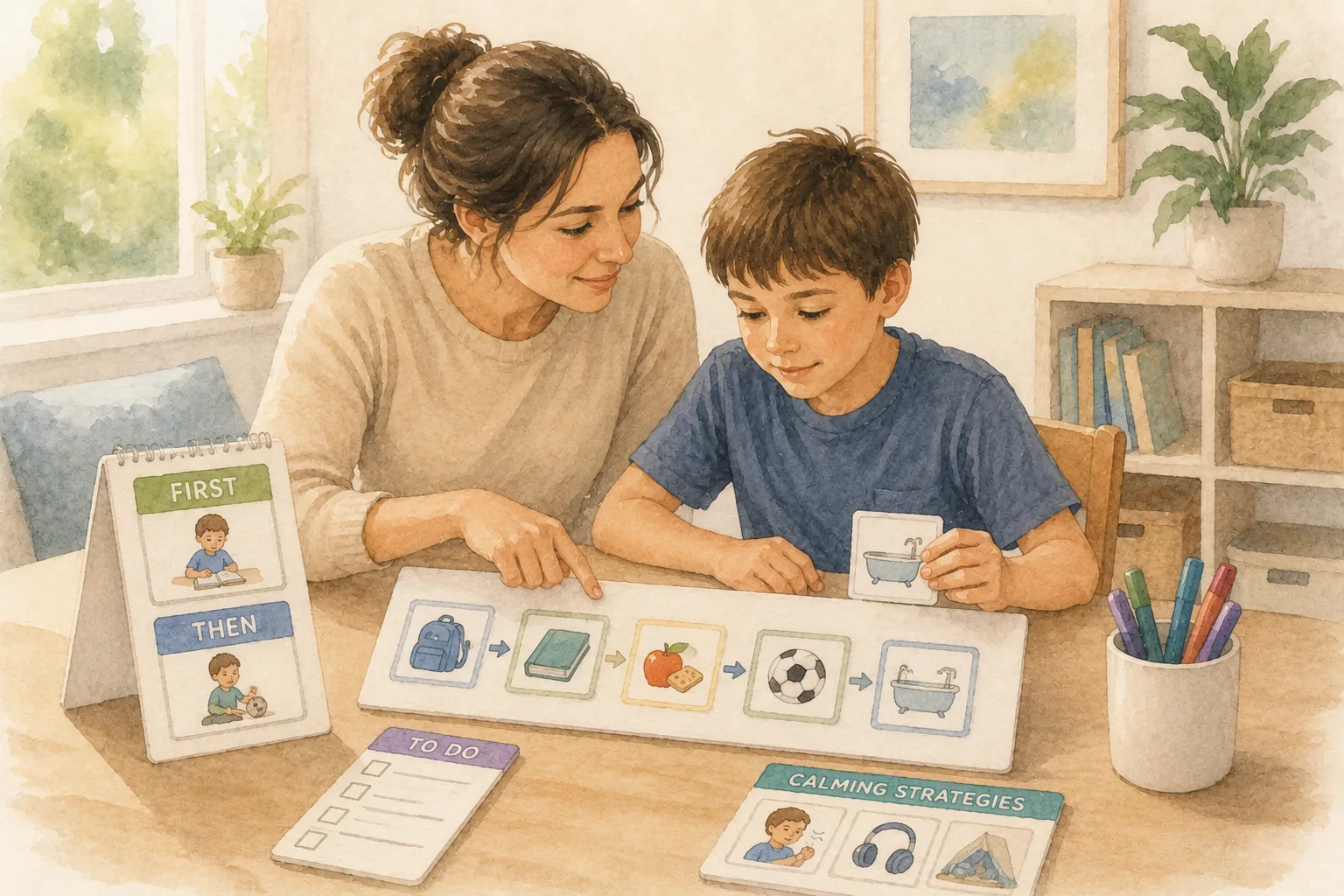
First brush, then [reinforcer]. Use a visual timer, 30 or 60 seconds depending on tolerance. A first-then board makes the sequence predictable, which directly addresses the routine-disruption trigger from the first section.
If you can't run this plan alone right now, that's a completely valid reason to involve a BCBA. A behavior analyst can build a gradual introduction plan matched specifically to your child's sensory profile. Start your intake to find a BCBA who works in your home.
Age-Specific Support for Brushing Difficulties
Toddlers (Ages 2-4)
Lap brushing works well at this age. Your child reclines with their head in your lap, which gives you control of the angle and reduces the sensory load of standing at a sink. Offer a choice between two brushes ("the blue one or the green one?").
That's not a choice about whether to brush, but it creates genuine buy-in. A 30-second song timer makes duration concrete. ABA for toddlers covers how to build self-care routines into early therapy goals.
School-Age (Ages 5-10)
First-then boards work well here. A brushing social story before a dentist visit, introduced days ahead rather than the night before, gives your child time to process the sequence. For kids with self-care IEP goals, oral hygiene is a natural fit for annual goal-setting. If the school has an OT, ask whether oral motor support is already part of your child's plan.
Teens (Ages 11-17)
Autonomy framing matters at this age. "You choose the brush and the paste" lands differently at 14 than at 6.
Electric brushes can double as sensory regulation tools, and some teens find the vibration genuinely calming. Give them bathroom privacy when possible, because brushing alongside a parent at 15 adds a social layer worth removing. Support for teens covers how ABA goals shift in adolescence.
Autistic Adults
Adult autistic individuals deserve the same sensory accommodation framework, without the assumption that these challenges should be resolved by adulthood. Choosing unflavored toothpaste, water-only brushing, or a specific brush type isn't a workaround. It's a solution that fits a real sensory profile. Self-advocacy means identifying what works and using it, full stop.
Protect Their Teeth While You're Working Through This
Autistic children experience higher rates of dental disease than their neurotypical peers, not because of anything inherent to autism, but because standard dental care tools and routines aren't designed with sensory differences in mind. That gap is the problem, not your child.
While you're working through the gradual introduction plan, these steps reduce risk in the meantime:
- Fluoride varnish: The AAPD recommends application 2-4 times per year for high-risk children. A sensory-informed pediatric dentist can apply it in under a minute with no brushing required.
- Xylitol: Available in gum, mints, or wipes for children 6 and up. Reduces the bacteria that cause cavities. Not a replacement for brushing, but a meaningful supplement during this period.
- Reduce between-meal sugar: Juice, dried fruit, and crackers left on teeth between brushing events matter more than brushing duration. Reducing exposure windows is within your control even when brushing isn't.
- Water-only brushing: Consistently recommended as preferable to skipping entirely. Mechanical plaque removal with a wet brush offers real protection even without fluoride.
When to Bring in Outside Support
If three weeks of gradual introduction haven't moved past Step 3 and your child is showing distress at the mention of brushing, not just the act, it's time to involve a professional. That's not failure. That's knowing when a different kind of support is needed.
A Sensory-Informed Pediatric Dentist
The AAPD has specific best practice guidance for children with special health care needs, including communication strategies, modified appointment structures, and accommodation options. Ask prospective dentists directly: "Do you have experience supporting autistic patients with sensory sensitivities?" Their answer tells you a lot.
A BCBA or Occupational Therapist
A BCBA can conduct a functional assessment of the brushing difficulty, build a task analysis matched to your child's sensory profile, and run the gradual introduction protocol systematically. An OT addresses the oral motor and sensory processing side.
The two roles complement each other well. See ABA vs OT for a breakdown of which role addresses which piece. Alpaca offers ABA sensory therapy through in-home and telehealth providers, as well as parent ABA training for running gradual introduction plans at home.
Sedation or General Anesthesia
For children where untreated dental disease has become a real health risk and other options have been exhausted, sedation is available. It's a last resort, but it's a legitimate one, and it's sometimes the right call.
If your child was recently diagnosed and you're still figuring out what support looks like, after a diagnosis is a useful place to start.
How Alpaca Health Helps
If a 21-day gradual introduction plan and a sensory-profile toothbrush audit sound like more than you can run alone tonight, that's exactly the BCBA conversation worth having. Alpaca matches families with independent, local BCBAs in under 24 hours, with no long waitlists and no corporate center. Providers work where your child is most comfortable: at home, in school, or via telehealth. Whether you need help building a self-care routine, a visual schedule system, or a full behavior support plan, parent ABA training through Alpaca starts with your intake.
You don't have to figure this out alone.
Alpaca Health matches your family with a vetted, in-network BCBA, often within days and with no waitlist. We handle the insurance paperwork so you can focus on your child.
Get matched with a BCBA →
Frequently Asked Questions About Autism and Teeth Brushing
My autistic son won't let me brush his teeth at all. What do I do tonight?
Wet the brush, skip the toothpaste, and get two seconds on the front teeth. Don't escalate the interaction. A wet brush on the front teeth is a meaningful protective step, and tomorrow night you try again at the same low-demand level. You're building tolerance, not chasing perfect technique.
Is my child in pain, or are they choosing not to brush?
For most autistic kids, brushing difficulty is sensory, not a choice. If your child shows immediate distress before the brush reaches their mouth, their nervous system is responding to real input. That's not defiance; that's communication. Check sensory regulation resources for a broader framework on what's happening.
What toothbrush works best for autistic kids with sensory differences?
There isn't a universal answer, but a useful starting point is the softest available bristle, smallest available head, and no vibration until manual brushing is tolerated comfortably. Silicone gum massagers are worth trialing for kids who gag on standard bristles. Electric brushes come after manual tolerance is established.
Can I just use water if toothpaste is too difficult right now?
Yes. Water-only brushing is recommended by multiple pediatric resources as a better option than skipping. The mechanical removal of plaque by a wet brush offers real protection even without fluoride. If water-only brushing holds for three consecutive nights, that's a genuine foundation to build from.
My autistic teen still finds brushing really hard. What's age-appropriate at 15?
Let your teenager choose the brush and paste from a curated shortlist of sensory-appropriate options. Give them bathroom privacy and frame it as a choice they're making, not a task being imposed. Support for teens covers how ABA therapy goals shift in adolescence, including self-care and hygiene.
Will my child's teeth get cavities if brushing is inconsistent right now?
The risk is elevated for autistic children. Fluoride varnish, xylitol for kids 6 and up, and reduced between-meal sugar exposure significantly reduce that risk while you're working on the brushing routine. A pediatric dentist who works with autistic patients can apply fluoride varnish in a single appointment without requiring brushing.
When should I bring in a pediatric dentist or BCBA?
If the gradual introduction plan hasn't moved past Step 3 after three weeks and your child is showing distress at the mention of brushing, it's time. A BCBA builds the behavior support plan; a sensory-informed pediatric dentist handles the dental side.
The two don't need to be sequential. ABA vs OT explains how the roles divide. If you're ready to start, begin your intake with Alpaca today.
What if my child has a meltdown every time we try?
A brushing meltdown is not a tantrum. A tantrum is goal-directed; a meltdown is involuntary. Your child's nervous system is overwhelmed, not making a strategic choice.
Stop the attempt, reduce the sensory input, and let the system settle before trying again. The gradual introduction plan above is designed specifically for this pattern: you build tolerance before you add demands. See our guide on autistic meltdowns for a full breakdown of what's happening and what ideas of how to help.
Turn these ideas into a plan built for your child.
Practicing at home is a great start, and a Board Certified Behavior Analyst can shape it into a program around your child's real goals. Alpaca Health matches you with one, often within days.
Get matched with a BCBA →
RELATED ARTICLES